- U.S. Central Command (CENTCOM) reported that multiple Iranian rocket and drone attacks were thwarted in the Persian Gulf, and the U.S. military carried out an attack on Qeshm Island on Tuesday.
- Iran launched several ballistic missiles toward regional neighbors; however, all failed to hit their intended targets, with two missiles fired at Kuwait falling short and three missiles launched at Bahrain being intercepted by U.S. and Bahrain air defenses.
- U.S. forces shot down three attack drones launched by Iran and conducted self-defense strikes on an Iranian military ground control station on Qeshm Island.
- The attacks intensified pressure on a shaky ceasefire between the U.S. and Iran.
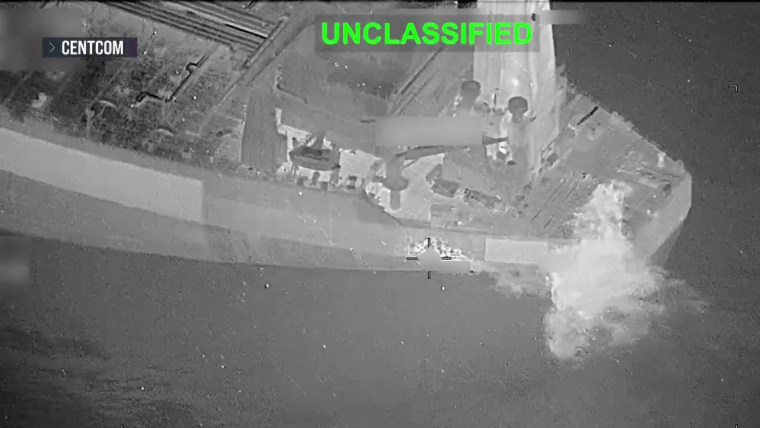
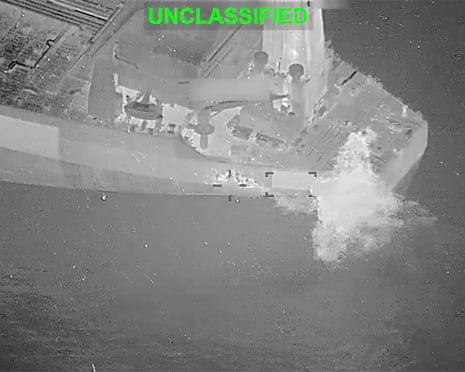
- CENTCOM announced it had disabled a Botswana-flagged tanker headed for Iran after the crew ignored warnings.
- A U.S. aircraft fired a Hellfire missile into the disabled vessel's engine room to prevent it from reaching Iran.
- Since a blockade against Iran’s ports began on April 13, the U.S. military has “disabled six commercial vessels and redirected 122.”
- US military says it struck tanker and sites on Iran’s Qeshm Island and defended Kuwait and Bahrain from missile attacks.
- Iran’s Islamic Revolutionary Guards Corps (IRGC) said it attacked the US Fifth Fleet headquarters in Bahrain with missiles and drones in response to the strike on Qeshm.
- Kuwait’s military warned the public 'not to approach or touch any debris' resulting from intercepting enemy aerial targets.
- Centcom reported that two Iranian missiles fired at Kuwait 'fell short or broke apart enroute'.
U.S. military forces have intensified their operations in the Persian Gulf, targeting Iranian interests amid a surge of missile and drone attacks from Tehran.6
CENTCOM reported that U.S. forces launched self-defense strikes on an Iranian military ground control station on Qeshm Island, which they view as pivotal for Iranian military operations.145781214
According to U.S. Central Command, Iranian missile attacks aimed at regional neighbors failed to reach their targets, with missiles fired at Kuwait falling short and three launched at Bahrain intercepted by U.S. and Bahrain air defense.2311

The escalating conflict comes as ceasefire talks remain stalled, creating uncertainty in the geopolitical landscape.
As part of its sustained naval blockade, the U.S. disabled a Botswana-flagged tanker attempting to reach Kharg Island, Iran’s main oil terminal, employing a Hellfire missile after the crew ignored repeated warnings.
The U.S. military has reported disabling six commercial vessels and redirecting 122 ships since the blockade's onset on April 13. The U.S. claims these actions are necessary to curb Iran's efforts to interfere with maritime operations in the region, particularly in the critical Strait of Hormuz.
Meanwhile, Iran's Revolutionary Guards Corps claimed responsibility for retaliatory strikes against U.S. bases in Bahrain, marking a significant escalation in the ongoing confrontation.
The U.S. military states that these hostilities threaten the fragile ceasefire, emphasizing the “self-defense” nature of their operations amidst this tense backdrop.
Military experts suggest that the geopolitical stakes are higher than ever, with the potential for broader conflict if negotiations do not resume effectively.
“U.S. and Iran have escalated military actions against each other in the Persian Gulf, highlighting the growing tensions in the region. CENTCOM reports multiple exchanges of attacks as ceasefire negotiations remain stagnant.”
 BBC
BBC The Guardian