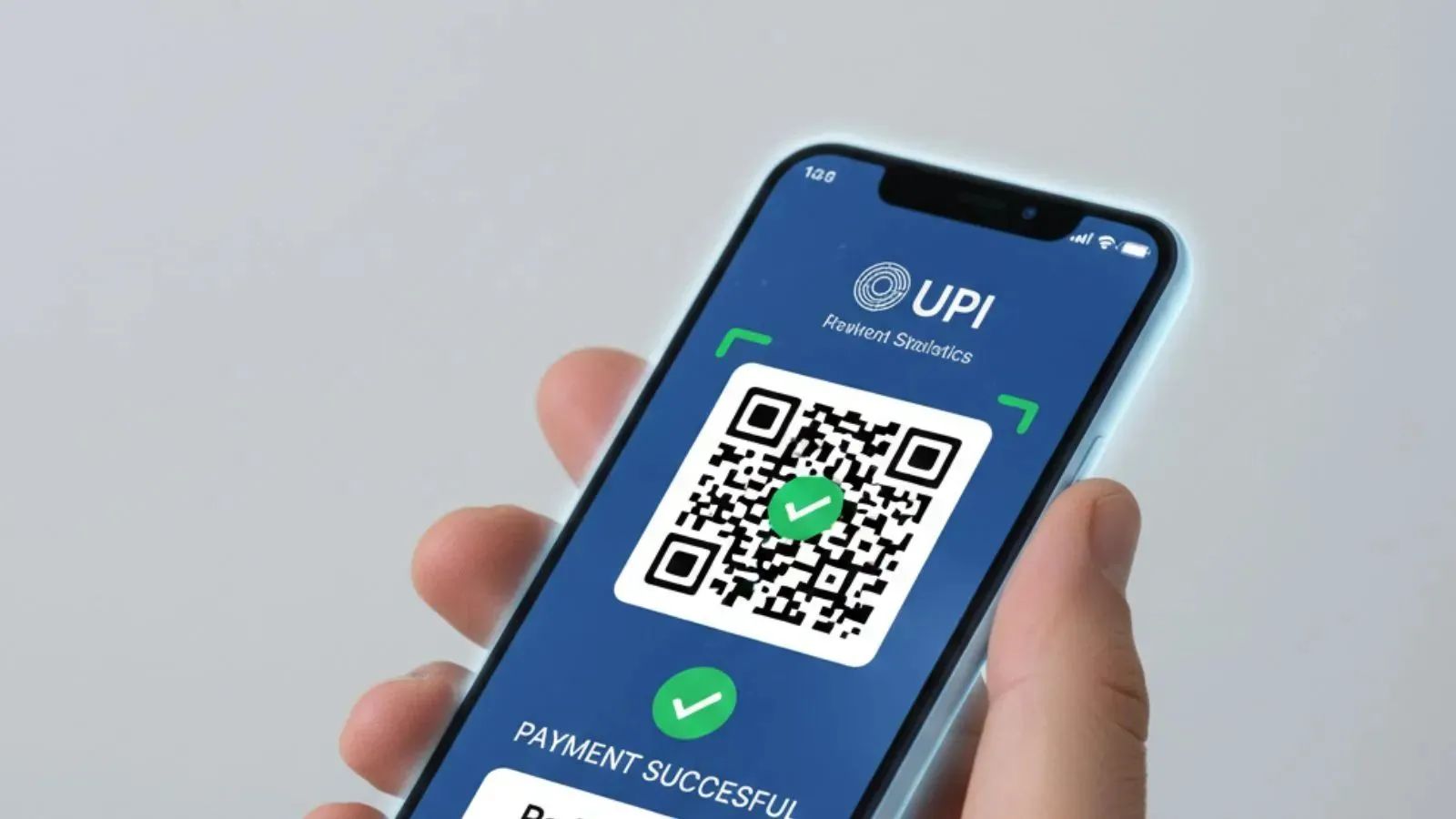
- The merchant discount rate (MDR) on UPI transactions is set to make a comeback after nearly six years, with payments worth Rs 2,000 and above likely to face a 0.3 percent fee.
- The legal path for MDR's return was cleared after the government moved an amendment to the Payment and Settlement Systems Act in August that removed the zero-MDR protection.
- The fee is not paid to a single entity but to several players – banks, fintech companies and others involved in the different layers of a transaction.
- When MDR returns, the fee will be split along the payment chain among four sets of players: the issuing bank, the payment service provider (PSP) and its bank, the acquiring banks and PSPs on the merchant's side (such as PhonePe, Google Pay and Paytm), and NPCI which operates and settles the UPI rail.
- In person-to-merchant transactions, the largest share of the fee – the interchange – goes to the issuing bank, which consistently takes the biggest slice across payment systems.
- A fee on high-value transactions would, for the first time since 2020, let the banks and fintech apps that carry UPI's volume earn revenue on the core payment.
- The Parliamentary Standing Committee on Finance, chaired by Bhartruhari Mahtab, reported that the government allocated just Rs 2,000 crore to promote UPI and compensate the industry for revenue foregone under zero-MDR – far below the industry's estimated annual operating cost of Rs 20,700 crore; the incentive covers only about 11 percent of actual costs and roughly 14 percent of potential MDR revenue.
- RBI Governor Sanjay Malhotra said UPI cannot stay free forever: "It is not free even now, someone is paying for it. The government is subsidising it, but somewhere the costs are being paid."
- The Department of Financial Services told the parliamentary panel it is weighing two routes to ease the funding burden: reintroducing MDR on high-value transactions, or a subsidy that is gradually phased out over the coming years.
- According to government data, India recorded more than 24,000 crore UPI transactions worth Rs 314 lakh crore in FY26; in value terms, 71 percent was person-to-person (P2P) and the rest person-to-merchant (P2M). Only about 4 percent of P2M transactions are worth Rs 2,000 or more, meaning the majority of transactions will stay outside MDR's ambit.
The return of the merchant discount rate (MDR) on UPI transactions marks a significant shift in India's digital payment landscape. After nearly six years of zero fees, a 0.3% charge will apply to person-to-merchant transactions valued at ₹2,000 and above.12
This fee will be divided among banks, fintechs, and the National Payments Corporation of India (NPCI), with the largest share going to the issuing bank.5678
The legal framework for this change was established following an amendment to the Payment and Settlement Systems Act in August, which lifted the zero-MDR protection.3
Prior to 2019, a similar fee was in place, but it was eliminated to encourage digital payments. The Parliamentary Standing Committee on Finance highlighted the financial strain on the digital payments industry, noting that the government's allocation of ₹2,000 crore to support UPI operations is insufficient compared to the estimated ₹20,700 crore annual operating cost.111213
RBI Governor Sanjay Malhotra emphasized that UPI cannot remain free indefinitely, stating, "It is not free even now, someone is paying for it. The government is subsidising it, but somewhere the costs are being paid."14
With over 24,000 crore UPI transactions recorded in FY26, only about 4% of person-to-merchant transactions will be subject to the new MDR, indicating that the majority of transactions will remain unaffected.161718
This move aims to provide revenue to banks and fintechs, which have been operating at a loss under the zero-MDR regime.
“The fee will be distributed along the payment chain, with the issuing bank receiving the largest share as interchange. Government data shows only about 4% of person-to-merchant transactions exceed ₹2,000, so most UPI payments will remain free of MDR.”
/indianstartupnews/media/media_files/2025/05/16/9bRP4xCxdD1HylAUoptP.png)
/indianstartupnews/media/agency_attachments/ura2gdmHFSrOsjLBAi1Z.png)