
- The Union Cabinet has approved ₹84,084 crore for the Samudra Manthan offshore exploration scheme.
- On July 25, ONGC spudded the first deepwater exploration well in the Mahanadi basin off Odisha.
- India's crude production has fallen from 36.9 million tonnes in 2015-16 to 28.7 million tonnes in 2024-25, while import dependency has climbed to a record 88.7%.
- The Samudra Manthan scheme aims to raise domestic oil and gas output from 62 to 80 million tonnes of oil-equivalent by 2031.
- The International Energy Agency (IEA) projects India's oil consumption to rise to 6.6 million barrels a day by 2030, while OPEC sees India adding 8.2 million barrels a day by 2050.
- India's offshore oil production includes Mumbai High, which peaked at 471,000 barrels a day in 1989 but has since declined.
The Union Cabinet's approval of ₹84,084 crore for the Samudra Manthan offshore exploration scheme aims to boost India's oil production amid rising import dependency.14
The initiative will fund the drilling of 60 deepwater wells, with the government covering up to 50% of drilling costs, capped at ₹675 crore per well.
The scheme is expected to catalyze reserves of over 600 million metric tonnes of oil equivalent (MMTOE) and enhance domestic output from 62 to 80 million tonnes of oil-equivalent annually by 2031.
“Investments in large-scale seismic data acquisition and drilling of exploratory wells in deep and ultra-deep waters will reduce geological uncertainty and derisk exploration,” said Rajnish Gupta, Partner for Tax and Economic Policy at EY India.
The plan also includes acquiring modern seismic data and developing shared offshore infrastructure to facilitate the commercialization of discoveries.
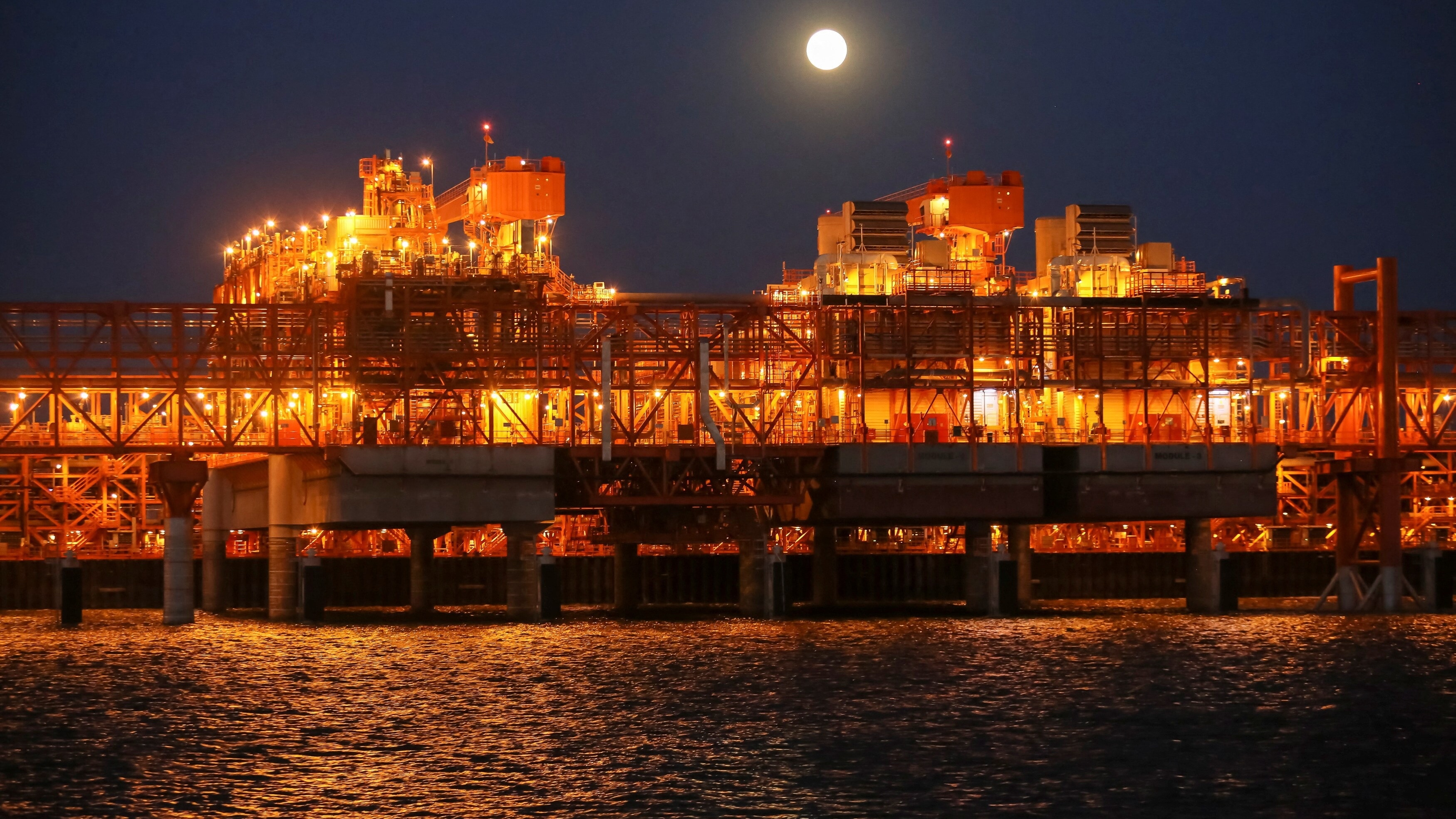
Despite these efforts, India's crude production has decreased from 36.9 million tonnes in 2015-16 to 28.7 million tonnes in 2024-25, while oil import dependency has surged to a record 88.7%.3
The International Energy Agency (IEA) projects India's oil consumption to rise from 5.48 million barrels a day in 2023 to 6.6 million by 2030.56
The Samudra Manthan initiative is crucial as India is identified as the largest source of new oil demand globally, with OPEC estimating an additional demand of 8.2 million barrels a day by 2050.
In the Mahanadi basin, ONGC has already spudded its first deepwater exploration well under this scheme, marking a significant step in India's offshore exploration efforts.2
“A deepwater well costs between $80 million and $150 million, and Rystad Energy puts offshore wildcat success at just under 25%. Samudra Manthan targets lifting domestic oil and gas output from about 62 to 80 million tonnes of oil-equivalent a year by 2031.”




