
 The Sun
- Jodrell Bank Observatory has lost its funding, putting it at risk of closure.
- The UK Research and Innovation (UKRI) agency announced it would withdraw funding for the e-Merlin network in March 2028.
- Prof Simon Garrington stated that the team is devastated by the funding cut.
- Prof Catherine Heymans described the funding cut as a real act of national self-harm.
- Twenty-eight jobs are at risk at the observatory, which will also affect nearly 3,000 researchers who rely on its facilities.
- The Jodrell Bank Observatory has housed the UK's largest telescope for nearly 70 years.
- All scientific observations at Jodrell are expected to cease on April 1, 2028 unless alternative funding can be found.
- Prof Michael Kramer criticized the UKRI's decision as scientifically, technologically, and economically short-sighted.
- Astronomers warn that the closure of the observatory will mean that Britain will fall behind in radio astronomy.
The Jodrell Bank Observatory, home to the UK's largest telescope for nearly 70 years, is facing closure due to funding cuts from UK Research and Innovation (UKRI). The agency plans to withdraw its annual £2.8 million budget for the e-Merlin network, which is crucial for national radio astronomy.12348
Unless alternative funding is secured, all scientific observations at the observatory are expected to cease by April 1, 2028. This decision has been described as "heartbreaking" by scientists, with 28 jobs at risk and nearly 3,000 researchers affected.79
Prof Catherine Heymans, Scotland’s astronomer royal, called the funding cut a "real act of national self-harm," emphasizing the observatory's role in delivering significant scientific discoveries. Prof Simon Garrington, associate director of the observatory, expressed devastation over the decision, highlighting its importance in attracting young talent to science and engineering careers.6
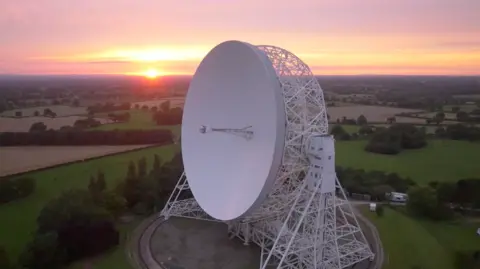
The funding withdrawal is part of a prioritization process by UKRI, which aims to focus on areas with greater potential for creating new industries and jobs. However, critics argue that this move threatens the UK's position in radio astronomy, a field pioneered at Jodrell Bank. Prof Michael Kramer from the Max Planck Institute criticized the decision as "scientifically, technologically as well as economically short-sighted," especially as other countries invest in their observatories for a new era in radio astronomy.
“The UK Research and Innovation agency's decision to withdraw £2.8 million in funding threatens to halt all scientific investigations by April 1, 2028. Prof Simon Garrington emphasized the observatory's role as a national capability for nearly 70 years, warning that the closure would hinder the UK's position in radio astronomy.”
 The Guardian
 BBC
BBC



