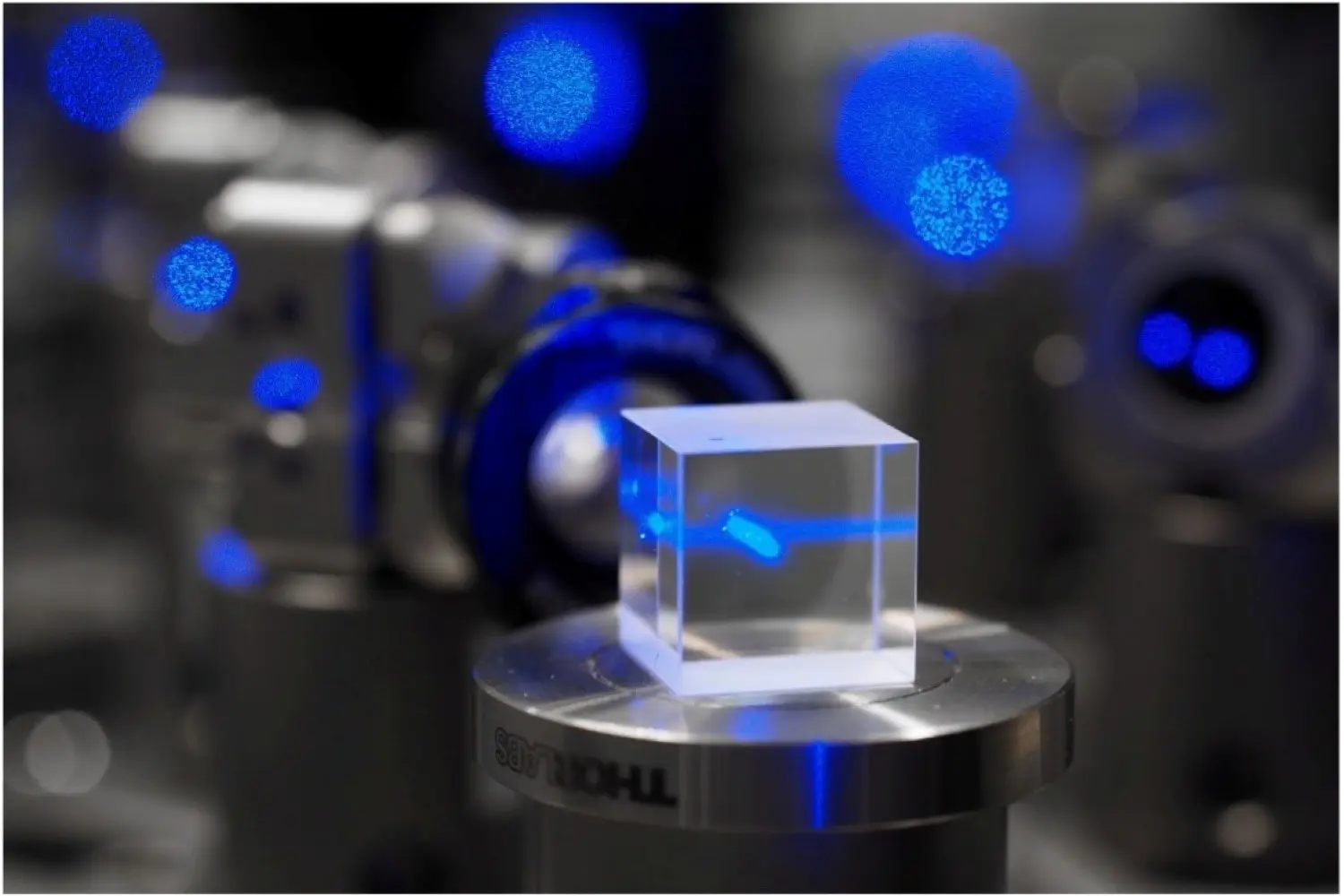
- UKRI has funded the AION project to build the first large-scale atom interferometer, marking a significant advancement in quantum sensing technology.
- The funding supports a breakthrough quantum experiment that aims to advance the quest for dark matter and gravitational waves.
- A prototype differential atom interferometer has been developed, demonstrating the ability to cancel out experimental noise and reveal faint signals.
- The AION collaboration aims to scale differential sensing techniques to kilometer-long baselines, which is crucial for detecting gravitational waves and dark matter interactions.
- The experimental confirmation that differential atom interferometry can suppress laser phase noise addresses a crucial hurdle in designing next-generation quantum detectors.
The UKRI has announced funding for the Atom Interferometer Observatory and Network (AION), which aims to construct the first large-scale atom interferometer. This initiative is pivotal in the quest to explore dark matter and gravitational waves, expanding our understanding of the universe.124
The AION project, detailed in a study published in Nature, represents a significant leap in quantum technology. It seeks to develop a 10-metre baseline detector, AION-10, at the Beecroft building, which will enhance the detection capabilities for ultralight dark matter and gravitational waves in frequency ranges not currently accessible by existing observatories.
Professor Oliver Buchmueller, Principal Investigator of the AION collaboration at Imperial College London, emphasized the importance of this work, stating, "This breakthrough is a cornerstone of the Atom Interferometer Observatory and Network (AION) collaboration, a multidisciplinary initiative that connects experts from UK institutions."
Researchers have successfully validated a technique for cancelling noise in large-scale quantum sensors, overcoming a significant hurdle in detecting elusive cosmic phenomena. The experimental breakthrough demonstrates that differential atom interferometry can effectively cancel out noise, revealing faint signals that would otherwise be lost in chaotic interference.
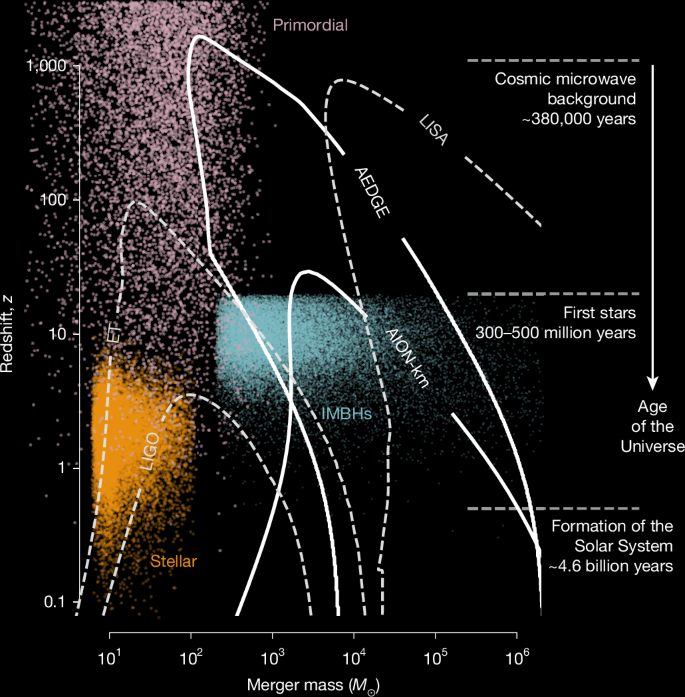
This advancement is crucial for future quantum sensors, which promise to open new windows onto astrophysical phenomena, capturing gravitational waves in previously inaccessible frequency bands. The successful integration of clock transition techniques with atom interferometry marks an important milestone on the path towards their joint implementation in quantum sensors with applications in fundamental physics.
The results imply laser noise cancellation consistent with full common-mode rejection, showcasing the potential of AION to uncover minute perturbations that could provide new insights into the fundamental fabric of the Universe.
“UKRI has announced funding for the AION collaboration to construct the first large-scale atom interferometer. This initiative aims to enhance the detection of dark matter and gravitational waves, marking a significant advancement in fundamental physics.”
 Quantum Zeitgeist
 Bioengineer.org
 Nature