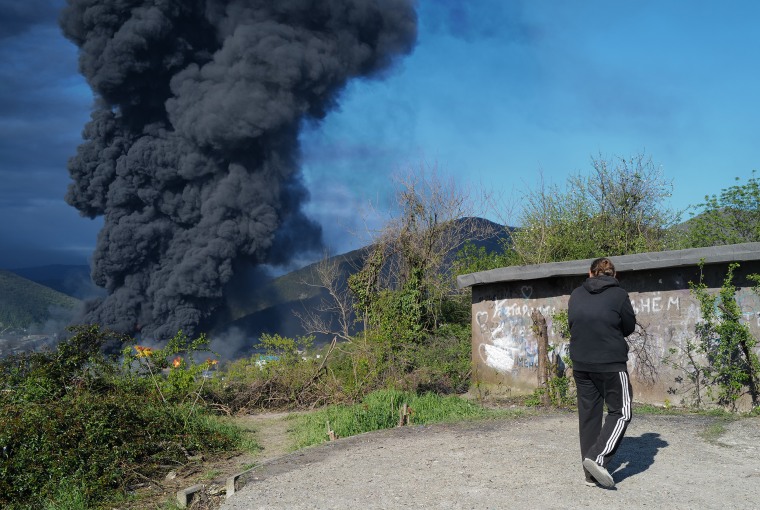
Ukrainian drone strikes have targeted the Tuapse Oil Refinery for the fourth time since April 1, igniting a substantial environmental crisis that local authorities are struggling to manage.
As toxic black smoke fills the air and oil permeates the coast, the community grapples with profound impacts on its economy and environment.
Local officials report they've cleared over 13,300 cubic meters of fuel oil and contaminated soil, though residents complain that the government's response is inadequate.
Svetlana, a local resident, emphasized,
“many people are in a depressed state”.
With a warning not to open windows or leave homes, Tuapse's scenic reputation deteriorates under the weight of the environmental disaster. Activist Yevgeniy Vitishko labeled the incident as potentially the
“biggest environmental catastrophe in the region in quite some time.” The Ukrainian military's strategy aims to cripple Russian oil production amidst soaring energy prices, contributing to an average refinery output drop to
4.69 million barrels a day, the lowest figure since December 2009. Volunteer groups are attempting to mitigate the damage, as local volunteers take on cleanup operations, sharing images of efforts to rescue affected wildlife and cleanup beaches.
As the situation in Tuapse unfolds, both economic and ecological futures hang in the balance.
Sources: 

Ukrainian drone strikes hit the Russian Black Sea port of Tuapse for the fourth time in 16 days, exacerbating an environmental disaster with black smoke and oil leaks. Local officials reported a major firefighting operation, while residents faced deteriorating conditions and concerns over the town's ecology and economy.