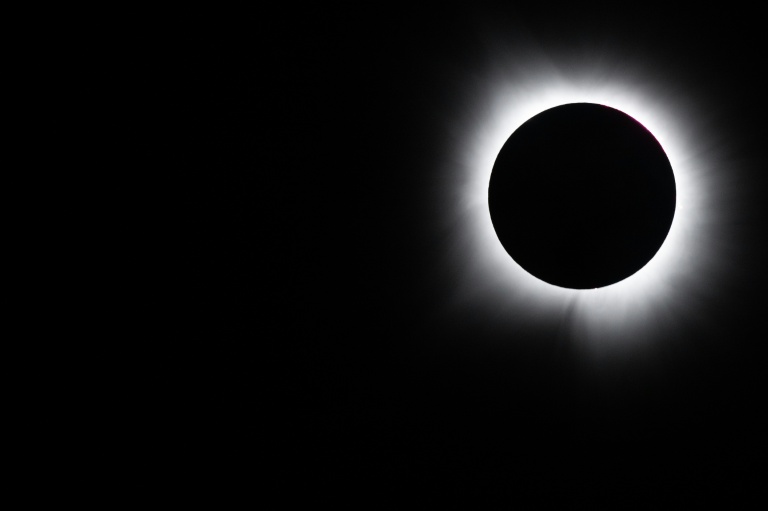
- The eclipse's path will start in Siberia in Russia, travel to Alaska in the US around 07:30 local time (16:30 BST), then sweep round to Greenland and through Europe.
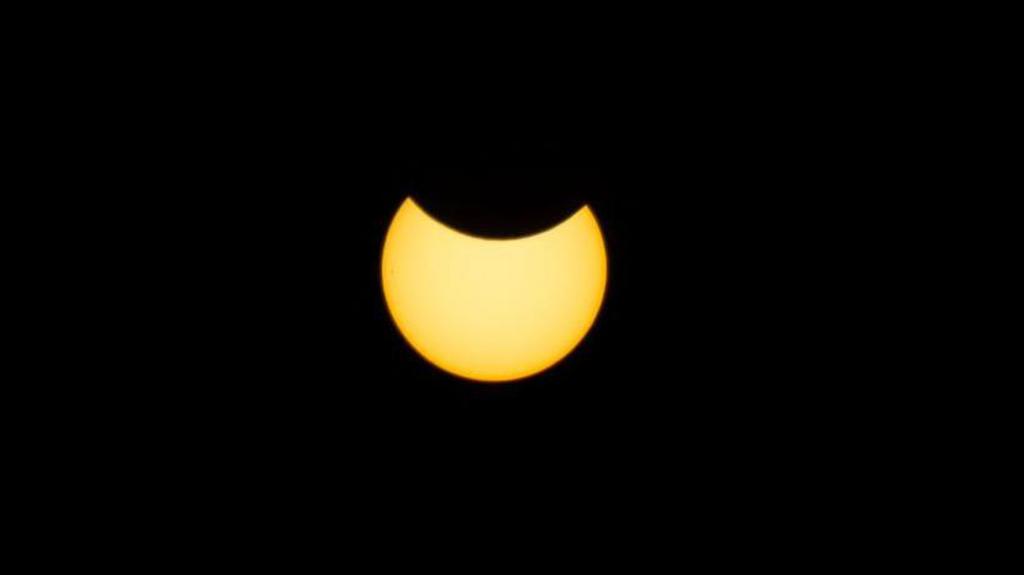
- In the UK, the eclipse will begin shortly after 18:00 BST and peak between 19:02 BST and 19:16 BST, with the further north you are, the earlier the maximum.
- A total eclipse will only be visible in a few places, including Reykjavik, Iceland, and León, Zaragoza, and Valencia in Spain.
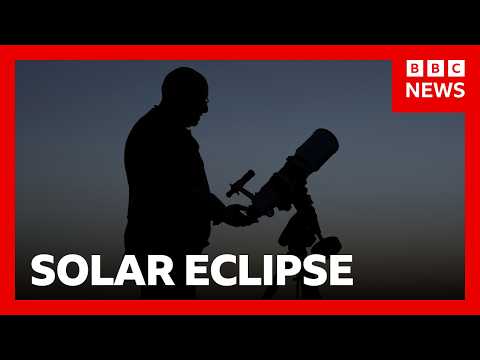
- Experts warn that the only time you can look without special glasses is during a total eclipse, which won't happen in the UK, and you cannot use binoculars, telescopes, or camera viewfinders even with eclipse glasses.
- If you don't have solar glasses, you can use an indirect viewing method like a pinhole camera, and experts warn that online supplies may be ineffective knock-offs.
- The eclipse will be the most dramatic visible from the UK since 1999, and the first total eclipse visible from continental Europe since then.
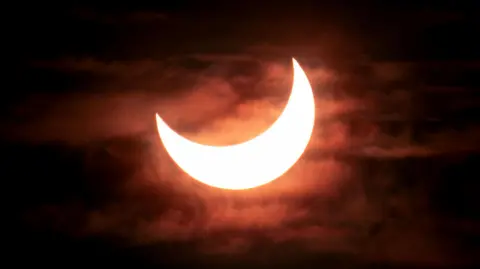
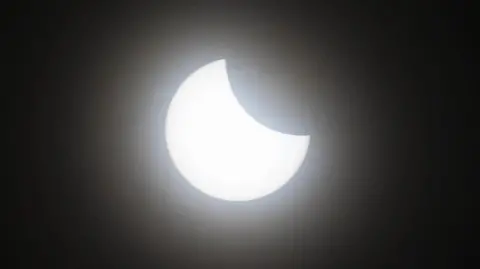
The UK and Europe are gearing up for a once-in-a-generation solar eclipse on Wednesday, with over 90% of the Sun obscured across the UK.1
Experts note that this will be the most significant eclipse visible from the UK since 1999, with the total eclipse only observable in parts of Iceland and Spain.346
The eclipse's path will begin in Siberia, travel to Alaska, and then sweep through Greenland and western Europe. In the UK, viewers can expect to see the eclipse starting shortly after 18:00 BST, peaking between 19:02 BST and 19:16 BST, depending on their location.2
A total eclipse will be visible in select locations, including Reykjavik, Iceland at 17:48 local time and León, Spain at 20:28 local time.
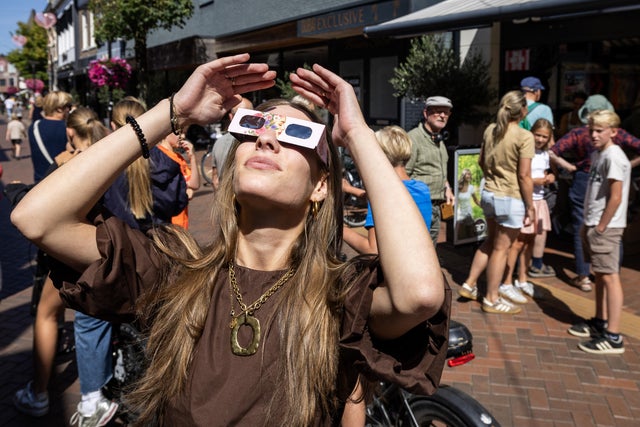
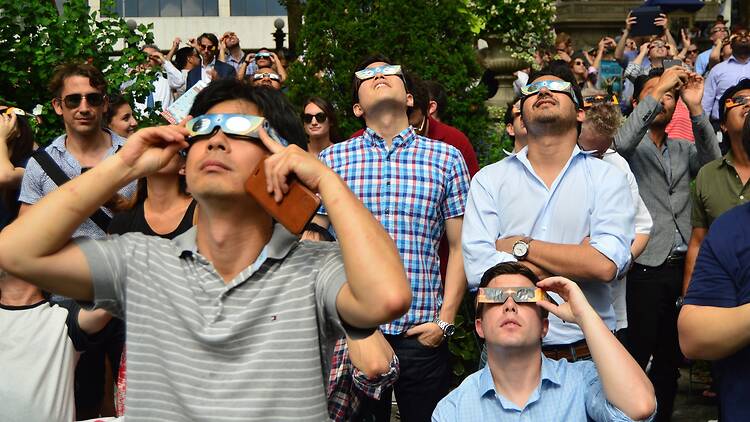
Experts have cautioned eclipse enthusiasts to avoid looking directly at the Sun without proper protection, as even brief exposure can cause lasting damage. “Looking directly at the Sun can severely damage your eyes,” they warn, advising the use of special eclipse glasses instead of regular sunglasses.
Additionally, they caution against using binoculars or telescopes while wearing eclipse glasses, as the magnifying effect can nullify their protection. For those without solar glasses, indirect viewing methods like a pinhole camera are recommended.5
As excitement builds for this rare celestial event, experts emphasize the importance of safety to ensure a memorable experience.
“The eclipse's path begins in Siberia, crosses Alaska around 16:30 BST, then sweeps through Greenland and Europe. In the UK, it peaks between 19:02 and 19:16 BST, with northern areas seeing maximum earlier; experts warn against using binoculars or telescopes even with eclipse glasses.”

 BBC
BBC