- The United Arab Emirates said that it intercepted an Iranian drone over its waters Monday, an attack that comes after the United States and Iran exchanged fire over the weekend for the first time in a month.
- The UAE Defense Ministry stated that it "dealt with" an Iranian drone that was detected over its waters approaching from Iran.
- The UAE Foreign Ministry described the incident as a 'dangerous escalation' and a blatant violation of the UAE's sovereignty.
- In response to the US attack, Iran's Foreign Ministry declared that it would respond decisively to any military aggression.
- Two weeks ago, the UAE suspended all trade with Iran after saying it had come under renewed fire from Iran with two missiles fired at shipping traffic in the Persian Gulf.
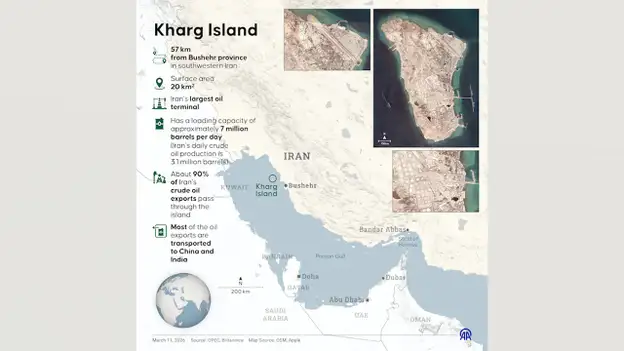
- On Sunday, U.S. Central Command struck Iranian launchers after observing forces with Iran's Revolutionary Guard Corps preparing to launch rockets with sea mines into the Strait of Hormuz.
- Iranian officials reported that two people were killed and several others wounded in the U.S. attack on Larak Island in the Strait of Hormuz.
- In retaliation, Iran launched missiles at U.S. sites in Jordan, which were intercepted.
The United Arab Emirates intercepted an Iranian drone over its waters on Monday, marking a significant escalation in regional tensions following U.S. airstrikes on Iranian rocket launchers. The UAE's Foreign Ministry condemned the drone incident as a 'blatant violation' of its sovereignty and a direct threat to its citizens.1
The UAE Defense Ministry confirmed it had 'dealt with' the drone, which was detected approaching from Iran. This incident follows a weekend of violence where the U.S. struck Iranian positions after observing preparations for rocket launches by Iran's Revolutionary Guard Corps.2
Iran's Foreign Ministry responded, stating it would 'not hesitate to exercise the inherent right of legitimate defense' and would respond decisively to any military aggression. Iranian officials reported casualties from the U.S. strikes, with two killed and several wounded on Larak Island.4
In a broader context, Anwar Gargash, a diplomatic adviser to the UAE's president, emphasized the need for a political solution to restore normal navigation in the Strait of Hormuz, criticizing previous agreements as ineffective. Iranian President Masoud Pezeshkian, while advocating for negotiation, reiterated that Iran would respond decisively to aggressors.
The situation remains tense as both nations navigate the complexities of military engagement and diplomatic relations.
“The UAE Defense Ministry denied Iran's claim that Al Minhad Air Base in Dubai was targeted, calling it false. Iran's Foreign Ministry said it would 'not hesitate to exercise the inherent right of legitimate defense' and respond decisively to any military aggression.”



 AP News