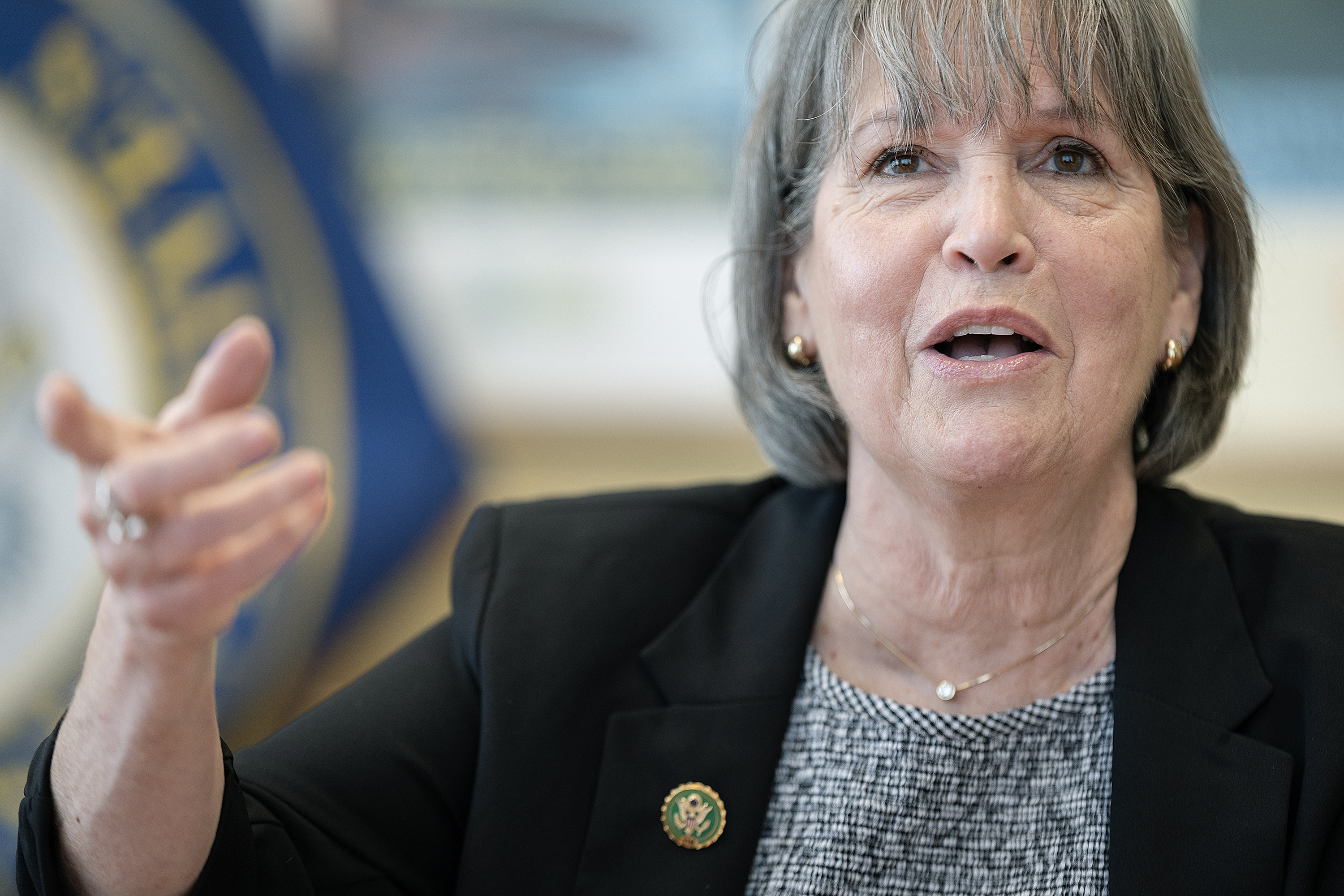
- Mary Peltola won two elections in 2022 to become Alaska's sole House member, first in a special election after the death of Republican Rep. Don Young, and then in the general election.
- In 2024, Peltola lost her House seat to Republican Nicholas Begich by 2.4 percentage points.
- A March poll by Alaska Survey Research showed both Sullivan and Peltola leading the remaining candidates by significant margins.
- In August, Peltola voted against confirming Trump's attorney general nominee, Todd Blanche.
- On August 18, Alaska voters participated in nonpartisan primaries, with four candidates advancing to the general election.
- Recent polls indicate Peltola and Sullivan are neck-and-neck, with Peltola leading by 1.6 points in one poll, Sullivan ahead by 2 points in another, and Peltola leading by 7 points in a third.
- The Alaska Federation of Natives has not yet endorsed a candidate for the 2026 Senate race, with a decision expected after its October convention.
- Peltola is the first Alaska Native member of Congress and the first woman representing the state in the House.
- If elected, Peltola would be the first Alaska Native to serve in the Senate.
- Sullivan has been a reliable Republican vote since winning election in 2014, defeating Democratic former Senator Mark Begich.
- Alaska's political landscape is unique, with independents making up two-thirds of registered voters and Republicans about 23%.
Mary Peltola is challenging incumbent Republican Dan Sullivan in Alaska's Senate race, with polls showing her leading in some instances. Peltola, who previously won two elections for the House, is seen as a unique candidate due to her pro-oil stance, appealing to Alaskan voters' economic interests.123468910
Peltola's campaign slogan, “fish, family, freedom,” resonates with local communities, particularly regarding fishing and energy issues. Political analysts note that her support for oil and gas development sets her apart from typical Democrats, making her a viable contender in a state that traditionally leans Republican.
Despite the challenges, Peltola has outraised Sullivan, bringing in $18.5 million compared to his $11.7 million. Major spending from both parties indicates the race's significance, with the Republican-aligned Senate Leadership Fund investing $17 million to support Sullivan, while the Democrats' Senate Majority PAC has committed $12 million to Peltola.
Political experts suggest that while Alaska typically votes Republican, Peltola's unique approach may resonate with voters. “The reason Mary Peltola has a chance is not because, necessarily, Democrats are surging in Alaska,” said election law attorney Scott Kendall. “It’s that Mary Peltola, you know, she’s very pro-oil and gas development.” As the race heats up, both candidates will need to address the pressing economic concerns of Alaskans, particularly rising energy costs.
With the primary elections approaching, the presence of another Dan Sullivan on the ballot adds complexity to the race, as the GOP attempts to clarify voter confusion. “The choice is clear, and Alaskans made their choice about Mary Peltola two years ago when they fired her,” said Sullivan's campaign spokesperson, Nate Adams.
“Peltola, a Yup'ik Alaska Native, would be the first Alaska Native in the Senate if she wins, and her campaign tacks to the center by supporting oil and gas drilling. Polls show a tight race, with one giving her a 7-point lead, while another puts Sullivan 2 points ahead.”
 The Guardian