- Turkey's stock market scandal has led to the liquidation of 131 investment funds, impacting nearly 500,000 investors and over $20 billion in assets, as ordered by the Capital Markets Board (SPK) in mid-September 2026.
- Former minister Fatma Betül Sayan Kaya resigned from her position in the AKP in September 2026 following allegations of large share sales prior to the market collapse.
- The Kaya couple was first questioned as suspects on 7 October regarding their share transactions with Özata Denizcilik.
- Presidential decrees in late October resulted in the removal of SPK chairman İbrahim Ömer Gönül and his successor Mahmut Sütçü.
- On 31 October, police detained Korkmaz Enes Ergun, the general manager of Borsa İstanbul, amid the ongoing investigation.
- As of 3 November, Justice Minister Akın Gürlek reported that 433 suspects were involved in the investigation, with 112 jailed pending trial and 186 under judicial supervision.
- US lawsuits may emerge as investors consider legal action over suspected manipulation involving Turkish companies linked to the United States.
- The investigation has revealed a criminal network allegedly involving bribery and manipulation of shares, extending into the upper echelons of Turkey's financial bureaucracy.
- Opposition figures have accused the Erdogan government of shielding beneficiaries connected to the ruling party, raising concerns about political influence in the investigation.
- The scandal has prompted renewed scrutiny of President Erdogan's family, particularly his nephew, whose business interests intersect with implicated financial groups.
Turkey's stock market scandal, which has implicated numerous high-profile figures, is under investigation for alleged market manipulation and corruption. Prosecutors are examining 433 suspects, including former cabinet members and financial regulators, amid claims of bribery and regulatory circumvention.136
The scandal has led to the liquidation of 131 investment funds and affected nearly 500,000 investors, with losses exceeding $20 billion. Allegations suggest that funds purchased concentrated positions in illiquid stocks, inflating their net asset values and returns. Justice Minister Akın Gürlek stated that the investigation has uncovered a criminal network within the financial bureaucracy, with bribes allegedly used to manipulate market liquidity.8
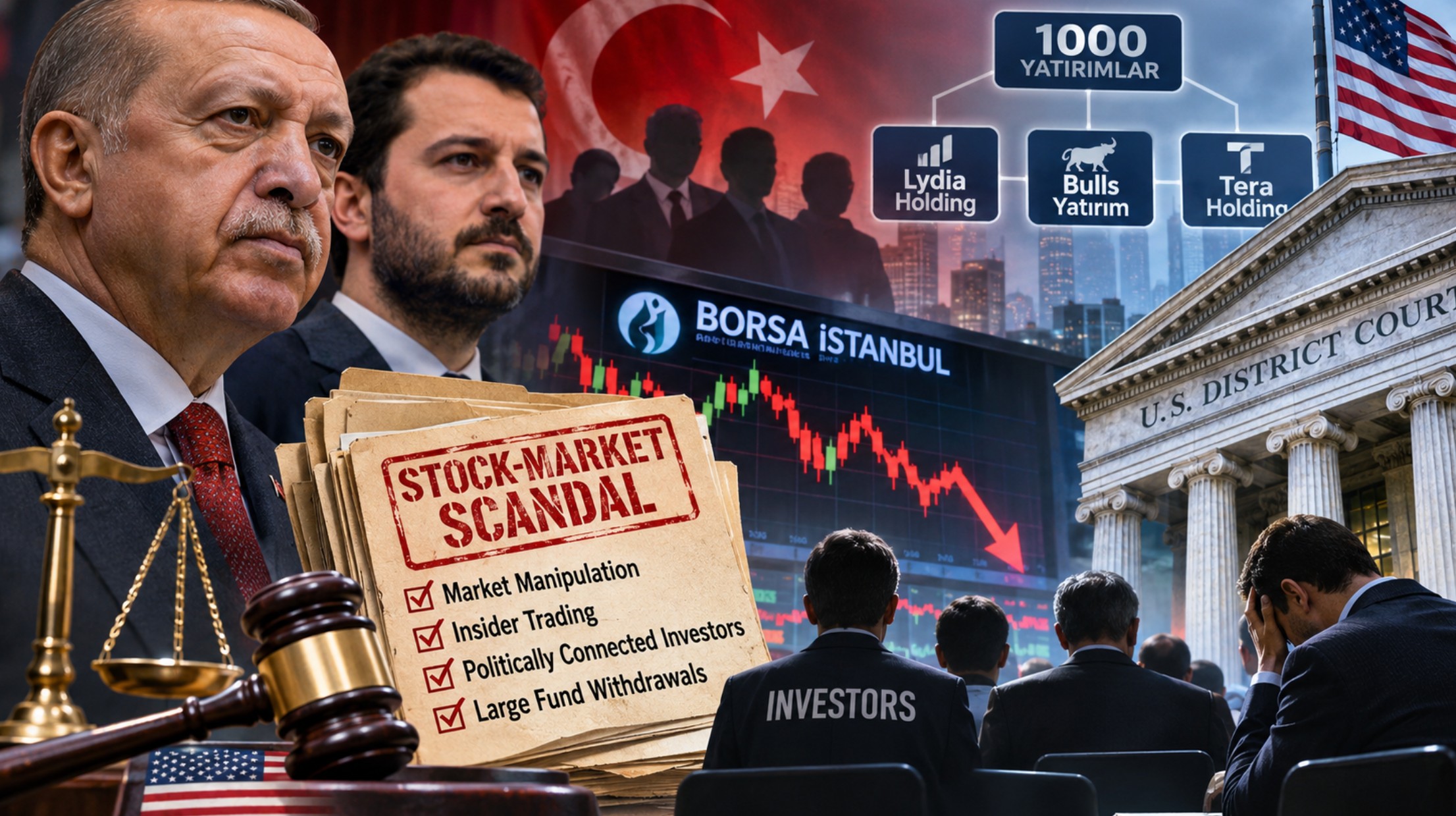
Former Family Minister Fatma Betül Sayan Kaya and her husband are among those questioned, with accusations of profiting from share transactions before the market collapse. They reportedly returned 1.86 billion lira through a voluntary repayment mechanism. The investigation has also scrutinized the business dealings of President Erdogan's nephew, Üsame Erdogan, raising concerns about political influence in the ongoing inquiry.2
As the scandal unfolds, U.S. investors are considering legal action, potentially leading to cases in American courts. The U.S. State Department has indicated that foreign heads of state enjoy immunity, complicating potential legal proceedings against Erdogan's administration.
“The investigation has ensnared nearly 500,000 investors and $20 billion in assets, with 131 funds liquidated and top officials, including former Borsa İstanbul head Korkmaz Enes Ergun, arrested. A US precedent like the Hepsiburada class-action settlement shows Turkish entities can face American litigation, though current transactions are mostly domestic.”