- Tumbleweed has raised €6.9 million in the country's largest-ever spacetech seed round, just four months after launching Austria's first commercial satellite.
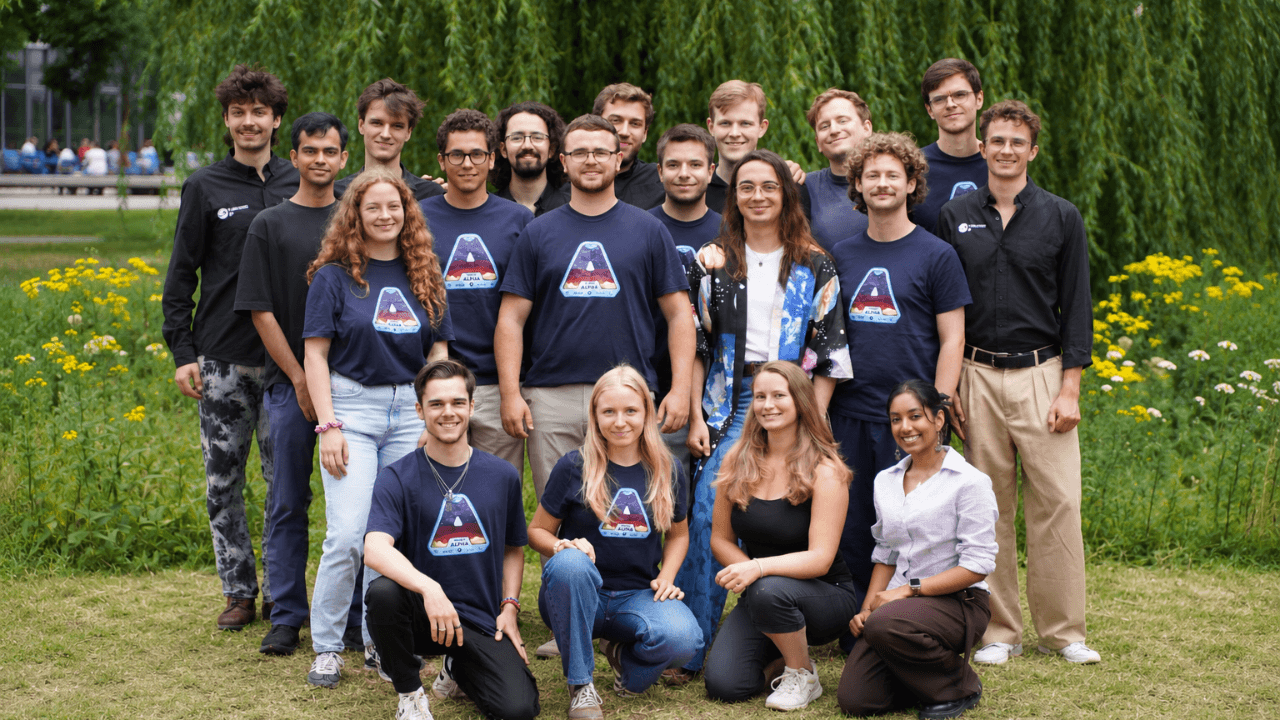
- Founded in 2024, Tumbleweed operates across Vienna and Delft, developing modular laboratory Pods hosted aboard its free-flying Oasis orbital platform.
- Oasis Alpha, built in nine months, launched aboard SpaceX Transporter-17 on 7 July 2026, carrying experiments for four customers, all first-time users of space.
- The mission was fully booked a year before launch and paid for upfront.
- The funding will support three missions in 2027 with more than 10 customers, and Oasis Beta in 2028 with re-entry capability.
- Tumbleweed's pricing covers the entire process, with a €15,000 offering that includes a Pod, development support, launch services, and operational support.
- Tumbleweed reports a customer conversion rate of approximately 40 percent, with around two-thirds of its customers coming through inbound enquiries.
- More than a third of Tumbleweed's 25 employees have invested their own money in the business, contributing a combined six-figure sum across its funding rounds.


Tumbleweed, founded in 2024, has raised €6.9 million in Austria's largest spacetech seed round, led by PactVC and supported by various investors. This funding will facilitate three missions in 2027, aiming to attract over ten customers from medical and agritech sectors.1256
The company's inaugural mission, Oasis Alpha, launched on July 7, 2026, aboard SpaceX Transporter-17, successfully tested its services with four first-time space users. “What we've realised is that the bigger challenge isn't necessarily the vehicle itself. It's the entire process of accessing microgravity,” said CEO Julian Rothenbuchner.3
Tumbleweed's pricing model starts at €15,000, covering the entire process from development to operational support, allowing customers to access their experiments remotely. The company boasts a 40 percent customer conversion rate, with two-thirds of clients coming through inbound inquiries.78

Looking ahead, Tumbleweed plans to introduce Oasis Beta in 2028, featuring re-entry capabilities for sample retrieval. The startup's innovative approach enables experiments to be conducted in microgravity at a fraction of the cost and time compared to traditional methods, with customers expected to reach orbit five times faster and at a tenth of the cost compared to the International Space Station.
The new funding will also support the development of Tumbleweed's own re-entry capsule, enhancing its service offerings for future missions.
In research, microgravity conditions can accelerate the study of diseases like Alzheimer’s and Parkinson’s, while also improving semiconductor efficiency significantly.
“The round was led by Pact, with participation from Vanagon Ventures, Prototype Capital, and EWOR, and more than a third of Tumbleweed's 25 employees invested their own money. The company's Oasis Alpha mission, launched on SpaceX Transporter-17, carried experiments for four first-time space users, with missions starting at €15,000.”
Tech.euwww.trendingtopics.eu