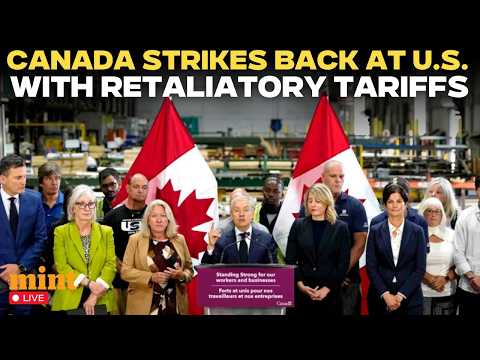
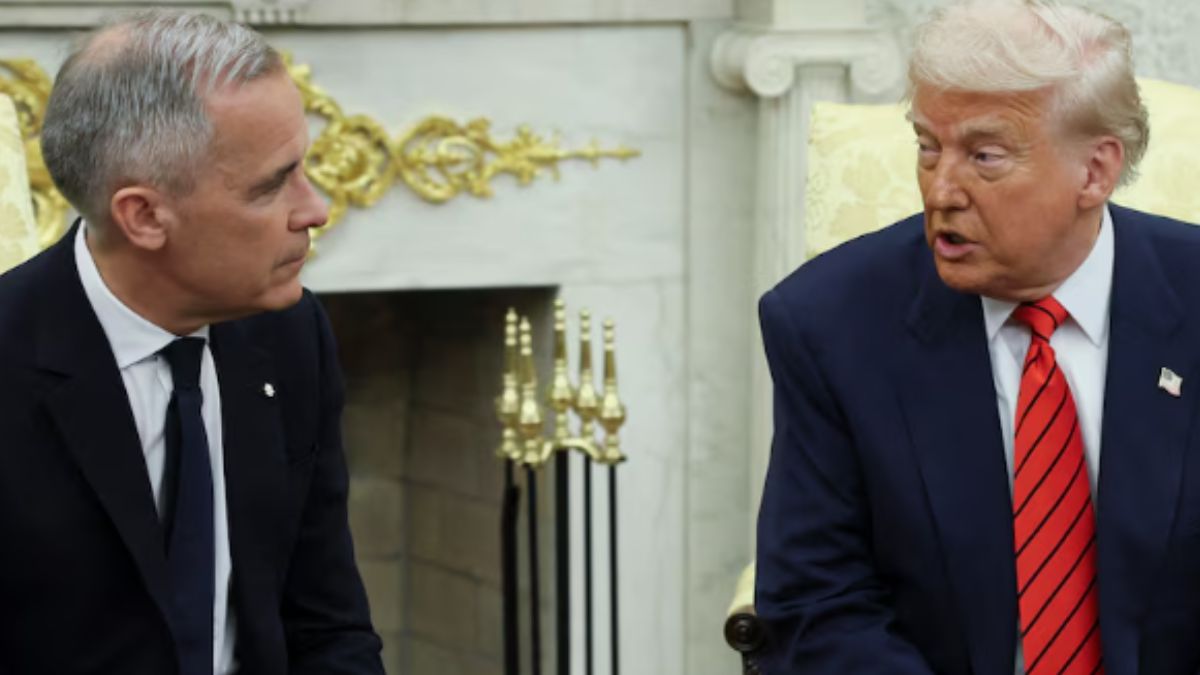
- Trump threatened new tariffs on Canada's auto industry, which is deeply integrated with the American counterpart, and also joked about renaming Lake Ontario 'Lake America'.
- Trump's feud with Canada began after the 2024 election, with him calling Trudeau 'governor' and suggesting Canada as the 51st state, and he later imposed historically high 25 percent across-the-board tariffs.
- Trump postponed tariff implementation after claiming a deal, as reported by the Washington Post, which found no policy paper or clear backer behind the Canadian tariffs.
- No political or business coalition supports Trump's trade fight, and even populist pundit Michael Lind titled his recent piece 'The madness of Trump’s Canada trade war.'
- The United Auto Workers opposed the proposed auto tariffs, and American voters disapprove of Trump’s tariffs on Canadian-made goods.
- Republicans are concerned about Senate races in border states, and a Democratic pollster suggests Senate Majority Leader John Thune would be angry at Trump.
- Trade economist Kim Clausing and economic historian Phil Magness attribute the tariffs to Trump’s idiosyncrasies and power motives, not a well-thought strategy.
- US demands included control over Canada’s tariff rates with other countries and the ability to reimpose American tariffs at will, and Trump menacingly said 'Canada lives because of the United States.'
President Trump's proposed tariffs on Canada's auto industry are facing significant backlash, with critics warning of potential economic fallout on both sides of the border.
The United Auto Workers, previously supportive of some tariffs, have now opposed the new auto tariffs, highlighting a shift in sentiment.910
American voters are increasingly discontent with Trump's trade policies, as the escalation threatens to be the most damaging yet.
Republicans are particularly concerned, as key Senate races are in states bordering Canada, where any tariff-related price spikes could impact affordability.
“If I were [Senate Majority Leader] John Thune, I’d be very pissed at Trump right now,” said Adam Carlson, a Democratic pollster.
Critics, including trade economist Kim Clausing, argue that Trump's strategy lacks coherence, stating, “This has never been a particularly well-thought strategy.”1314
Phil Magness, an economic historian, noted, “I really do think it is Trump’s idiosyncrasies that caused him to settle on Canada.”
Trump's recent comments, including joking about renaming Lake Ontario to 'Lake America,' further illustrate the tensions in U.S.-Canada relations.
The tariffs, initially imposed shortly after Trump took office, were criticized for lacking a clear policy rationale, with no substantial backing from industry or intellectual sources.
As the situation evolves, the implications for both economies remain uncertain.
“The United Auto Workers opposed the proposed auto tariffs, and American voters disapprove of Trump's tariffs on Canadian-made goods. Even populist pundit Michael Lind titled his recent piece 'The madness of Trump's Canada trade war,' and trade economist Kim Clausing says the strategy is about power, not well-thought policy.”