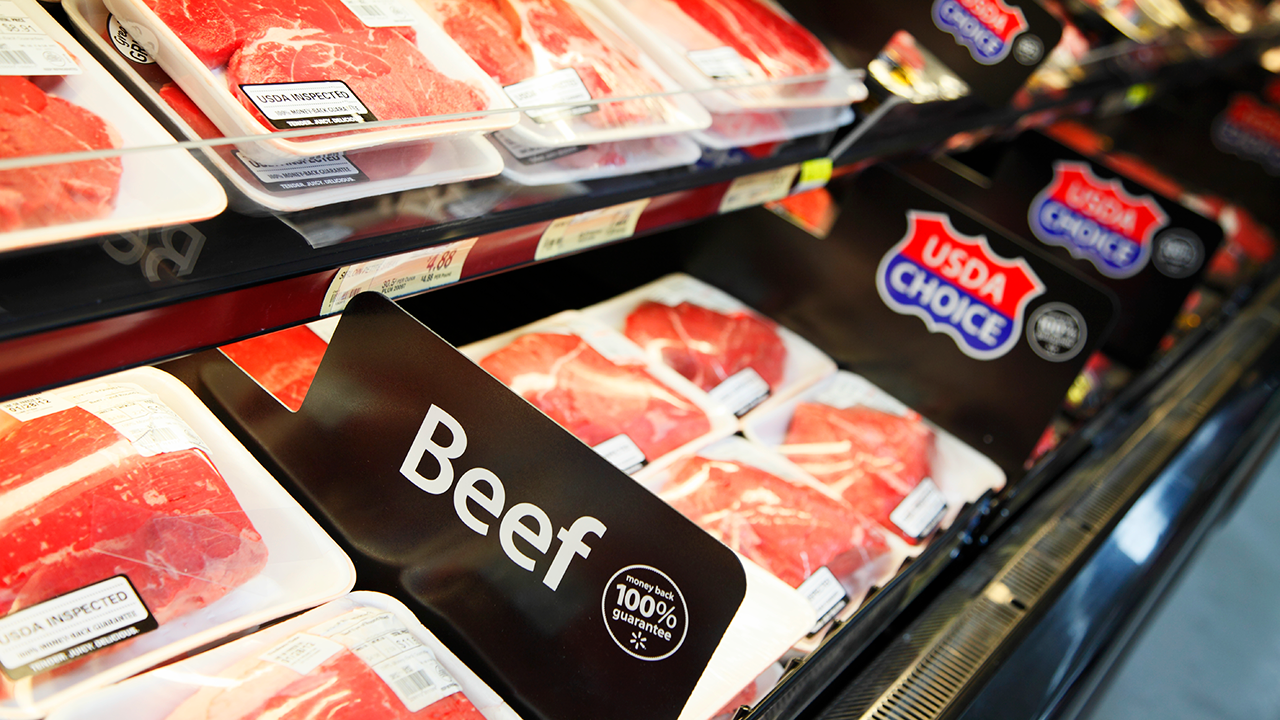
- Last Friday, President Trump announced on Truth Social a plan to allow up to 300,000 pounds of foreign beef over the next 90 days to be sold at 25 percent less than current market prices.
- The White House's abrupt decision last week to ease tariffs on 300,000 metric tons — more than 660 million pounds — of foreign beef imports has infuriated American cattle ranchers and congressional Republicans alike.
- When Tim Brunner was at an auction barn earlier this week, he was surprised to see decent cows selling several hundred dollars cheaper than they were just a few weeks ago.
- Nearly 30,000 pounds of raw beef imported from Argentina and sold in Texas and Florida is under recall, according to the U.S. Department of Agriculture, adding to a string of food recalls this summer.
- On Monday, Democratic U.S. Senate candidate James Talarico released a statement criticizing the plan, saying, “D.C. politicians are flooding the market with foreign beef and making it harder for them to get by. This is a political stunt that will only boost foreign competitors and make life harder for Texas cattlemen.”
- The recall notice points to missed import re-inspections as the cause, but the USDA’s Food Safety and Inspection Service classified the beef as a Class I health hazard, the agency’s highest risk category.
- Detwiler commented, “It’s not like a paperwork thing; you know someone made the decision. This does not have to be reinspected at the border.”
- Detwiler expressed curiosity about the classification, saying, “I find this curious because it's kind of like saying, hey, this is a paperwork problem; this is a bureaucratic problem. We forgot to do this, we missed this inspection, and we have no indication that there’s any problem, but we’re going to give it the highest classification of risk.”
- Detwiler noted the political timing: “This is where we get political, 24-48 hours about the administration approving meat coming from Argentina at a time that there’s a major recall of some 30,000 pounds of meat because of failure to inspect it.”
- Detwiler remarked, “I don’t want to say it’s the imagination of the internet. What I want to say is it's amazing how we have all these kinds of conflicting pieces of information coming together right now at a time where there is this recall of the meat from Argentina.”
President Trump’s recent tariff easing on foreign beef imports has sparked outrage among American cattle ranchers. The decision allows up to 300,000 metric tons of beef to be sold at a 25% discount, which ranchers argue undermines their livelihoods.2
The USDA has also recalled nearly 30,000 pounds of Argentine beef sold in Texas and Florida due to missed inspections, classified as a Class I health hazard, the highest risk category.46
Critics, including Democratic U.S. Senate candidate James Talarico, have condemned the tariff easing as a political stunt that benefits foreign competitors while harming local ranchers. Talarico stated, “D.C. politicians are flooding the market with foreign beef and making it harder for them to get by.”5

The timing of the tariff decision has raised eyebrows, especially as the USDA faces scrutiny over the beef recall. Detwiler, a food safety expert, remarked, “This does not have to be reinspected at the border,” questioning the bureaucratic handling of the situation. Ranchers are already feeling the impact, with reports of cattle prices dropping significantly at auctions.
As the situation unfolds, the implications for both the beef market and food safety remain a pressing concern for consumers and ranchers alike.
“The White House's decision to ease tariffs on 300,000 metric tons of foreign beef has sparked backlash from ranchers and Republicans, with Tim Brunner noting cows selling several hundred dollars cheaper at auction. Meanwhile, the USDA classified the recalled Argentine beef as a Class I health hazard, the highest risk category, due to missed import re-inspections.”
 KEYE
KEYE