- Trump has announced a phased tariff on imported generic drugs, starting at 0% for two years, then increasing to 100% for one year, and finally 200% thereafter, effective August 1st, 2026.
- This tariff structure is designed to encourage international drug manufacturers to invest in domestic American infrastructure, with penalties for those who do not comply.
- India is often referred to as the 'Pharmacy of the World' due to its significant role in supplying generic medicines globally, accounting for nearly 40% of the US market by volume.
- In financial year 2024-2025, India exported USD 9.7 billion worth of pharmaceuticals to the US, which is 38% of its total global pharma exports.
- Indian generic medicines are widely prescribed for various health conditions, including hypertension, depression, and cancer.
- India's pharmaceutical industry has the highest number of US FDA-approved manufacturing plants outside the US, contributing significantly to the US healthcare system.
President Trump has introduced a phased tariff plan on imported generic drugs, effective August 1, 2026. The tariffs will start at 0% for two years, then rise to 100% for one year, and finally reach 200%. This initiative aims to reshore pharmaceutical production to the U.S., penalizing companies that do not establish manufacturing plants domestically.12
India, known as the 'Pharmacy of the World', supplies nearly 40% of the generic drugs consumed in the U.S. by volume. In the fiscal year 2024-2025, India exported USD 9.7 billion worth of pharmaceuticals to the U.S., accounting for 38% of its total global pharma exports of USD 25.8 billion, according to a Global Trade Research Initiative report. The move is expected to significantly impact India's pharmaceutical industry, which holds over 3,000 U.S. FDA-approved manufacturing plants.57
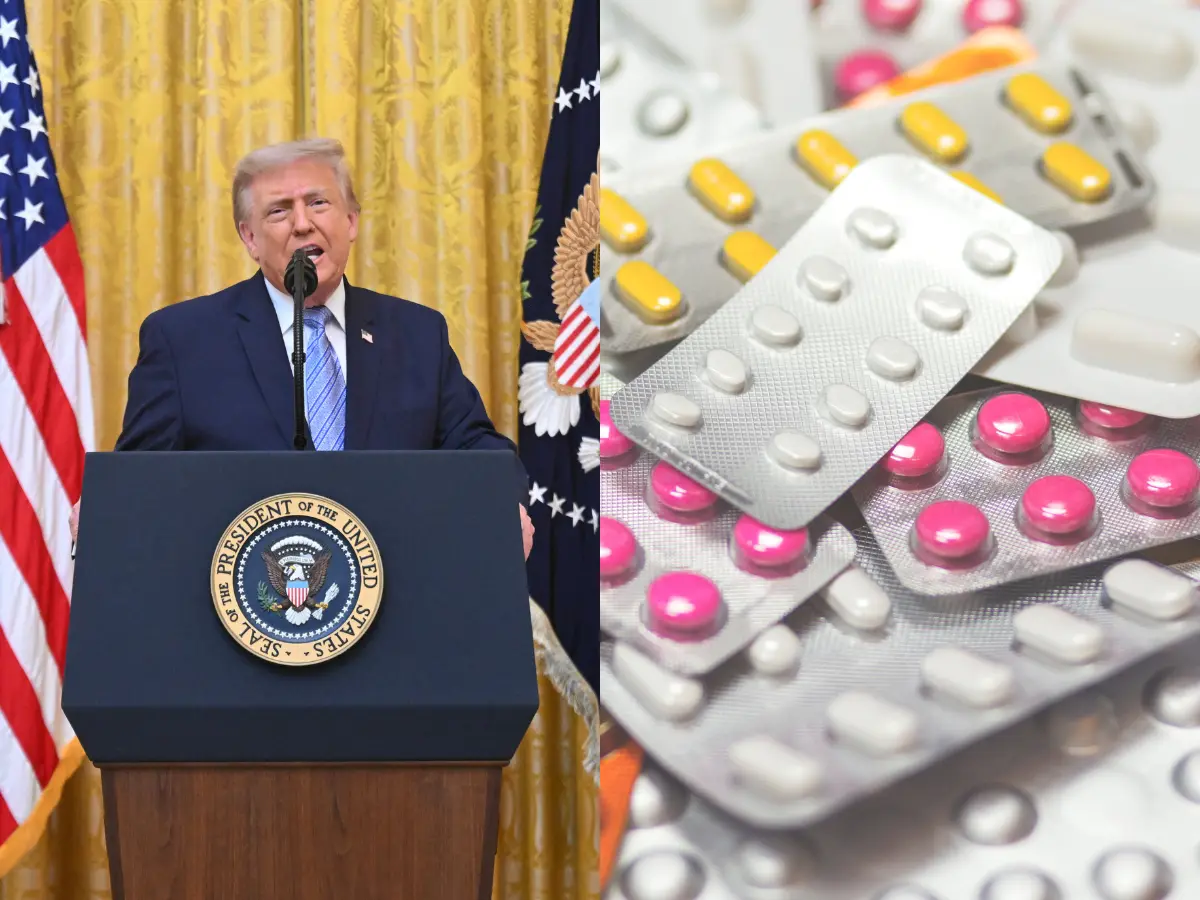
Trump's announcement, made on his Truth Social platform, emphasizes the urgency for international drug manufacturers to invest in U.S. infrastructure. He stated, "This is done in order to RESHORE Generic Pharmaceutical Production into America, with a penalty to those Companies that decide not to build Plant and Equipment within the stated period of time given to them." The Indian pharmaceutical sector has been crucial in providing affordable medications, saving the U.S. healthcare system USD 219 billion in 2022 alone.
Union Health Secretary Punya Salila Srivastava noted, "The contribution of the Indian pharmaceutical industry is evidenced by the fact that India has the highest number of US FDA-approved pharmaceutical plants outside of the United States."
“India supplies nearly 40% of all generic drugs consumed in the US by volume, with pharmaceutical exports to the US totaling $9.7 billion in FY2024–25. Trump's plan offers manufacturers a two-year zero-tariff window to build US plants before duties rise to 100% then 200%.”




