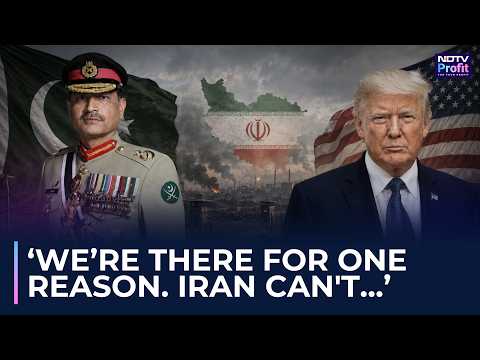
- US President Donald Trump spoke with Pakistan's army chief Asim Munir last week ahead of Munir's trip to Tehran on Monday, according to three Pakistani sources, with one saying the main U.S. request was to use Pakistan's influence to bring Iran back to negotiations.
- Munir arrived in Tehran on Monday accompanied by Pakistan's Interior Minister Mohsin Naqvi, Pakistan's military confirmed, saying it was "part of Pakistan’s efforts to promote regional peace and stability."
- Trump last week warned of economic consequences against any country that provided "any type of lifeline to Iran" as he seeks to isolate the Islamic Republic.
- Last week's call, which has not been previously reported, was initiated by Trump, according to two Pakistani sources.
- Pakistan, which has played a key mediating role between the U.S. and Iran this year, has remained a trading partner of Iran throughout the recent fighting.
- Pakistan's earlier mediation efforts between the U.S. and Iran resulted in an interim peace agreement signed in June. A third Pakistani source said about the U.S. and Iran: "There is a trust deficit on both sides," adding that Munir's aim was to mitigate the lack of mutual trust on Monday.
- Munir was expected to meet with people close to Iran's Supreme Leader Ayatollah Mojtaba Khamenei on Monday, one Pakistani source said.
- Another Pakistani government source said while U.S.-Iran tensions were a focus of the visit, Munir was also expected to discuss recent attacks by Iran-aligned Houthi fighters on Pakistan's ally Saudi Arabia as well as the recently signed mutual defence agreement between Pakistan, Turkey and Saudi Arabia.
US President Donald Trump initiated a call with Pakistan's army chief Asim Munir last week, seeking assistance in persuading Iran to return to negotiations. This conversation precedes Munir's visit to Tehran, where he aims to address escalating tensions between the U.S. and Iran.12
During the call, Trump warned of economic consequences for any nation providing a "lifeline to Iran," emphasizing his strategy to isolate the Islamic Republic. Munir's trip, confirmed by Pakistan's military, is part of efforts to promote regional peace and stability and includes discussions on recent attacks by Iran-aligned Houthi fighters on Saudi Arabia.39
Munir's agenda also involves meetings with close associates of Iran's Supreme Leader Ayatollah Mojtaba Khamenei. A Pakistani source noted that while U.S.-Iran tensions are a priority, the visit will also touch on a recently signed mutual defense agreement between Pakistan, Turkey, and Saudi Arabia.8
Pakistan has previously mediated between the U.S. and Iran, leading to an interim peace agreement in June. However, a third source highlighted a trust deficit between the two nations, indicating that Munir's mission is to bridge this gap during his discussions in Tehran.67
“Munir arrived in Tehran on Monday with Interior Minister Mohsin Naqvi, expected to meet people close to Iran's Supreme Leader. The visit also covers Houthi attacks on Saudi Arabia and the recently signed mutual defence agreement between Pakistan, Turkey and Saudi Arabia.”