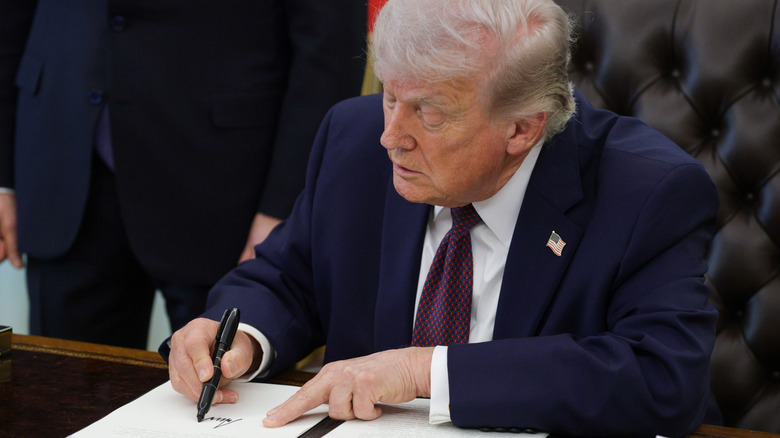
- Trump signs a scaled-back AI cybersecurity order requiring AI companies to share their most powerful models for voluntary government review 30 days before public availability.
- This order gives the federal government only 30 days at best to review new models.
- The directive aims to address software vulnerabilities in AI systems and tasks the Cybersecurity and Infrastructure Security Agency with developing processes for information sharing regarding these vulnerabilities.
- Trump initially planned to announce this order earlier, on May 21, but the signing was postponed due to pressure from the tech industry.
- The president expressed his discontent, stating he "didn't like certain aspects" of the original order.
President Trump's recently signed AI cybersecurity order mandates 30-day voluntary reviews of powerful AI models before public release, a shift from earlier proposals that included possibly 90-day reviews. The directive aims to ensure that vulnerabilities are addressed prior to deployment, signaling a new governmental approach to AI oversight.14
The White House's more lenient stance comes amid pressure from tech insiders, as the final order was signed in a private ceremony, urging AI companies to collaborate with the federal government. This collaboration focuses on sharing vulnerabilities identified in AI systems specifically with operators of critical infrastructure like banks and hospitals. The original expectation was for Trump to announce the order much earlier, highlighting the shifting priorities shaped by industry pushback.2
Critics, including some industry officials, argue that even a 30-day review is insufficient. Jain pointed out that such regulations must not lead to arbitrary governmental control over model releases, emphasizing the need for transparency in the benchmarking process. He voiced concerns that regulatory measures could veer towards ideological agendas rather than focusing purely on security.
In summary, while the order indicates progress in addressing AI risks, industry experts remain wary about the potential for misuse and the challenge of establishing a balance between safety and innovation.
“The new AI cybersecurity order signed by Trump mandates companies to share their powerful models for government review ahead of public availability. This directive comes amid ongoing concerns about the impact of AI on critical infrastructure security.”
