- The Trump administration issued a pair of executive orders this week attempting to restrict birthright citizenship and foreigners who give birth in the US, following a Supreme Court decision in June that struck down a previous attempt.
- The new executive order is narrower than the previous one and targets specific categories, including children of foreign embassy workers, international organisation employees, and alien enemies.
- US immigration law already excludes children of foreign diplomatic officers from birthright citizenship, but Trump's orders would sharply expand those exemptions.
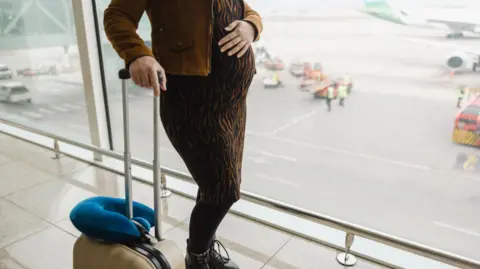
- One order disqualifies babies who are products of birth tourism, defined as entering the US on a nonimmigrant visa for the purpose of giving birth on American soil.
- Children of parents tied to designated terrorist organisations like Antifa or Tren de Aragua are also excluded, raising practical concerns about identifying such members.
- The executive order addressing surrogacy could raise new legal questions, as neither the 14th Amendment nor Supreme Court decisions mention surrogates.
- Experts say Trump's claim of hundreds of thousands of birth tourism cases is exaggerated; CDC data shows nearly 9,600 births to foreign mothers with foreign addresses in 2024, and another estimate puts birth tourists at 20,000 to 26,000 per year.
- The administration argues the orders use legally validated means and do not violate Supreme Court rulings, while opponents insist the 14th Amendment guarantees birthright citizenship and will again block the effort.
President Trump has signed executive orders to limit birthright citizenship, specifically targeting birth tourism and children of foreign embassy workers. These orders come after a Supreme Court ruling in June that rejected similar restrictions. The new measures aim to clarify and narrow the scope of citizenship eligibility.123478
The first order disqualifies children born to parents who enter the U.S. for the purpose of giving birth, a practice known as birth tourism. Trump's definition includes those on nonimmigrant visas. The second order focuses on children of foreign diplomats and employees of international organizations, expanding existing exemptions under U.S. immigration law.
According to estimates, 20,000 to 26,000 birth tourists come to the U.S. annually, with nearly 9,600 children born to foreign mothers in 2024 alone. Critics, including law professor César Cuauhtémoc García Hernández, question the feasibility of enforcing these orders, particularly regarding the identification of children linked to terrorist organizations.131415
Despite the administration's claims, Cody Wofsy from the ACLU argues that birthright citizenship is protected by the 14th Amendment and that executive orders cannot alter constitutional rights. The president did not provide data to support his assertion of “hundreds of thousands” of cases related to birth tourism, raising further skepticism about the necessity of these orders.1617
“The new orders expand exemptions beyond current law, which already excludes children of diplomatic officers. Experts question enforcement, as CDC data shows nearly 9,600 births to foreign mothers in 2024, while the ACLU vows to block the effort, citing the 14th Amendment.”