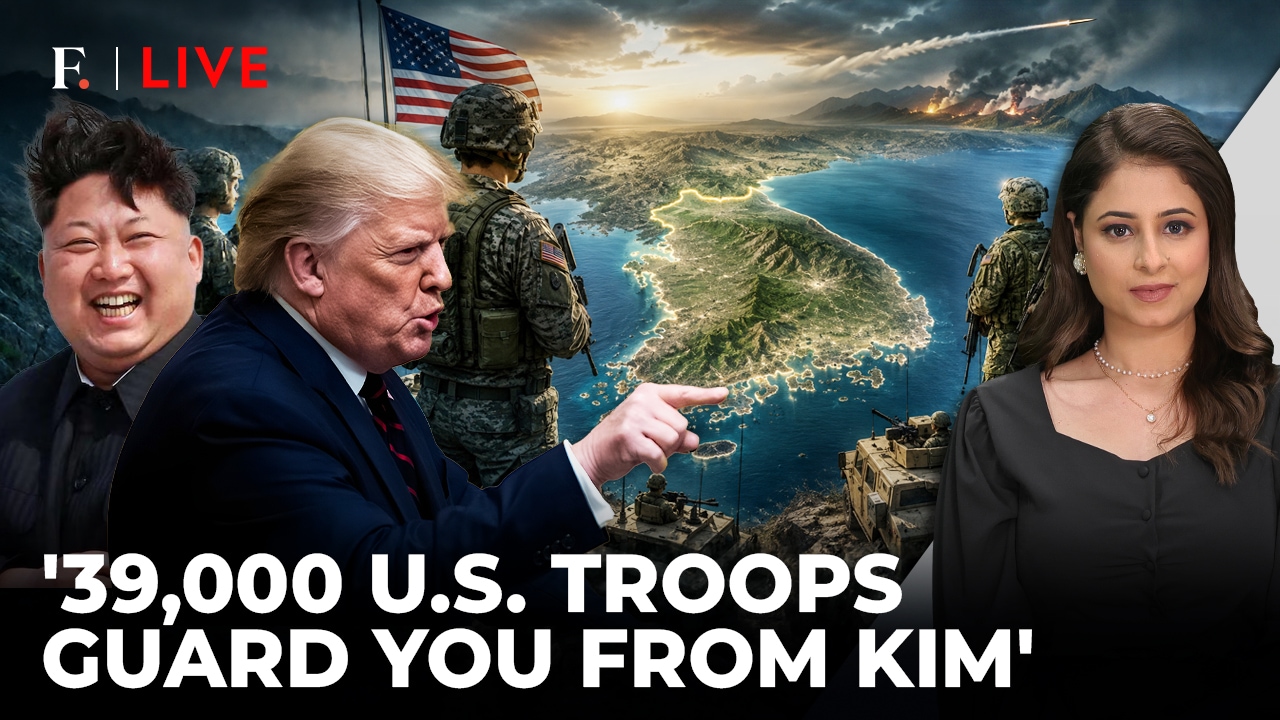
- U.S. President Donald Trump ordered the Defense Department to the 11-day Ulchi Freedom Shield drills, citing Seoul’s alleged failure to adequately help the United States combat Iran and his 'very good relationship' with North Korean leader Kim Jong Un.
President Trump has announced a reduction in military exercises with South Korea, specifically the Ulchi Freedom Shield drills, citing his 'very good relationship' with North Korean leader Kim Jong Un.1
This decision, made mere hours into the event, reflects ongoing tensions in the region and the complexities of U.S. foreign policy. Trump stated that the downsizing was also influenced by Seoul's alleged failure to support U.S. efforts against Iran.
Critics argue that these military exercises are costly and send inappropriate signals to North Korea, which has been relatively unthreatening under Trump's administration. Experts suggest that this move may be part of a broader strategy to encourage North Korea to return to nuclear disarmament discussions that stalled in 2019.
The implications of this decision are significant, as it not only affects U.S.-South Korea relations but also the delicate balance of power in Northeast Asia. Trump's approach has drawn scrutiny, with some viewing it as a concession to an authoritarian regime.
“Trump's decision to reduce the Ulchi Freedom Shield drills comes amid criticism of South Korea's support in combating Iran. This move reflects a significant shift in U.S. military strategy in the region, raising concerns about the implications for U.S.-South Korea relations.”