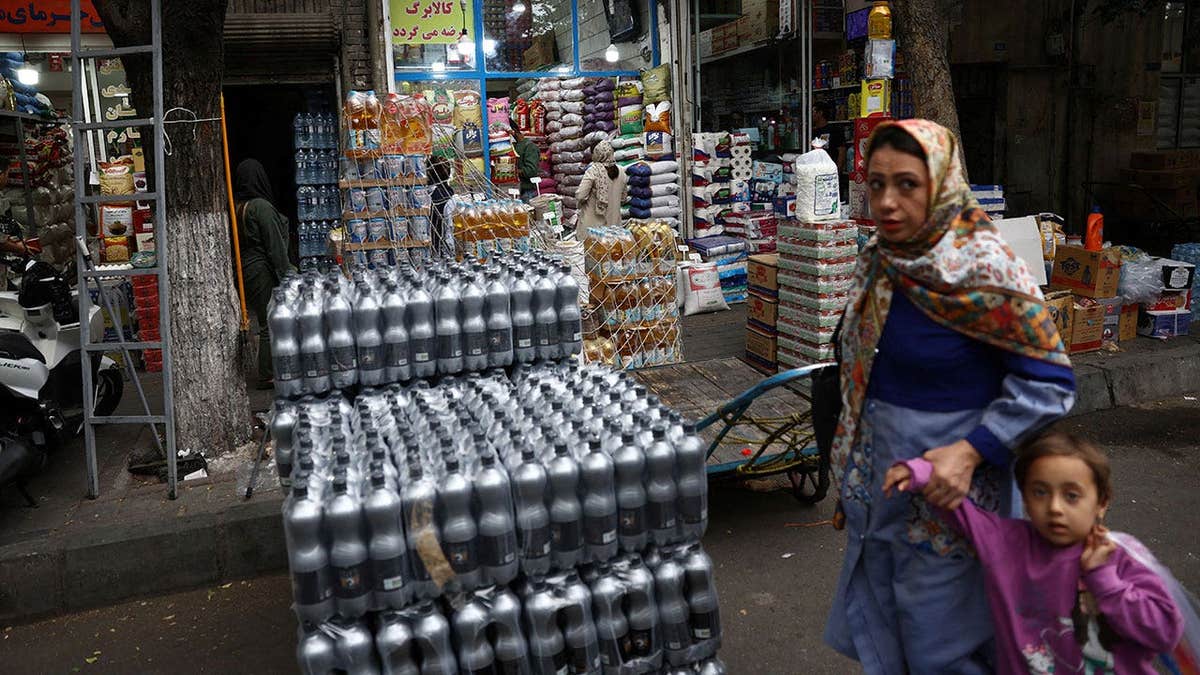
- The Treasury Department's campaign, called Economic Fury, has prevented 'tens of billions of dollars' in revenue from reaching the Iranian regime.
- Trump described the U.S. approach as 'low-keying it' and said Iran was in severe economic distress, struggling to pay its troops.
- A Treasury spokesperson said 'Economic Fury has left the regime desperate for cash', adding that Iran's economy is in freefall.
- A U.S. official stated that while Trump prefers a diplomatic solution, he 'retains all options' if Iran continues terrorism.
- Miad Maleki, a senior fellow at the Foundation for Defense of Democracies, argued that Iran's own policies created underlying vulnerabilities.
- Morad Tahbaz stated that sanctions have created a lucrative 'franchise' for those controlling money and goods channels.
- According to Central Bank of Iran data, Iran's military spending rose from 16% in 1993 to 52% by 2006, while education spending fell from 27% to 15%.
- The IRGC received approximately $6.96 billion, compared with $2.73 billion for the Artesh, roughly 2.5 times as much.
President Trump is leveraging economic pressure as a primary strategy against Iran, allowing sanctions to deepen the regime's financial woes. The U.S. Treasury's 'Economic Fury' campaign has effectively blocked tens of billions in revenue, leaving Iran in a state of economic distress.
Trump noted, "We are only semi-negotiating with them. We are just watching Iran with its and the fact they have no money," highlighting the regime's struggles to fund its military operations.
According to a Treasury spokesperson, "Economic Fury has left the regime desperate for cash." The campaign targets shadow banking networks and sanctions-evasion infrastructure, contributing to Iran's economic freefall, where inflation has skyrocketed and military funding has been severely impacted.
Miad Maleki, a senior fellow at the Foundation for Defense of Democracies, stated, "Sanctions and the war have accelerated Iran's economic decline, but both are consequences of the regime's own troublemaking." He emphasized that the regime's policies have created vulnerabilities that sanctions have exploited.
Morad Tahbaz, an Iranian-American conservationist, described the sanctions as creating a lucrative "franchise" for those controlling financial channels, stating, "Money can't flow freely to the Iranian government's treasury because of the sanctions." He lamented that the Iranian people are suffering the most from these economic pressures.
“The Treasury's 'Economic Fury' campaign has targeted shadow banking, weapons procurement, and cryptocurrency holdings, preventing 'tens of billions of dollars' from reaching Tehran. A Treasury spokesperson said the regime is 'desperate for cash,' while a U.S. official stressed Trump 'retains all options' if Iran refuses a deal.”
 foxnews.com





