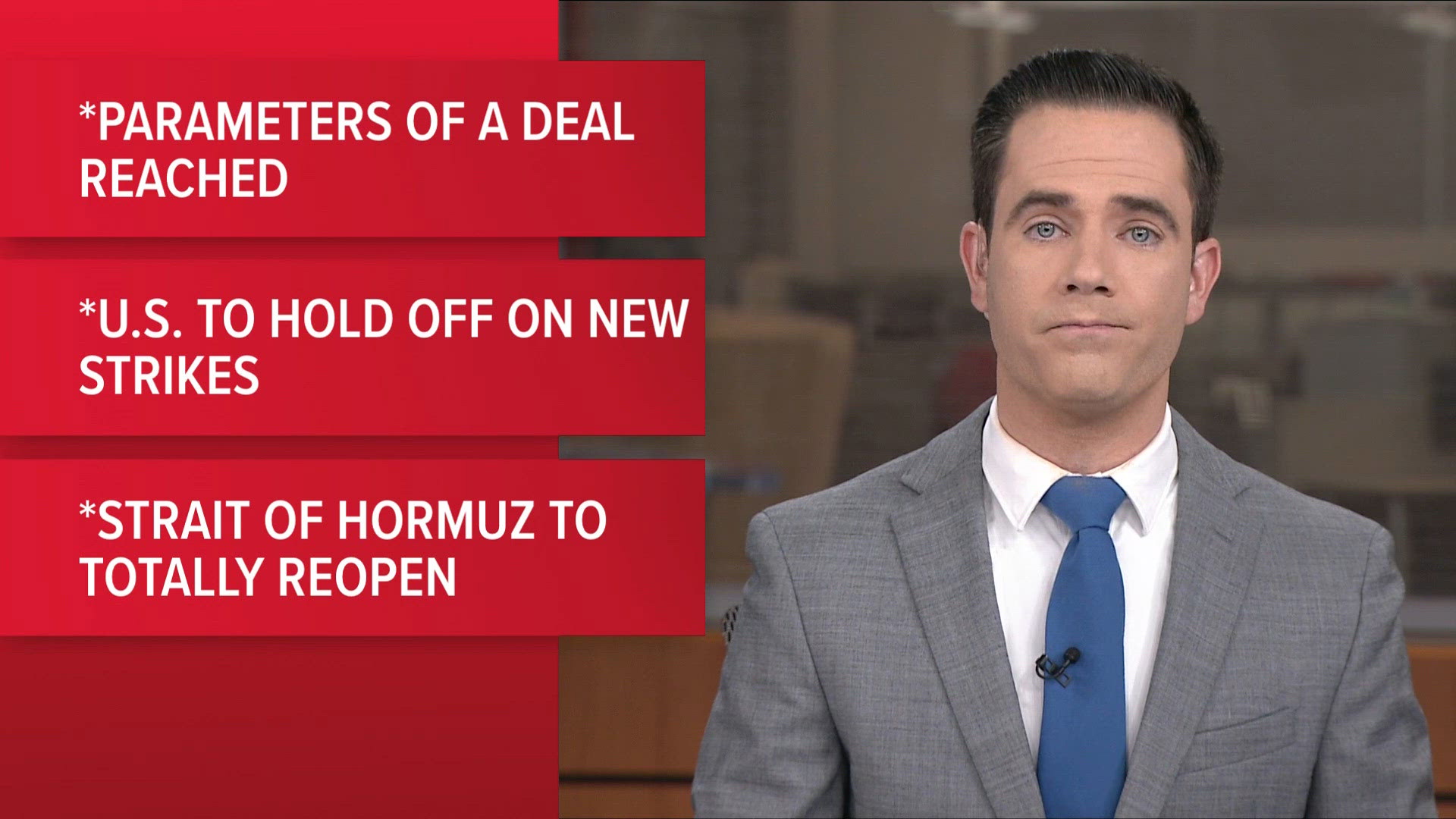
- President Trump said he would order American forces to hold off on new strikes against Iran, claiming Mideast allies have reached the parameters of a deal to end the 5-month old war.
- Trump wrote that the emerging deal would include the Immediate, Complete, and Total OPENING OF THE HORMUZ STRAIT and an end to Iran’s nuclear threat, and said he agreed to cancel the attack subject to rapidly making a deal.
- Iran’s defense minister responded that the country was “neither surprised nor passive,” remaining alert to concrete threats from the U.S.
- A regional official said the proposal calls for reopening the Strait of Hormuz, halting attacks, and, in exchange, the U.S. would end its naval blockade and allow Iran to export oil.
- No deal has been reached yet, but mediation efforts are underway, the official said.
- Trump said Israel is joining his commitment to end the war by implementing the ceasefire deal; Israel did not publicly comment.
- Saudi leaders raised concerns that Tehran could attack energy infrastructure; Crown Prince Mohammed bin Salman sought clarity from Trump, and a White House official confirmed the two leaders spoke Saturday.
President Trump has declared a halt to U.S. military strikes against Iran, asserting that Middle Eastern allies have reached a tentative agreement to end the ongoing conflict. The proposed deal aims to address critical issues, including the reopening of the Strait of Hormuz and Iran's nuclear ambitions.567
In a social media post, Trump stated that the emerging deal “would include the Immediate, Complete, and Total OPENING OF THE HORMUZ STRAIT, and an end to Iran’s nuclear threat.” He emphasized that this decision was made for the “future benefit of the WORLD” and the “survival of a successful and prosperous Iran.”23
Despite the announcement, Iran’s defense minister responded on X, indicating that the country remains vigilant against U.S. threats, stating they were “neither surprised nor passive.”
A regional official involved in mediation efforts revealed that the proposal includes a halt to attacks by Iranian-backed militias in Iraq and a cessation of U.S. naval blockades on Iran, allowing Tehran to export oil.
While Trump claims that Israel supports this ceasefire initiative, the Israeli government has not publicly commented. Concerns remain among Gulf states, particularly Saudi Arabia, regarding potential Iranian retaliation against their energy infrastructure.9
As negotiations continue, no formal agreement has been finalized, but mediation efforts are actively underway, according to sources familiar with the discussions.
“Iran's defense minister said Tehran was 'neither surprised nor passive' and remains alert to U.S. threats. A regional official said the tentative deal would reopen the Strait of Hormuz and halt attacks, with the U.S. ending its naval blockade and allowing Iran to export oil.”
 10TV
10TV



