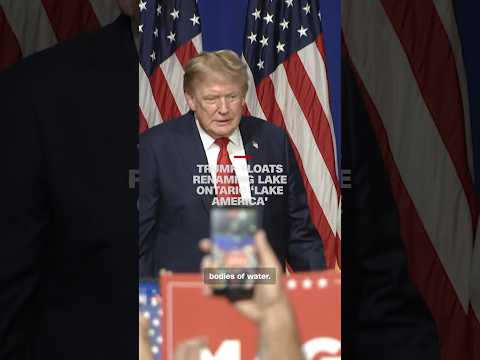
- Trump on Aug. 26 compared his proposed renaming of Lake Ontario to his prior action to rename the Gulf of Mexico, which he did on his first day of his second term.
- Trump said, "You saw the Lake Ontario thing. People thought I was kidding, maybe I wasn't," and referenced the Gulf of Mexico being renamed to Gulf of America, saying "Now, we have a gulf and we have a lake. It's very simple."
- On Tuesday, President Donald Trump said that the U.S. government was giving serious consideration to renaming the Great Lake 'Lake America', adding that 'we don't expect to [be] doing much business with Ontario any longer.'
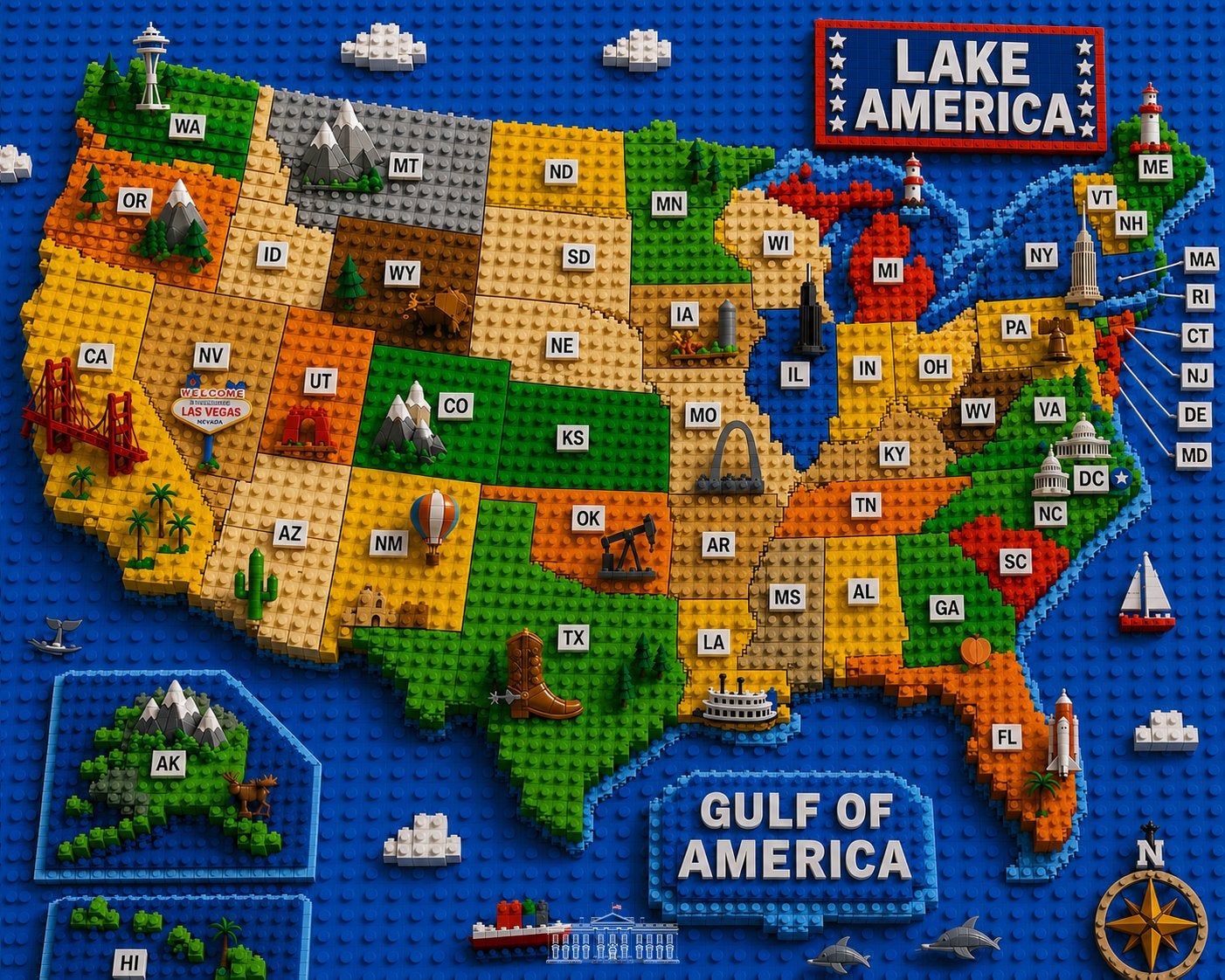
- Hours after Trump’s post, the White House followed up by posting a map with 'LAKE AMERICA' emblazoned above the Great Lakes, which all sit near the border with Canada.
- The map, which labeled all 50 states, also contained an embarrassing error: it placed Washington, D.C. in North Carolina—roughly 200 miles south of its actual location, between Virginia and Maryland.
- Commenters on the post, which garnered over 2 million views, were quick to pounce on the mistake, with one user writing, 'You guys can’t even put DC in the right place on the map.'
- Trump made the remarks as he defended his sweeping 50% tariffs slapped on many goods from Canada after trade negotiations between the two countries fell apart last week.
- Trump criticized Canada's trade practices, saying 'They charge tariffs, they take advantage of us' and claimed Canada has taken the U.S. car and agriculture industries.
- Lake Ontario's name, which goes back to the 17th century, comes from the native Iroquois tribe's word 'Ontarí'io', meaning 'lake of shining waters.'
- A proposed renaming of a body of water is typically the subject of a formal process.
- Despite the rebranding of the Gulf of Mexico to Gulf of America, the international community including Mexico still refers to the body of water as the Gulf of Mexico.
- Mélanie Joly, Canada's minister of industry, responded to Trump's threat, saying 'We'll always call it Lake Ontario. Period.'
Trump's remarks about renaming Lake Ontario to Lake America have sparked controversy, as he defended recent tariffs on Canadian goods. During an interview, he stated, "You saw the Lake Ontario thing. People thought I was kidding, maybe I wasn't," suggesting a serious intent behind the proposal.1
The White House's promotion of the name change was marred by a significant error on a map that incorrectly placed Washington, D.C., in North Carolina, approximately 200 miles from its actual location. This blunder drew sharp criticism from social media users, with one commenting, "You guys can’t even put DC in the right place on the map. This page is such an embarrassment," highlighting the administration's ongoing struggles with accuracy.5
Trump's comments come amid escalating trade tensions, as he imposed a 50% tariff on $20 billion in Canadian goods after negotiations failed. He stated, "They charge tariffs, they take advantage of us as though they were a state, and they're not a state," emphasizing his stance on trade fairness. Canadian officials, including Prime Minister Mark Carney, have responded strongly, with Carney likening the tariffs to an act of war.
Despite Trump's push for the name change, Canadian officials remain firm, with Minister Mélanie Joly stating, "We'll always call it Lake Ontario. Period. We're proud of our Great Lakes," reinforcing the cultural significance of the lake's original name.
“Trump's remarks came as he defended 50% tariffs on Canadian goods after trade talks collapsed, drawing sharp rebukes from Canadian officials. Mélanie Joly vowed, "We'll always call it Lake Ontario. Period." while Ontario Premier Doug Ford called Trump a "bully" and told him to "kiss my a**."”

 The Independent