- Trump imposed new tariffs of 10% and 12.5% on goods from 60 trading partners, including the European Union and China, over allegations of lax enforcement of forced labor bans, just as a temporary 10% global tariff expired.
- The new tariffs took effect at 12:01 a.m. EDT on Friday, coinciding with the expiration of the temporary 10% global tariff.
- Countries without laws prohibiting the import of goods produced through forced labor, including China, the United Kingdom, and Japan, will face tariffs of 12.5%.
- Seventeen economies, including India, Canada, and the UK, will be subject to a 10% tariff, while the remaining 43 will face 12.5%.
- The US Supreme Court struck down Trump's most sweeping tariff measures earlier this year, prompting the administration to impose a temporary 10% global tariff.
- The USTR launched an investigation into forced labor practices in 60 economies, which led to the new tariffs.
- India amended its foreign trade policy on July 14 to prohibit the import of goods produced using forced labor, which influenced its tariff rate.
The Trump administration's new tariffs of 10% and 12.5% on imports from 60 countries, including China and the EU, are aimed at enforcing bans on forced labor.
U.S. Trade Representative Jamieson Greer stated, "The United States has had a forced labor import ban for nearly a century, and rigorously enforces it. It's well past time for our trading partners to do the same."
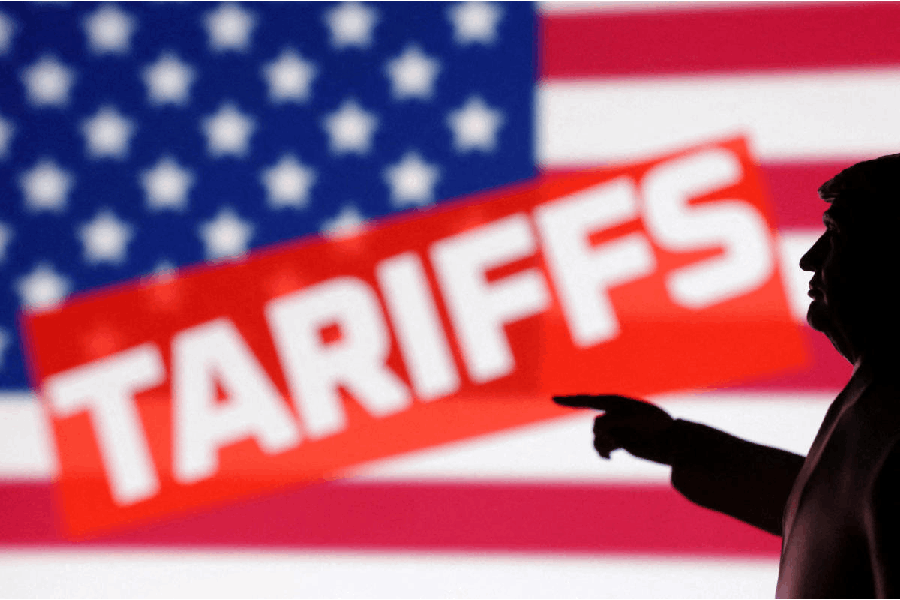
The tariffs, effective immediately after the expiration of a temporary 10% global tariff, cover 99.4% of U.S. imports but exempt certain products like oil and gas.
Countries without adequate labor laws, such as China and Japan, will face the higher 12.5% tariff, while nations like India and Canada will incur a 10% levy.

Ryan Majerus, a trade lawyer, noted that these tariffs may be more challenging to contest legally due to their basis in Section 301 of the Trade Act of 1974.
The tariffs are part of a broader strategy to address human rights abuses and improve labor conditions globally.
European Union foreign policy chief Kaja Kallas criticized the tariffs as a shock, arguing that EU labor laws are robust compared to those in the U.S.
The U.S. has engaged in a long-standing investigation into forced labor practices across these economies, with the new tariffs reflecting a significant shift in trade policy under the Trump administration.
“India's tariff was cut to 10% after it amended its foreign trade policy to ban forced-labor imports, while China and others without such laws face 12.5%. European Union foreign policy chief Kaja Kallas called the tariffs a 'shock' and said the rationale was not grounded in reality.”





