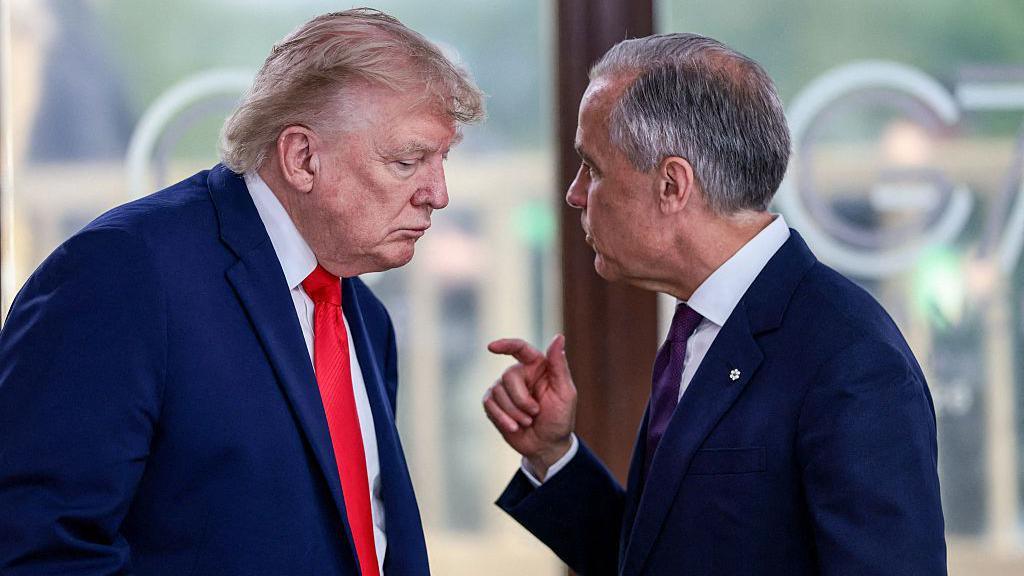
- US President Donald Trump has imposed a 50% tariff on a wide range of goods imported from Canada, in retaliation for what he called "unequal treatment" of US cars, dairy and alcohol.
- The new duties apply to all covered goods regardless of whether the product was included under the existing free trade agreement between Canada, the US and Mexico, known as the USMCA.
- Prime Minister Mark Carney responded by saying Canada stood ready to "intensify" trade talks with the US in the coming weeks.
- The White House said the duties would take effect in 30 days and mark a major escalation in trade tensions between the North American neighbours.
- Monday's duties were being introduced under Section 338 of the 1930 Tariff Act, which covers trade discrimination rather than national emergencies.
- Trump threatened tariffs on Canada over wildfire smoke, claiming the US had been "invaded" by dirty air.
- Canada issued air quality warnings as smoke from US fires drifted north, affecting regions like Kootenay Lake and Cranbrook.
- Officials in British Columbia warned that smoke from US fires was creating polluted air conditions.
US President Donald Trump has imposed a 50% tariff on a wide range of goods imported from Canada, citing 'continued discrimination' against American products.1
The tariffs, effective in 30 days, target consumer items like wine and hockey sticks, while sparing key exports such as energy and fish.
Prime Minister Mark Carney responded, stating Canada is prepared to 'intensify' trade talks, emphasizing the need for meaningful progress before the tariffs take effect.
Carney criticized the unilateral US trade actions, which he claims violate the Canada-United States-Mexico Agreement (USMCA), and warned of threats to Canadian sovereignty.
The White House described the duties as a significant escalation in trade tensions, with existing tariffs already affecting Canadian steel, aluminum, and softwood lumber.
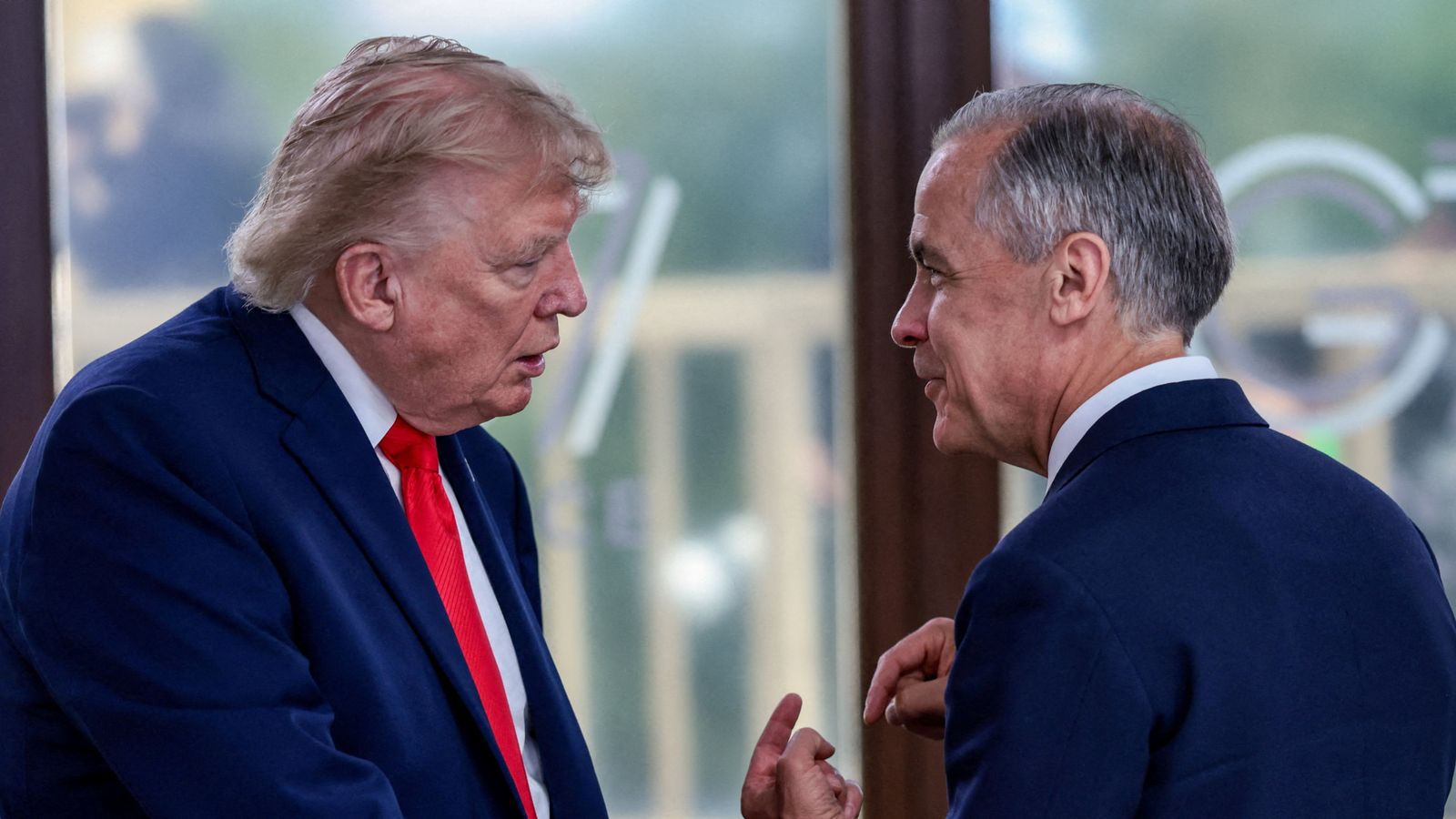
Candace Laing, head of the Canadian Chamber of Commerce, called the tariffs a 'regrettable decision' and urged for progress in negotiations.
The tariffs are introduced under Section 338 of the 1930 Tariff Act, which addresses trade discrimination rather than national emergencies.
With over 75% of Canada's exports going to the US, the economic implications are significant, as C$3.6bn of goods cross the border daily.

Trump's administration has previously threatened Canada with economic repercussions, including the idea of making it the '51st state'.
As tensions rise, Ontario Premier Doug Ford suggested that Canada should respond 'tariff for tariff, dollar for dollar' if the tariffs proceed.
“The 50% tariffs, set to take effect in 30 days, exempt energy, potash, and critical minerals but escalate trade tensions under a rarely-used 1930s trade law. Separately, more than 900 wildfires rage across Canada as Trump accuses Canada of 'poisoning' US air, prompting air quality warnings in British Columbia.”

 The Guardian
 BBC
BBC



