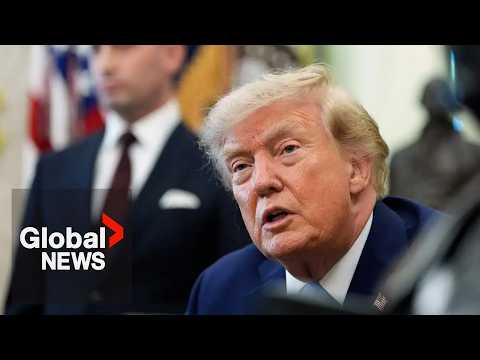
- On Monday, US President Donald Trump said he would demand compensation from Iran for deaths and injuries linked to conflicts and attacks over several decades, after Iran last week asked for reparations and said it would not reopen the Strait of Hormuz until Washington meets its political and economic conditions.
- Trump told reporters at the White House: “We’re going to ask for money for the damage they’ve done over a 50-year period. So if there’s damages to be paid, I think Iran should pay those damages.”
- In a post on his Truth Social platform, Trump said Iran should compensate families of the 17 US sailors killed in an October 2000 attack on the USS Cole, which was blamed on al-Qaeda not Iran, and also be responsible for damages and deaths caused to people in Lebanon, Syria, Yemen, and Gaza.
- Trump’s demands came after Iran said the US should compensate Tehran for damage caused by US and Israeli attacks during this year’s war.
- Oil prices jumped more than 5 percent on Monday after Trump’s new demands, and rose again on Tuesday as hopes for a deal faded.
- Iran’s Supreme National Security Council announced six new conditions on Saturday, including an end to US threats, a permanent end to attacks on Iran and its allies, lifting the naval blockade, compensation for damage from two “imposed wars,” lifting sanctions, and unconditional release of frozen Iranian assets.
- The escalatory rhetoric from Trump appeared to conflict with comments by Vice President JD Vance, who on Saturday said he was confident about reaching a deal with Iran and that Iran had told the US it has “no plans” to impose tolls on the Strait of Hormuz.
- Analyst Negar Mortazavi said US-Iran negotiating positions appear to be hardening, with both sides putting forward “maximalist demands,” and that Trump’s new demands could make a deal extremely difficult for Tehran to accept.
President Trump has escalated tensions with Iran by demanding compensation for damages linked to decades of conflict, including the deaths of US sailors. In response, Iran has outlined six conditions for negotiations, including an end to US threats and the lifting of sanctions.
Trump stated, “We’re going to ask for money for the damage they’ve done over a 50-year period,” emphasizing that Iran should be held accountable for various conflicts in the region. He specifically mentioned the USS Cole attack, which was attributed to al-Qaeda, not Iran, as a basis for his demands.34
Iran's Supreme National Security Council responded with six conditions, including “an end to US threats and insults against Iran” and the lifting of the US naval blockade. These demands reflect a hardening of positions on both sides, complicating the prospects for a diplomatic breakthrough.7
Analyst Negar Mortazavi noted, “Both sides appear to be putting forward maximalist demands ahead of serious negotiations.” The situation has led to a significant increase in oil prices, which jumped over 5% following Trump's statements, indicating market concerns over the potential for conflict in the strategically vital Strait of Hormuz.189101112
As negotiations stall, the likelihood of a peaceful resolution appears increasingly uncertain, with both nations entrenched in their respective positions.
“Iran's Supreme National Security Council on Saturday listed six conditions, including lifting sanctions and releasing frozen assets, while Vice President JD Vance said Iran has 'no plans' to impose tolls on the Strait. Analyst Negar Mortazavi warns both sides' 'maximalist demands' could make a deal extremely difficult for Tehran to accept.”