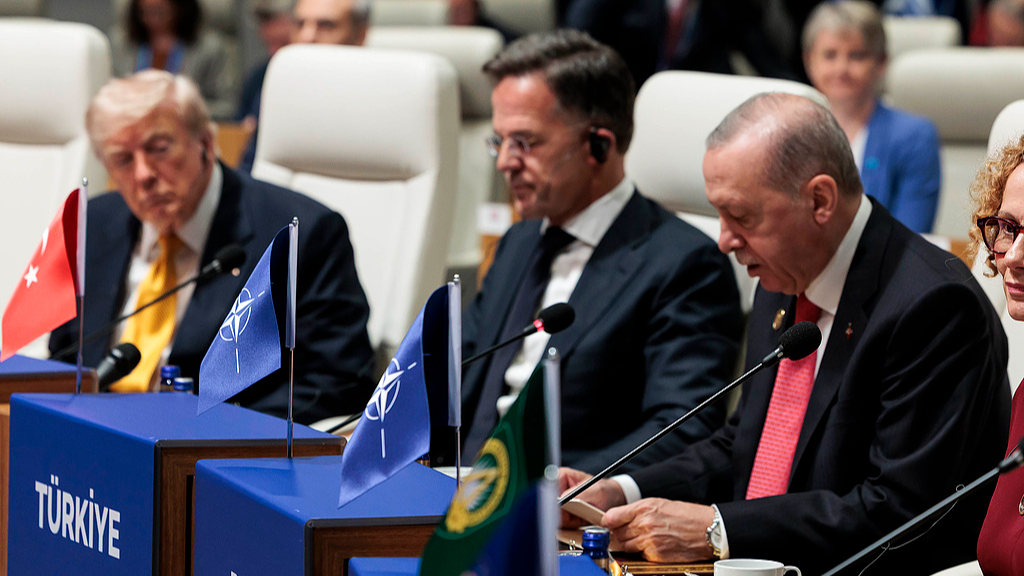
- The NATO summit in Ankara concluded without resolving deep-rooted disagreements over defense spending, burden-sharing, Ukraine, and regional security, despite a show of unity.
- US President Donald Trump made repeated remarks that put allies in an uncomfortable position, including expressing disappointment with NATO and threatening to withdraw US troops from Europe.
- The Ukraine crisis exposed growing divergences, with Washington eager to reduce involvement while European nations advocated a tougher stance and continued military support for Ukraine.
- NATO finalized a 70-billion-euro framework for long-term military aid to Ukraine, with European countries and Canada providing the funding and the US contributing arms and intelligence.
During the NATO summit, President Trump criticized allies for not meeting defense spending commitments, expressing he was 'very disappointed' and threatening troop withdrawal from Europe.
The summit, which concluded on July 7, aimed to present unity but revealed deep-rooted disagreements over defense spending and the Ukraine crisis.56
Analysts noted, 'The summit did not remove the factions within NATO. Instead, it compartmentalized them.' Trump labeled Spain a 'terrible partner' for its refusal to meet NATO's 5% GDP defense spending target, further straining relations.
The Ukraine conflict has exacerbated tensions, with the U.S. appearing eager to reduce its involvement while European nations push for a tougher stance against Russia. NATO members finalized a 70-billion-euro framework for military assistance to Ukraine, with European countries and Canada providing funding while the U.S. focuses on arms supplies and intelligence support.78
Cui, an analyst, stated, 'What is increasingly emerging is not a shared approach based on collective defense... but rather significant divergences in security considerations.' This reflects a shift from mutual trust to growing suspicion between the U.S. and Europe, with Europe seeking greater strategic autonomy within NATO.
Dirioz noted, 'European countries within NATO are likely to evolve toward a more autonomous defense posture.' However, the effectiveness of this autonomy remains uncertain, as Europe grapples with balancing independence and military capability.
“NATO finalized €70 billion aid framework for Ukraine, with European and Canadian funding and US arms and intelligence. Analysts said the summit did not remove factions but compartmentalized them, with declining US-Europe trust shaping NATO's future.”


 news.cgtn.com



