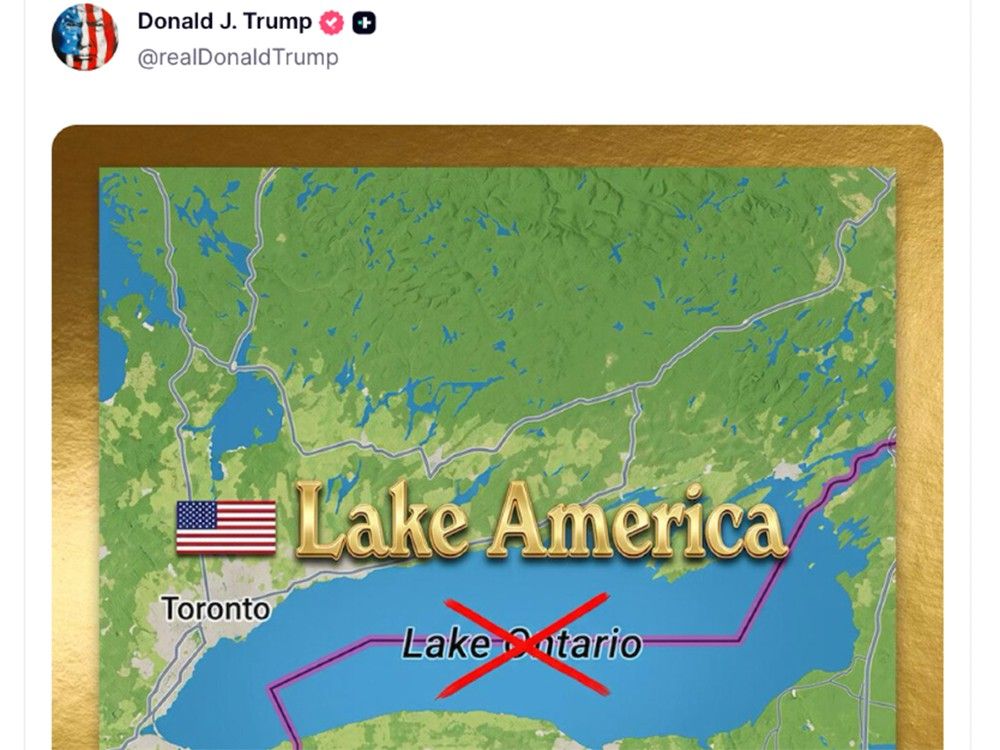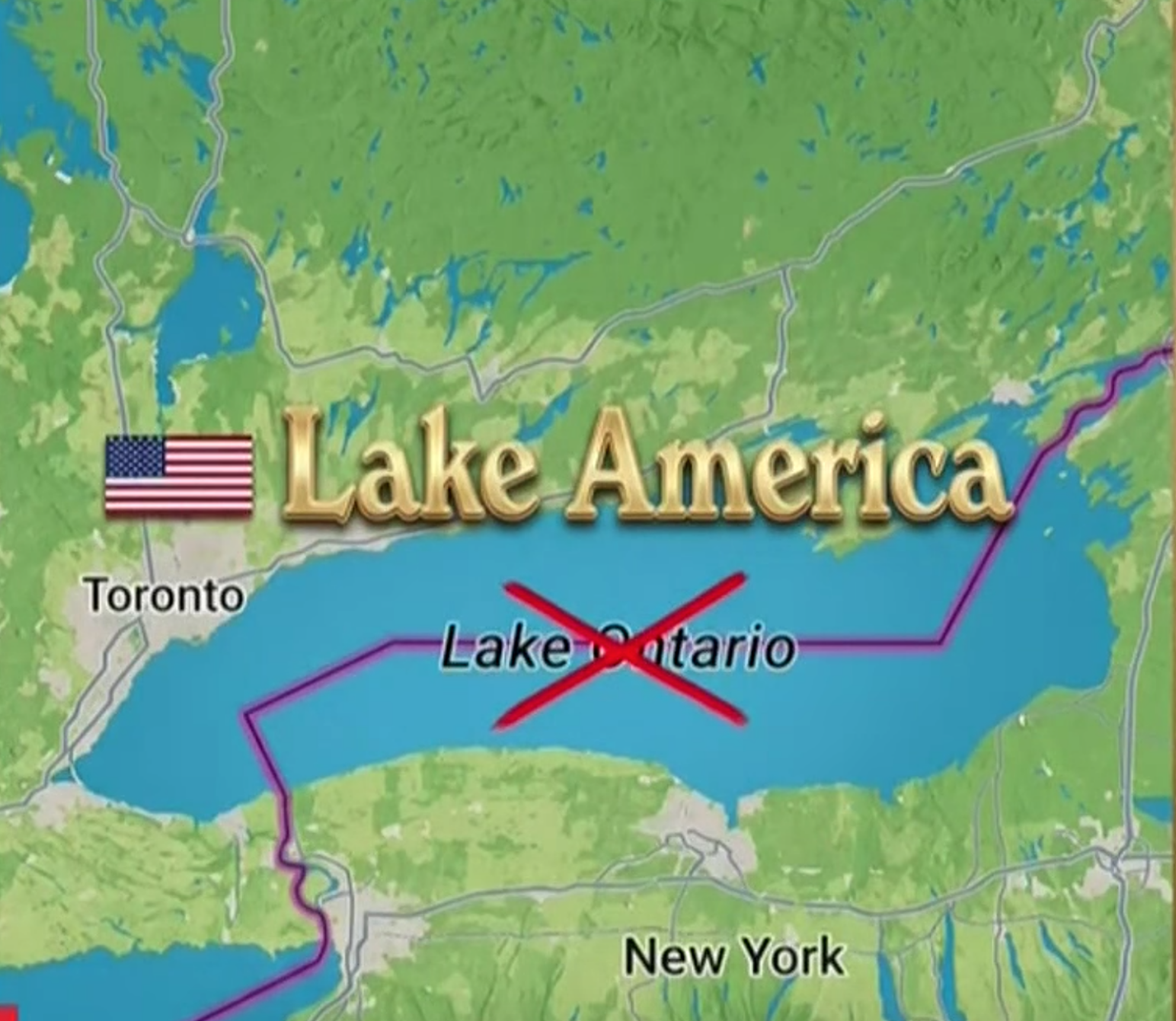
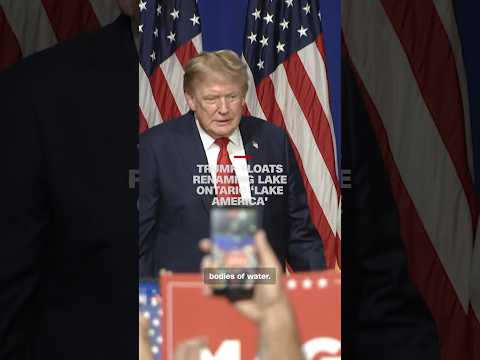
- Trump said Tuesday the United States is considering renaming Lake Ontario to 'Lake America' amid an escalating trade dispute, and he later posted a graphic depicting the Great Lake under the proposed name.
- Canadian officials responded firmly: Industry Minister Mélanie Joly said 'we'll always call it Lake Ontario,' while Ontario Premier Doug Ford dismissed the post as 'a lot of rhetoric.'
- Indigenous leaders and academics criticized the proposal, with Chief Maracle calling it an 'attack' on Indigenous people.
- Trump previously used an executive order to rename the Gulf of Mexico, but that name isn't universally recognized; he could use similar power for Lake Ontario, but Canada isn't compelled to acknowledge it, according to Daniel Macfarlane, an environmental historian and geography professor at Western Michigan University.
- Experts and Indigenous leaders say Trump's threat imposes American nationalism and erases Indigenous identity, with Chief Maracle calling it an 'attack' on Indigenous people.
- Chief Maracle emphasized that Indigenous culture and rights should not be eroded in trade discussions, and that Trump should consult Indigenous communities before floating new names for lakes.
- Academics criticized the proposal: Derek Alderman, a geography professor at the University of Tennessee, said the targeting of Lake Ontario follows a trend of erasing Indigenous culture, citing the renaming of Mount McKinley from Mount Denali in 2025; James Conolly, an archaeology and anthropology professor at Trent University, called 'Lake America' a 'nonsensical proposal' that ignores the deeper Indigenous history.
U.S. President Donald Trump has suggested renaming Lake Ontario to 'Lake America' as trade tensions escalate with Canada. This proposal has drawn criticism from Canadian officials and Indigenous leaders, who emphasize the lake's historical significance and its name's Indigenous roots.123456
The name Ontario originates from an Iroquoian term meaning 'sparkling waters', with its first recorded use on maps dating back to 1656. Chief R. Donald Maracle of the Mohawks of the Bay of Quinte called the name change an 'attack' on Indigenous people, stressing the importance of consulting Indigenous communities before making such proposals.
Ontario Premier Doug Ford dismissed Trump's comments as 'a lot of rhetoric', while Industry Minister Mélanie Joly affirmed, 'we’ll always call it Lake Ontario.' Experts argue that the name change reflects a broader trend of erasing Indigenous culture, with Daniel Macfarlane, an environmental historian, noting that while Trump can propose a name change, Canada is not obliged to accept it.89
The International Boundary Waters Treaty Act governs shared water bodies, but does not address naming rights. James Conolly, an anthropology professor, criticized the proposal as 'nonsensical', highlighting the need to preserve the linguistic connection to Indigenous heritage.
As tensions rise, the debate over the lake's name underscores the complexities of U.S.-Canada relations and the importance of historical context in naming geographic features.
“Chief Maracle of the Mohawks of the Bay of Quinte called the proposal an 'attack' on Indigenous people, noting his community is 20 kilometers from the lake. Academics like Derek Alderman see it as part of a trend erasing Indigenous culture, citing the 2025 renaming of Mount McKinley from Mount Denali.”


 Global News
 The Globe and Mail