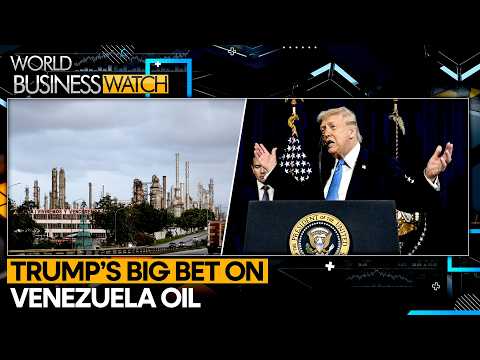
- Trump announced the agreement Friday night, calling it 'THE BIGGEST OIL DEAL IN WORLD HISTORY'.
- The U.S. government and an unnamed private operator formed a new private company that was given rights to vast, untapped oil fields for 100 years, involving 17 fields with a proven potential of 65 billion barrels.
- The deal gives the United States 55% effective output of the new private company, including an ownership stake and rights to buy oil at cost; American purchases will go toward the national debt along with the military, according to a U.S. official.
- Trump said the agreement would give the United States a stake in Venezuela, a step toward extracting energy after American forces captured Nicolás Maduro in a middle-of-the-night raid in January and brought him to New York to face charges.
- Venezuela's acting president, Delcy Rodríguez, described the deal as a step toward economic recovery that will modernize the country's oil industry.
- The agreement could draw $100 billion in investment into Venezuela's oil industry and yield over $209 billion in taxes for Caracas.
- Trump said the agreement was negotiated by Secretary of State Marco Rubio, Defense Secretary Pete Hegseth and Rodríguez.
Trump's announcement of what he calls 'THE BIGGEST OIL DEAL IN WORLD HISTORY' marks a significant shift in U.S.-Venezuela relations. The agreement, negotiated by Marco Rubio, Pete Hegseth, and Rodríguez, grants the U.S. a 55% stake in a new company that will manage 17 Venezuelan oil fields for 100 years.123
The deal is expected to attract $100 billion in investments and generate over $209 billion in taxes for the Venezuelan government. According to a statement from Rodríguez, the fields have a proven potential of 65 billion barrels, positioning the new company as the second largest corporate holder of proven reserves after Saudi Aramco.8
Trump emphasized that this agreement is a step toward extracting energy from Venezuela, following a military operation earlier this year. The U.S. will also have rights to purchase oil at cost, with American purchases intended to support military operations, as per an unnamed U.S. official.
Venezuela's acting president hailed the deal as a crucial step toward economic recovery and modernization of the country's oil industry, indicating a potential shift in the geopolitical landscape surrounding energy resources.7
“The deal could draw $100 billion in investment into Venezuela's oil industry and yield over $209 billion in taxes for Caracas. The new company would become the second largest corporate holder of proven reserves after Saudi Aramco, with American purchases going toward the national debt and military.”