
- President Donald Trump stated that the nuclear deal with Saudi Arabia does not allow for enrichment of uranium and requires the kingdom to join the Abraham Accords and recognize Israel.
- U.S. Energy Secretary Chris Wright and Saudi Energy Minister Prince Abdulaziz bin Salman signed an agreement on civilian nuclear cooperation, which is described as a peaceful nuclear cooperation agreement.
- The Department of Energy indicated that the deal would lay the foundation for a decades-long, multibillion nuclear partnership between the U.S. and Saudi Arabia.
- Saudi Arabia has previously stated it would not recognize Israel without the establishment of a Palestinian state.
- In 2020, Trump brokered the Abraham Accords, which secured the historic normalization of relations between Israel and two Arab nations, the United Arab Emirates (UAE) and Bahrain.
- Israeli Prime Minister Benjamin Netanyahu's office stated that Saudi Arabia joining the accords would be an historic leap forward for peace in the Middle East.
The Trump administration's nuclear accord with Saudi Arabia aims to establish a peaceful nuclear cooperation framework while preventing uranium enrichment. President Trump emphasized that Saudi Arabia must recognize Israel and join the Abraham Accords for the deal to proceed.12378
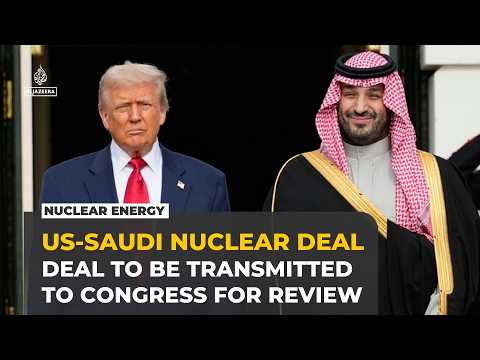
The agreement, signed by U.S. Energy Secretary Chris Wright and Saudi Energy Minister Prince Abdulaziz bin Salman, is expected to lay the groundwork for a multibillion-dollar partnership in civilian nuclear energy. The Department of Energy stated that the deal will be sent to Congress for review, as required under the Atomic Energy Act.45
Trump reiterated, “There will be no enrichment of material!” and clarified that the deal pertains only to non-military use. However, concerns have been raised about the potential for a nuclear arms race in the region, with Senator Chris Murphy warning that it could disincentivize Iran from limiting its nuclear program.
Saudi Arabia has historically linked its recognition of Israel to the establishment of a Palestinian state. The Israeli Prime Minister Benjamin Netanyahu welcomed the prospect of Saudi Arabia joining the accords, calling it a “historic leap forward for peace in the Middle East.” Meanwhile, Saudi Arabia's Crown Prince Mohammed bin Salman has previously stated that while his country does not plan to acquire nuclear weapons, it would follow Iran's lead if the latter developed a nuclear bomb.9
“U.S. Energy Secretary Chris Wright and Saudi Energy Minister Prince Abdulaziz bin Salman signed the agreement Wednesday, described by the Department of Energy as laying foundation for a multibillion nuclear partnership. Senator Chris Murphy warned the deal could set off a nuclear race in the region, further disincentivizing Iran from limiting its own program.”

 CNBC
CNBC BBC
BBC



