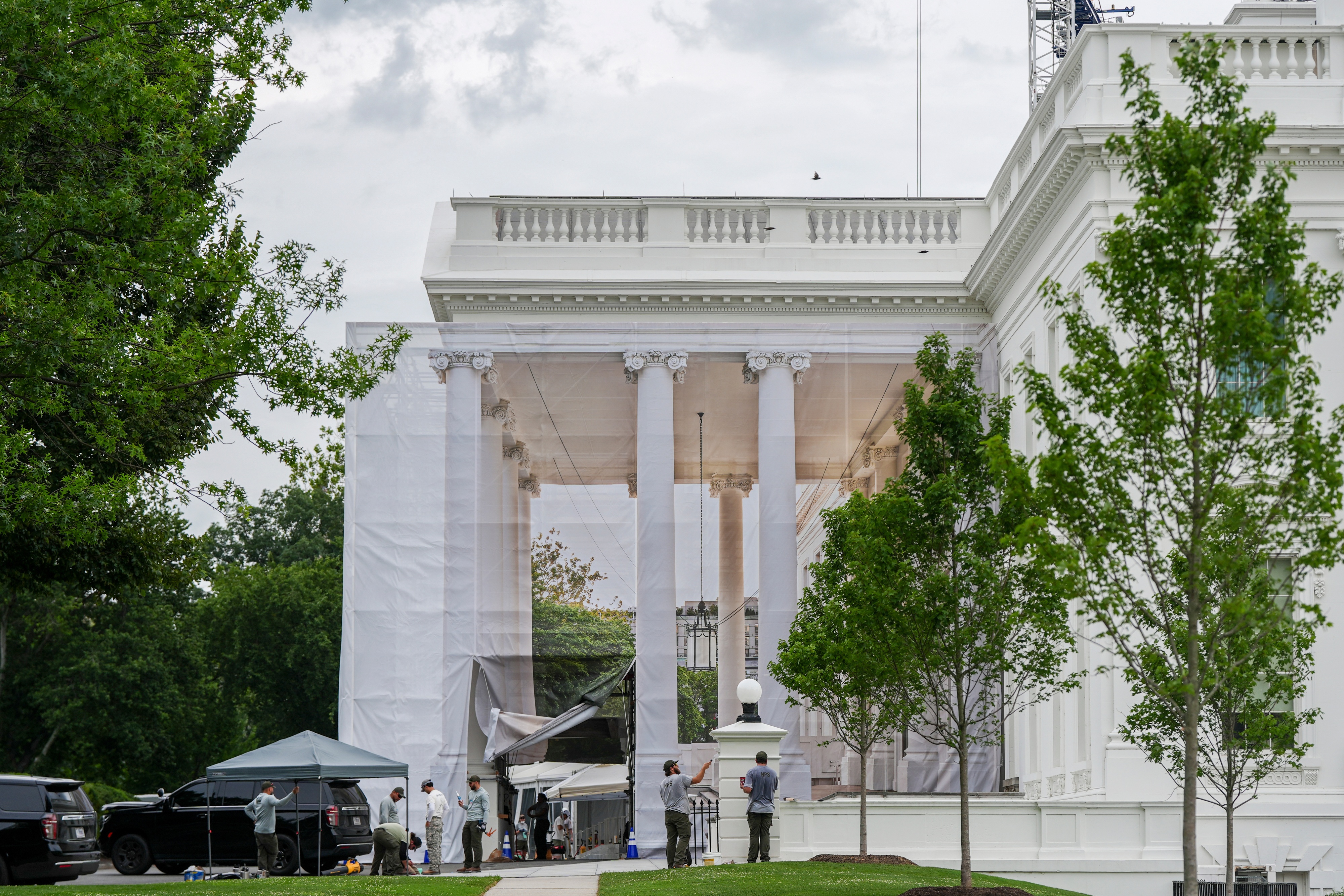
- Projects include demolition of the East Wing, construction of a White House ballroom, an underground security complex, a helipad, and redesign of the West Wing space where the Oval Office sits.
- Costs balloon to at least $900 million, with $600 million allocated for the ballroom space and additional funds for Lafayette Park overhaul, gold embellishments, statues, labor, and materials.
- The projects undertaken without congressional approval are unusual in their size and scope, and historic preservationists and past leaders have decried the lack of proper review to prevent permanent damage.
- The court majority wrote that there is no precedent for a president unilaterally demolishing substantial portions of the White House using privately collected funds, while the minority argued the ruling was judicial overreach.
- Trump argued the project, including the underground national security complex, is being built for the protection of our Country and, additionally, all future Presidents.
- Legal experts say the president is attempting to bypass the power of the purse which belongs solely to Congress, and Democrats have urged an independent watchdog to investigate private donor funds.
The Trump administration's ambitious plan to spend at least $900 million on White House construction projects has raised eyebrows due to its scale and funding sources. The projects include the demolition of the East Wing, a new ballroom, an underground security complex, and a helipad.123
White House spokesman Davis Ingle stated that the work is "long-overdue and necessary" for the security of the President and the White House grounds. Approximately $400 million for the ballroom is reportedly sourced from private donations, including contributions from "President Trump and generous American patriots."
However, about $875 million has been allocated to the White House Repair and Restoration account, which typically holds only a few million dollars for routine maintenance. Critics have raised concerns about the funding's origins, with some $500 million coming from the Secret Service and the White House Military Office, and $305 million from private donations.

The projects have faced legal challenges, with a federal judge ruling that the ballroom construction requires Congressional approval. Critics argue that the administration is circumventing the "power of the purse" that belongs to Congress. Democrats have called for investigations into the acceptance of private funds for the ballroom construction, citing potential conflicts of interest.89
Ingle emphasized that the projects are coordinated with the Secret Service and the White House Military Office, aiming to enhance security for the President and future leaders. Nonetheless, historic preservationists have voiced concerns over the potential permanent damage to the White House grounds.
“The $600 million ballroom space is part of a broader overhaul of Lafayette Park, with additional funds for gold embellishments and statues. Legal experts say the president is bypassing Congress's 'power of the purse,' and Democrats have urged an independent watchdog to investigate private donor funds.”