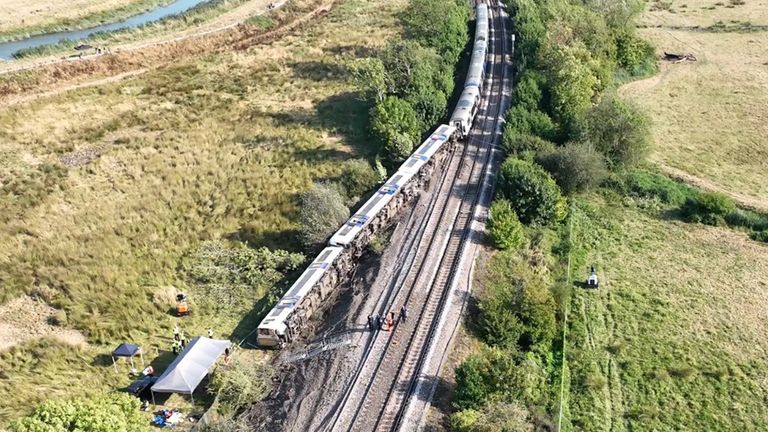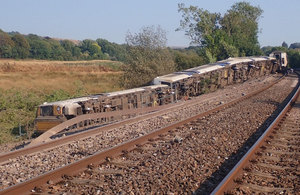
- Train 1F34 derailed at Lewes at around 15:54 on Thursday 13 August 2026.
- Around 150 people were on the train when it derailed, with 30 injured and 20 requiring hospital treatment, some with serious injuries.
- RAIB was notified of the accident at 16:02 and immediately deployed a team of inspectors, with the first arriving at 19:11.
- The RAIB released the site of the accident to Network Rail at 14:09 on Saturday 15 August 2026 for repairs.
- The Rail Accident Investigation Branch has been investigating the derailment, which involved three carriages of a Southern Railway service.
- Preliminary analysis indicates the train was travelling at around 65 mph as it approached the point of derailment, which is within the 70 mph speed limit.
- The accident occurred during a sustained period of hot and dry weather, with an ambient air temperature of around 27 degrees Celsius.
A passenger train derailed in Lewes, East Sussex, on August 13, injuring 30 people, with 20 requiring hospital treatment, including two seriously injured.2
The train, which was traveling at 65 mph within the 70 mph speed limit, derailed during a period of hot weather, with temperatures around 27 degrees Celsius.678
The Rail Accident Investigation Branch (RAIB) was notified shortly after the incident and deployed inspectors to the scene. They noted that marks on the rails indicated the wheels of the derailed carriages had climbed over the tracks.345
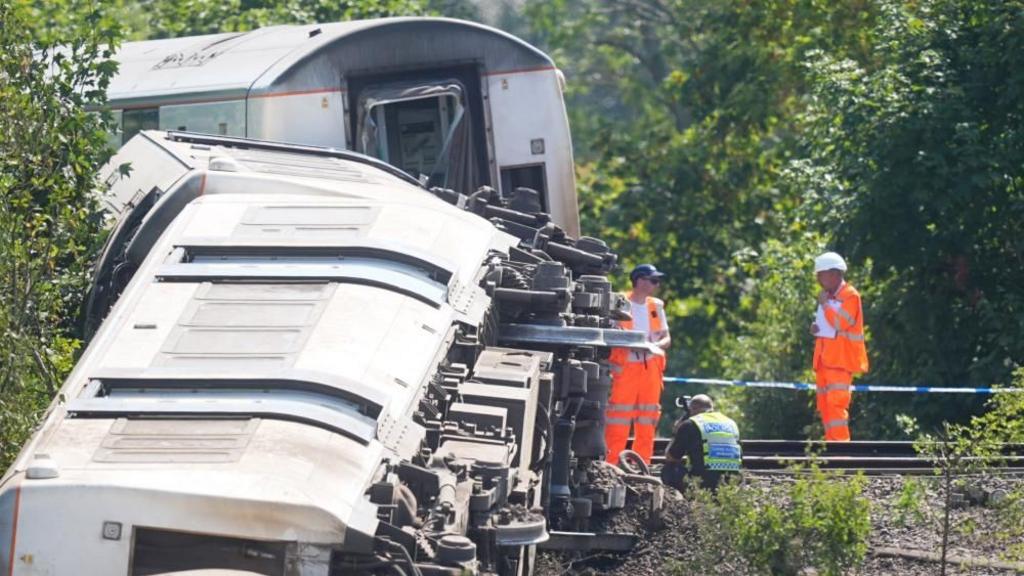
CCTV footage revealed an irregularity in the track geometry just before the derailment, and passengers on other trains reported rough riding in the area prior to the incident.
The RAIB has begun analyzing data from the train's black box as part of its investigation, which aims to determine the cause of the derailment and prevent future occurrences.
The site was released to Network Rail for repairs on August 15, allowing for the recovery of the train and restoration of services.
“The Rail Accident Investigation Branch is analyzing data from the train's black box and CCTV footage, revealing an irregularity in track geometry before the derailment. Preliminary findings indicate the train was traveling at 65 mph, within the 70 mph speed limit, during a period of hot and dry weather.”