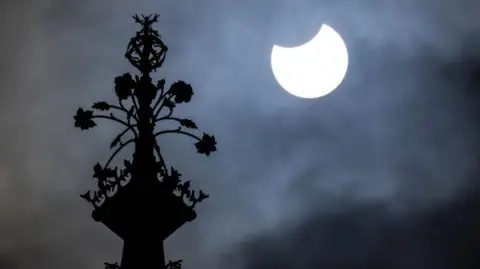
- A total solar eclipse is scheduled for August 12, 2026.
- Key totality times include Scoresby Sund, Greenland at 4:35 p.m. (1m 46s), Reykjavik, Iceland at 5:48 p.m. (1m 1s), Snæfellsjökull, Iceland at 5:45 p.m. (2m 10s), Gijón, Spain at 8:26 p.m. (1m 46s), A Coruña, Spain at 8:27 p.m. (1m 15s), Burgos, Spain at 8:28 p.m. (1m 44s), and Mallorca, Spain at 8:31 p.m. (1m 36s).
- Partial eclipse maximum coverage times and percentages include New York City at 1:54 p.m. (9%), London at 7:13 p.m. (91%), Paris at 8:17 p.m. (92%), Madrid at 8:32 p.m. (99.96%), and Barcelona at 8:29 p.m. (99.82%).
A total solar eclipse will take place on Aug. 12, 2026, with totality visible in select locations including Scoresby Sund, Greenland at 4:35 p.m. for 1m 46s, and Reykjavik, Iceland at 5:48 p.m. for 1m 1s. In Spain, totality will be seen in Gijón at 8:26 p.m. for 1m 46s, and A Coruña at 8:27 p.m. for 1m 15s.1
Observers in Madrid will experience a stunning 99.96% coverage of the sun at 8:32 p.m., while cities like Barcelona will see 99.82% coverage.
A total solar eclipse occurs when the moon completely blocks the sun's disk, leading to significant changes in the environment. During totality, the sky darkens, temperatures drop, and bright stars and planets may become visible.
It is crucial to remember that looking directly at the sun can be harmful. Observers should use solar filters for safe viewing, except during the brief period of totality when it is safe to look without protection.
This eclipse is a rare opportunity for millions across Europe to witness a celestial event that will not occur again for several years.
“Totality durations vary from 1m 1s in Reykjavik to 2m 10s at Snæfellsjökull, while New York City sees only 9% coverage. London and Paris will experience over 90% partial eclipse, making them prime viewing spots despite not being in the path of totality.”