- Norse reached Canada around the year 1000, establishing L'Anse aux Meadows as a base for further exploration into North America.
- Leif Erikson led multiple journeys to North America, significantly predating Columbus's arrival by 500 years.
- In 1960, a Norse transit camp was discovered at L'Anse aux Meadows in Newfoundland, Canada.
- In 2021, researchers confirmed that Vikings were at L'Anse aux Meadows 1,000 years earlier than previously thought.
- Norse found Iceland around 870 and Greenland 100 years later, which became launching points for their explorations.
- Erik the Red was banished from Iceland in 982 and subsequently discovered and settled Greenland, which lasted for around 500 years.
- Norse settlement on Greenland continued until the early 15th Century, serving as a base for further exploration.
- By 1480, Norse were deliberately attempting to sail to North America, referred to as the Isle of Brazil.
- Christopher Columbus reached the Bahamas on 12 October 1492, marking his arrival in the Americas.

The Vikings reached North America around the year 1000, establishing a settlement at L'Anse aux Meadows in Newfoundland, 500 years before Columbus. This Norse outpost served as a base for further exploration, as revealed by the Vinland Sagas and archaeological findings, highlighting a forgotten chapter of history.
In 1960, archaeologists discovered the Norse settlement, which included eight sod-and-wood structures and artifacts like bone needles and iron nails. Carbon dating estimates the outpost was active between 990 and 1050. In 2021, researchers used tree-ring analysis to confirm Viking presence in North America.34
The Vinland Sagas, 13th-century Icelandic texts, recount the Norse exploration and settlement attempts, providing a narrative that predates Columbus's voyages. “Columbus had better PR,” says John Steinberg, an archaeologist, contrasting the sagas' oral tradition with Columbus's documented journey.
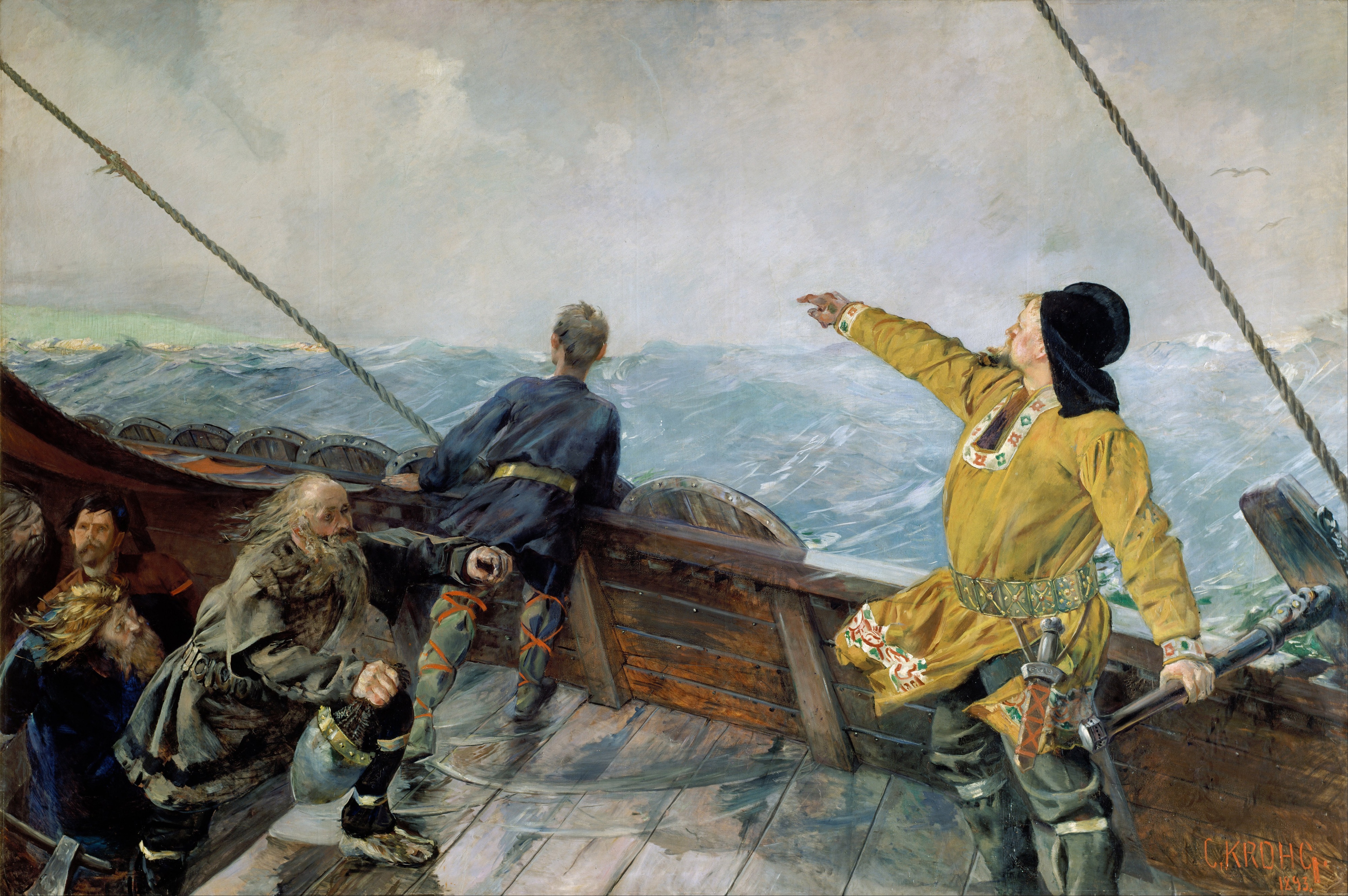
The Norse, led by Leif Eriksson, not only explored but also interacted with Indigenous peoples, naming the area Vinland. This historical context challenges the narrative surrounding Columbus Day, which celebrates an explorer who arrived centuries after the Vikings.
As Robert McGhee, an archaeologist, notes, “Most people assume that after Leif Eriksson... nothing more was heard of the New World.” However, evidence suggests Norse voyages continued for centuries, indicating a complex history of exploration and contact long before Columbus's arrival.
“The Norse established a year-round outpost at L'Anse aux Meadows in Newfoundland around 1000 AD, confirmed by a 2021 study using tree rings from a solar disturbance in 993. Despite this, Columbus Day became a federal holiday in 1937, while Leif Erikson Day, first proclaimed nationally in 1964, remains celebrated mainly in the Upper Midwest.”
BBC