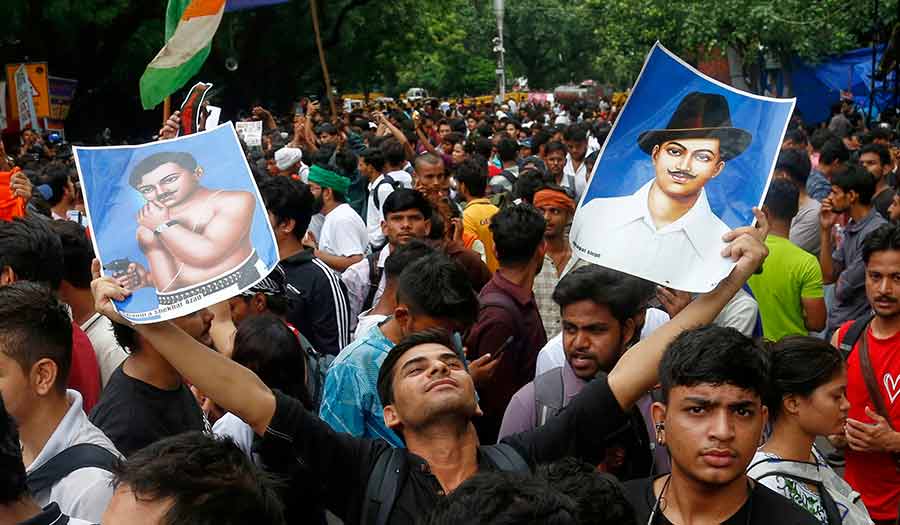
- Cockroach Janta Party leaders have vowed to continue their protest in New Delhi after police used tear gas and batons to disperse thousands of protesters attempting to march toward Parliament.
- Protesters are camped at Jantar Mantar, a designated protest site, demanding the resignation of Education Minister Dharmendra Pradhan over alleged failures in India's examination system.
- Abhijeet Dipke, the founder of the Cockroach Janta Party, stated, "We are going to continue our protest," emphasizing the movement's commitment to their cause.
- The Cockroach movement, which began as a satirical protest, has evolved into a nationwide youth-led movement addressing issues like exam leaks and unemployment.
- The protests gained momentum after Sonam Wangchuk, a prominent activist, was forcibly taken to a hospital during a hunger strike, which became a symbol of the protests.
- Delhi Police reported that nearly 180 people were injured during the clashes, including 118 security personnel and 60 protesters.
- The protests represent a rare public challenge to Prime Minister Narendra Modi's government, reviving criticism over its handling of dissent and use of force against protests.
- Rights group Amnesty International condemned the police actions, stating they demonstrate how peaceful dissent is being suppressed in India.
Supporters of India's youth-led Cockroach Janta Party are determined to continue their protests in New Delhi after a violent police crackdown that left nearly 180 injured, including 60 protesters. The movement, which began as a satirical protest, has evolved into a significant challenge to Prime Minister Narendra Modi's government.147
The protests intensified following the police's use of tear gas and batons to disperse demonstrators attempting to march toward Parliament. Abhijeet Dipke, the party's founder, stated, "We are going to continue our protest." Protesters are demanding the resignation of Education Minister Dharmendra Pradhan over alleged failures in the examination system, including exam leaks and rising unemployment.23
The movement gained momentum after prominent activist Sonam Wangchuk's hunger strike, which became a symbol of the protests. Video footage of police brutality against protesters has fueled public outrage, showing young demonstrators pleading with officers not to hit them.5
Delhi Police reported that nearly 180 people were injured during the clashes, highlighting the tensions surrounding the protests. Sona Bisht, a 20-year-old student, expressed her determination, saying, "If the government thinks that doing this with Gen Z, they can stop us, then that won't happen." The government has attempted to engage with protesters, but movement leaders insist on action rather than mere assurances, including Pradhan's resignation and examination reforms.6
Rights group Amnesty International condemned the police's actions, stating that they reflect how peaceful dissent is being suppressed in India, a right protected under the Indian constitution.8
“Nearly 180 people were injured in the crackdown, including 118 police and 60 protesters. The movement demands Education Minister Dharmendra Pradhan's resignation over alleged exam system failures, with student Sona Bisht vowing 'we will not move from here' until demands are met.”


 NPR
NPR



