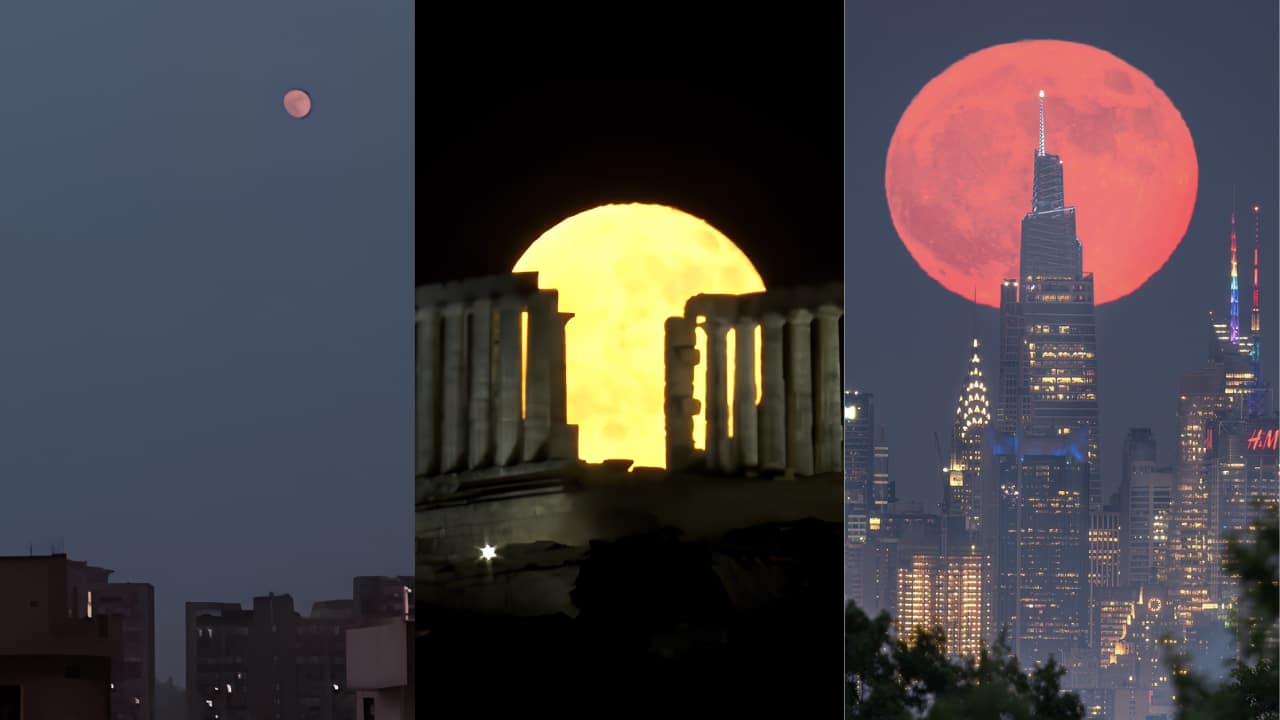
- The Strawberry Moon illuminated skies across the world on June 30, creating breathtaking scenes over famous landmarks and coastlines.
- On June 30, the Full Strawberry Moon graced the skies all over the world, creating an amazing night for skywatchers.
- The Strawberry Moon of 2026 reached its peak illumination on 29 June 2026 (30 June in India).
- The Moon appeared unusually large due to the Moon illusion.
- June's full moon was seen bigger than usual in golden, pink and red glow in different parts of the world.
- It attracted global attention because it appeared unusually low in the sky in the Northern Hemisphere and occurred near the Moon’s apogee, making it one of the smallest full moons of the year.
- The full moon that occurs in June is traditionally known as the Strawberry Moon.
- The name comes from the seasonal traditions of Indigenous communities, who associated the June full moon with the harvesting of wild strawberries.
- In 2026, the Strawberry Moon was the seventh full moon of the year because a Blue Moon (the second full moon in a calendar month) occurred on 31 May 2026.
- It was the first full moon of summer in the Northern Hemisphere and occurred near the Moon’s apogee, making it one of the year’s Micromoons.
- The Strawberry Moon is important because it connects astronomy with human history and culture.
- The traditional names of full moons reflect the ecological knowledge of Indigenous peoples.
The Strawberry Moon illuminated the night sky on June 30, captivating observers globally with its vibrant hues and unusual size. This full moon, traditionally known for its connection to strawberry harvesting by Indigenous communities, marked the first full moon of summer in the Northern Hemisphere.178
The moon appeared larger than usual, glowing in shades of golden, pink, and red, creating breathtaking scenes over famous landmarks and coastlines. It attracted global attention as it appeared unusually low in the sky in the Northern Hemisphere and occurred near the Moon’s apogee, making it one of the smallest full moons of the year.6
“The Strawberry Moon is important because it connects astronomy with human history and culture,” experts noted, emphasizing its significance beyond mere observation. The traditional names of full moons reflect the ecological knowledge of Indigenous peoples, linking celestial events to seasonal changes and agricultural practices.1112
In 2026, the Strawberry Moon was the seventh full moon of the year, occurring after a Blue Moon on May 31. It reached its peak illumination on June 29, 2026, at 5:27 a.m. IST on June 30, further enhancing its visibility and allure for skywatchers.9
As the first full moon of summer, the Strawberry Moon serves as a reminder of the deep connections between nature, culture, and the cosmos, inviting people to reflect on the beauty and significance of celestial events.
“The Strawberry Moon was observed globally on June 29 and June 30, reaching peak illumination on June 29. This full moon is significant for its connection to Indigenous traditions and its appearance as one of the smallest full moons of the year.”

 Vajiram & Ravi



