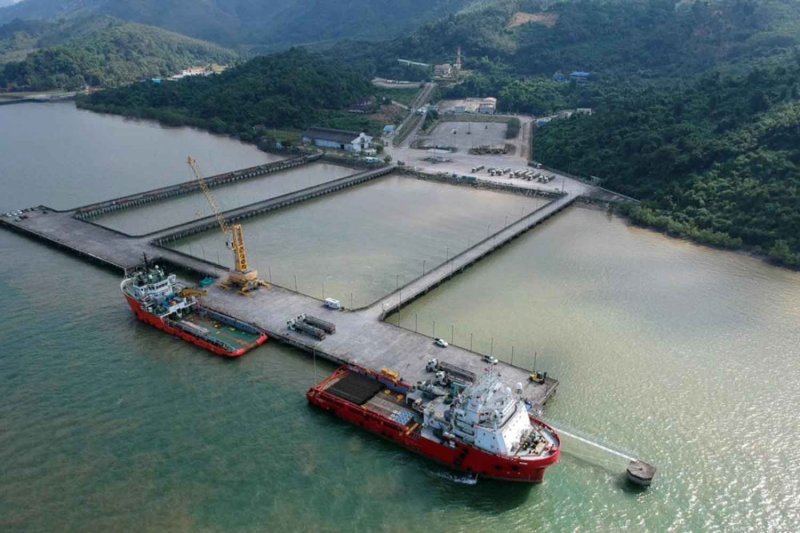
- Thailand plans to scrap its proposed landbridge megaproject that would link the Gulf of Thailand and the Andaman Sea after a government study found it was no longer economically viable and poses significant environmental risks.
- The review found the project's financial outlook had deteriorated significantly due to global economic uncertainty following the Covid-19 pandemic, the Russia-Ukraine war and tensions in the Middle East.
- The financial return rate for the project fell from 8% to 4.8%, and the net present value shifted from an expected positive 637.7 billion baht to a negative 10.3 billion baht.
- Container volumes were estimated to have declined by 15-16%, reducing returns by 38%.
- Nine of the world’s 10 major shipping lines have already invested in similar projects elsewhere, leaving limited opportunities to attract major cargo volumes.
- The proposed route would pass through forests, mountainous areas and sensitive ecosystems, raising environmental concerns.
- Ranong province, home to the country's largest mangrove forest, could face impacts on marine ecosystems, rare species, local fisheries and coastal communities.
- The review also found gaps in environmental impact assessments, with seven separate reports prepared by three agencies lacking an integrated assessment of overall impacts.
- The updated study found it would lose money overall, compared with an earlier assessment that projected substantial economic gains.
- Instead of pursuing the landbridge, the government plans to upgrade Ranong Port and develop a rail link that would connect the Andaman coast with Thailand’s existing rail network to improve freight transport.
- Ekniti stated that the government has incurred no losses from the earlier plan because no land had been acquired and construction had not started.
- Ekniti emphasized that the project offers an important lesson that large infrastructure investments should begin with a clear assessment of the country’s strategic priorities and environmental considerations.
Thailand's government is poised to scrap the US$29.7 billion Land Bridge project, following a review that highlighted low financial viability and environmental risks. The project's expected financial return plummeted from 8% to 4.8%, with cargo volumes projected to decline by 15-16%.
The review indicated that the net present value (NPV) shifted from a positive 637.7 billion baht to a negative 10.3 billion baht. Finance Minister Ekniti Nitithanprapas stated that nine of the world's ten major shipping lines have invested in competing projects, limiting interest in the Land Bridge proposal.
Environmental concerns were also significant, with potential impacts on Ranong province's biosphere reserve and wetlands. The study revealed gaps in environmental assessments, lacking an integrated overview of impacts. Ekniti emphasized that no investment losses occurred as land acquisition and construction had not yet begun.
Instead of the Land Bridge, the government plans to enhance Ranong Port and develop a rail link to improve freight transport along the Andaman coast. Ekniti remarked, “The project offers an important lesson that large infrastructure investments should begin with a clear assessment of the country’s strategic priorities and environmental considerations.”14
“The updated study found the project's net present value turned negative at 10.3 billion baht, and container volumes declined by 15-16%. Nine of the world's 10 largest shipping lines have already invested in competing projects, leaving limited interest, while the government will instead upgrade Ranong Port and develop a rail link.”




