- Omar made the journey after rumours spread across northern Morocco that they could easily enter Spain after a law change at the end of June; the Spanish supreme court ruled that would not be summarily returned if intercepted at sea, fuelling hopes among Moroccans.
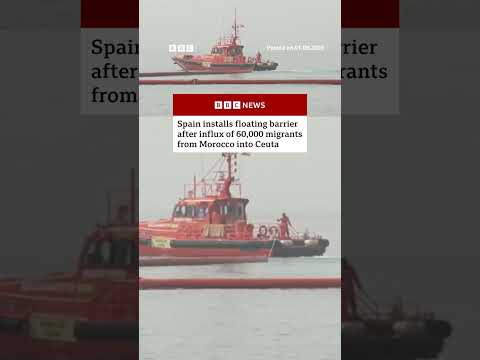
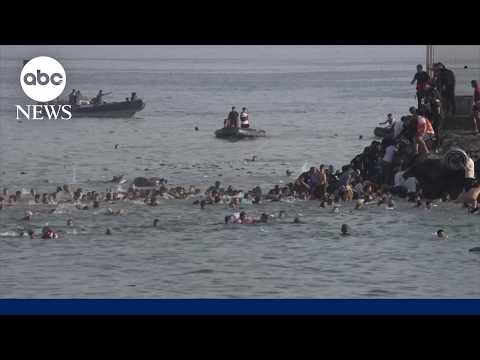
- Thousands of migrants surged from Morocco into the Spanish enclave of Ceuta, with around 60,000 entering and at least 57 reported dead by drowning or being crushed at the border fence.
- Migrants told The Telegraph they were allowed to walk towards the beach without being stopped by border guards; Moroccan officers used batons on the shoreline, causing panic and prompting people to rush into the water.
- Hundreds of police officers and Guardia Civil officers were deployed to the enclave, including riot police, border specialists, underwater search units, maritime assets and helicopters.
- Prime Minister Pedro Sánchez described the events as 'an attack on Spain's territorial integrity', pledged 'all the resources of the state', and refused to blame Morocco; almost everyone who arrived was sent back to Morocco.
- Fifteen-year-old Omar, who swam around the breakwater marking the border, told The Telegraph he came to Ceuta to study, wants to study for six years in Tarazona and then maybe go to England; he said his sister already lives in Spain and he started learning English at home from the age of seven.
- Facing a return to Morocco, Omar said he loves his country but does not see a future there: 'Everything is expensive and life is difficult.' He also described how his parents divorced and his mother has to raise four children on her own.
- Omar’s stated ambition: 'I want to study, work and build a future for myself and for my family.'
Moroccan teenager Omar, 15, made a perilous journey to Ceuta, Spain, driven by dreams of education and a better future. He stated, “I came to Ceuta because I want to study.” His sister lives in Spain, and he hopes to study for six years in Tarazona before possibly moving to England.1278
“I love my country. But I don’t see a future there,” Omar lamented, highlighting the struggles faced by his family, including a divorced mother raising four children alone.
The surge of migrants, with over 60,000 entering Ceuta, was fueled by rumors of easier access to Spain following a law change. Many migrants reported being allowed to approach the beach without interference from border guards, while others faced violence from Moroccan officers.3
Spanish Prime Minister Pedro Sánchez condemned the influx as “an attack on Spain’s territorial integrity,” pledging to use “all the resources of the state” to restore order. The response included deploying hundreds of police and sending most migrants back to Morocco. Tragically, at least 57 people have died during the crossings, either by drowning or being crushed at the border fence.56
Omar’s story reflects the desperation of many seeking a better life, as he expressed, “I want to study, work and build a future for myself and for my family.”
“Around 60,000 migrants entered Ceuta with at least 57 dead by drowning or crushing, and almost everyone who arrived was sent back to Morocco. Omar told The Telegraph his mother raised four children alone and he started learning English at home at age seven for a future he says Morocco cannot offer.”