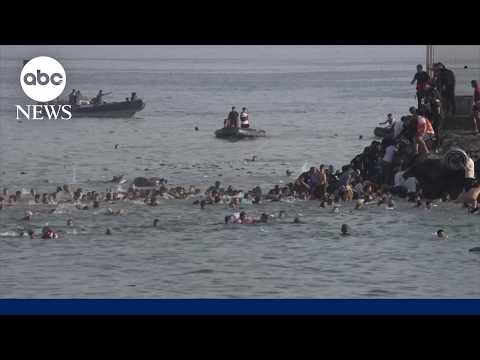
- A mass influx from Morocco into the Spanish enclave of Ceuta left at least 67 dead.
- Authorities say virtually all of the estimated 60,000 migrants who entered Ceuta have already left voluntarily, returning to Morocco.
- Spain’s Interior Ministry reported that about 50,000 people crossed the border and estimated 48,300 had returned by Friday evening.
- Ceuta local government head Juan Jesus Vivas stated that as many as 60,000 people had pushed across and called for completing the return of all those who entered.
- Ceuta authorities linked the surge to a Spanish Supreme Court ruling that blocked immediate returns of migrants arriving by sea.
- Moroccan police used tear gas and water cannon trucks at the enclave’s border to disperse people near the fences.
- A young Moroccan man heading back stated: “Honestly, I don’t even know why I came, and now I’m going back.”
- Sanchez blamed mafias for spreading rumors about the ruling that does not apply to migrants entering Spain by land.
Spain's recent migrant crisis in Ceuta has left at least 67 dead as a massive influx of migrants surged from Morocco. Since Thursday, approximately 60,000 migrants crossed into the Spanish enclave, with 48,300 returning by Friday evening, according to Spain's Interior Ministry.2
Spain's Minister of Foreign Affairs, Jose Manuel Albares, confirmed on X that “virtually all those who entered have now returned to Morocco.” The situation has prompted 22 EU governments to demand an emergency response, leading to a video meeting scheduled for Tuesday to discuss coordinated measures to prevent further crossings.
Local government head Juan Jesus Vivas reported that the surge was linked to a recent Spanish Supreme Court ruling that hindered immediate returns of migrants arriving by sea. This ruling does not apply to land crossings, which have seen increased attempts as well.45
In response to the crisis, Spain has erected a 500-metre containment barrier along its sea border with Morocco. Meanwhile, Moroccan police have used tear gas and water cannons to manage crowds at the border. A young Moroccan man from Tangier expressed confusion about his decision to migrate, stating, “Honestly, I don’t even know why I came, and now I’m going back.”7
The influx has raised concerns about the influence of smuggling mafias spreading misinformation regarding the court ruling, exacerbating the situation.
“Spain installed a 500-metre containment barrier along Ceuta's sea border after the rush, while Ceuta authorities linked the surge to a Spanish Supreme Court ruling blocking immediate returns of sea-arriving migrants. Prime Minister Sanchez blamed the influx on mafias spreading rumours about the ruling, which does not apply to migrants entering Spain by land.”