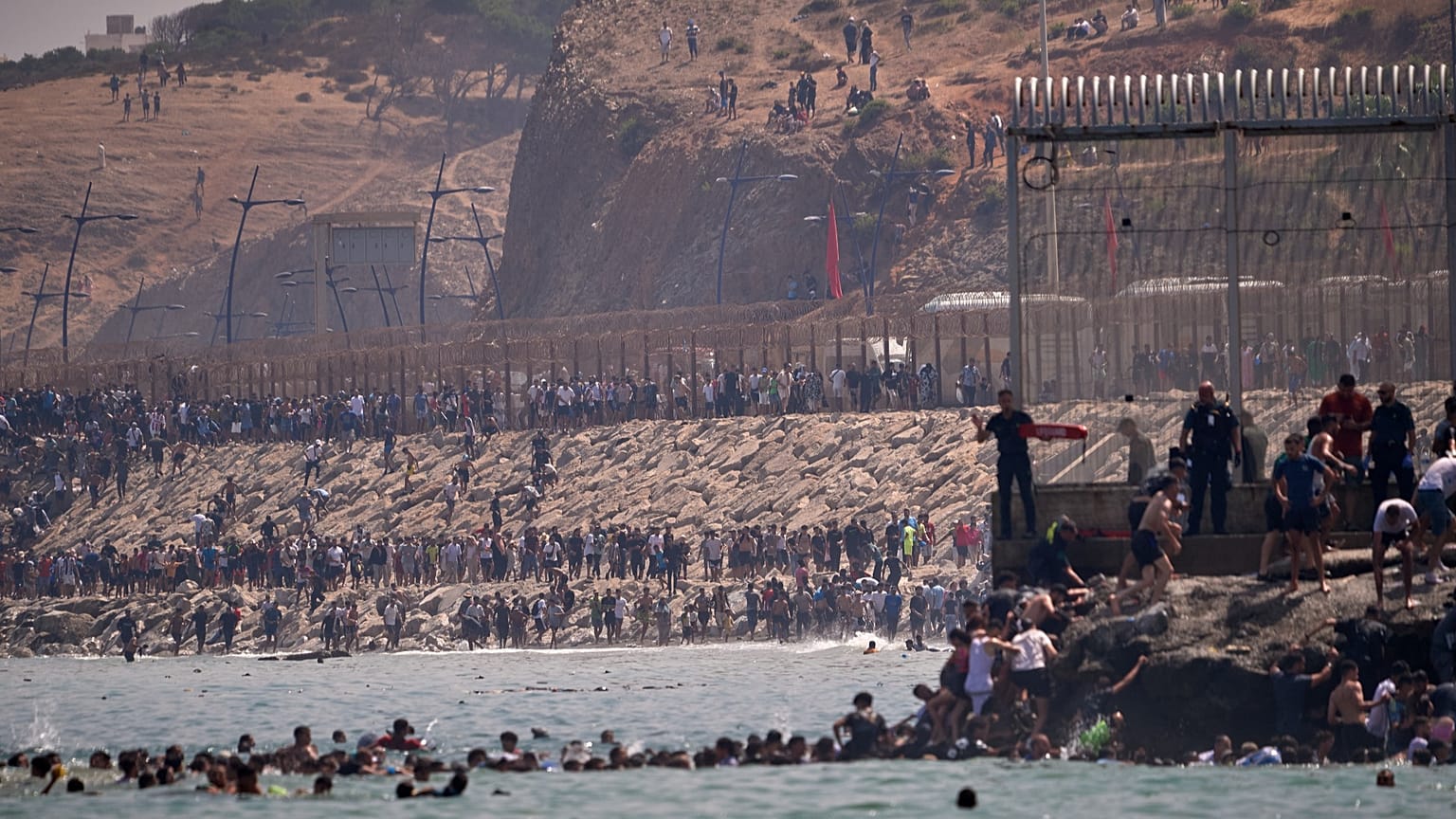
- Thousands of protesters have rallied across Spain against the ongoing migrant crisis in Ceuta, with roughly 50,000 people gathering in Madrid alone on Wednesday.
- The protests coincided with Ceuta Day, a local holiday that marks the Portuguese takeover of the North African city in the 15th century.
- These protests come a little more than a month after more than 70,000 migrants and asylum seekers entered Ceuta from Morocco on July 30 and 31, resulting in at least 80 deaths.
- The Spanish government has allocated €309 million ($357 million) in aid for Ceuta to support social services and security infrastructure.
- After the Madrid demonstration, police fired rubber bullets and tear gas to disperse crowds, as reported by an Associated Press journalist.
- The situation in Ceuta has been chaotic, with reports of violence, including fights and clashes between residents and police.
- Ceuta's regional leader, Juan Jesus Vivas, has called the crisis a violation of Spain's territorial integrity, urging the central government to reinforce the border with Morocco.
- The protests were officially organized by the Spanish Federation of Municipalities and Provinces and included large turnouts in cities like Barcelona, Valencia, and Seville.
Tens of thousands of protesters took to the streets across Spain on Ceuta Day, marking a local holiday against the backdrop of a severe migration crisis.12
The protests, which saw around 50,000 participants in Madrid, were fueled by the recent influx of over 70,000 migrants into Ceuta, resulting in at least 80 deaths during the surge.3
Demonstrators chanted slogans like “Expel the invaders” and “Ceuta is not for sale”, expressing frustration with Prime Minister Pedro Sanchez’s government and its handling of the crisis.
The Spanish government has allocated €309 million ($357 million) to support social services and migrant housing in Ceuta, but critics argue these measures are insufficient.4
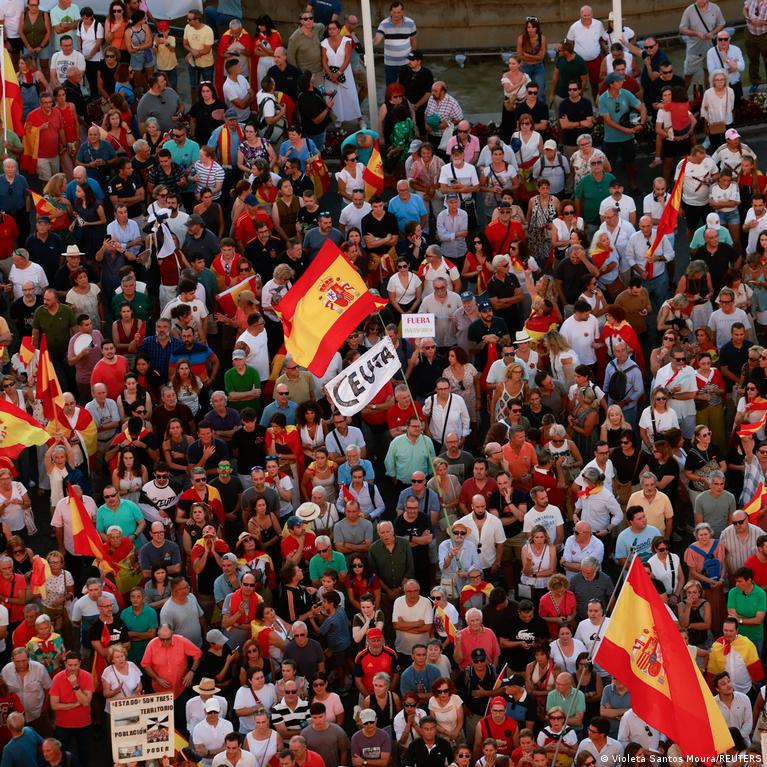
Following the Madrid rally, police fired rubber bullets and tear gas to disperse crowds, leading to clashes and reports of violence.
“We’re suffering and we want to get to Europe or find a solution right now,” said Moroccan migrant Nebil Tazi, highlighting the desperation among those stranded in Ceuta.
Ceuta’s top official, Juan Jesus Vivas, urged the central government to reinforce the border with Morocco, warning that migration could be exploited for political ends.7
The protests were organized by the nonpartisan Spanish Federation of Municipalities and Provinces, with significant turnouts also reported in Barcelona, Valencia, and Seville.8
“The protests coincided with Ceuta Day, a local holiday marking the 15th-century Portuguese takeover, and drew 50,000 in Madrid alone. Spain's government has pledged €309 million ($357 million) in aid, but critics say it's insufficient as migrants remain stranded on beaches.”


 DW.com