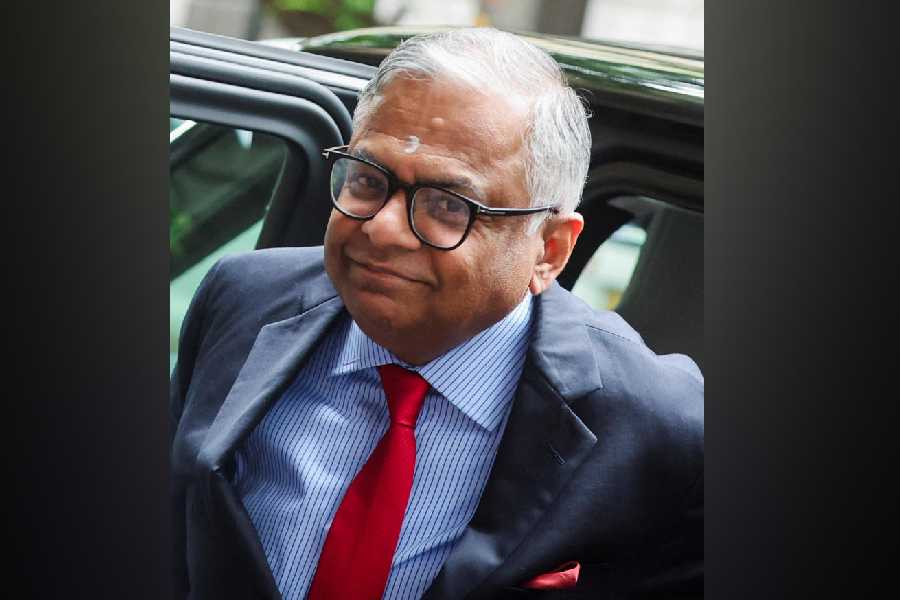
- Tata Trusts has initiated the search for a successor to N Chandrasekaran following his announcement on August 12, 2026, that he would not seek another term due to insufficient board support.
- Chandrasekaran's resignation comes amid ongoing governance and strategic challenges within the Tata Group, particularly after the death of Ratan Tata in October 2024, which altered the dynamics of leadership.
- The next chairman will inherit extraordinary assets but will face unforgiving accountability for their management, as the Tata Group navigates complex challenges.
- Ratan Tata's passing removed the central figure who could balance competing interests and legitimise the chairman's authority, leading to a contentious reappointment for Chandrasekaran.
- The successor will face unresolved issues including the Tata Sons listing, regulatory demands, and the threat to TCS, which has been crucial for financing the group's expansion.
- Chandrasekaran's tenure was marked by significant changes, including the execution of the 'One Tata' strategy and stabilising the group after the Mistry upheaval.
Tata Trusts is on the lookout for a new chairman to succeed N Chandrasekaran, who has played a pivotal role in stabilizing the group post-Mistry upheaval. His tenure was marked by the execution of the 'One Tata' strategy, which aimed at simplification and synergy across various businesses, including TCS, Tata Motors, and Tata Steel.16
However, the incoming chairman will inherit a complex landscape filled with challenges. The successor must address unresolved issues such as the Tata Sons listing, regulatory demands, and the exit of Shapoorji Pallonji. Additionally, there are concerns regarding loss-making ventures and the sustainability of TCS, which has been the financial backbone of the Tata Group, funding ambitions in sectors like Air India, semiconductors, EVs, and batteries.5
The next chairman's role is not merely about managing assets but also about making tough decisions regarding their deployment. As one expert noted, “The task is to *reallocate* what has been built, with the courage of a founder and the discipline of an owner.” The accountability for mismanagement will be unforgiving, especially given the extraordinary nature of the assets at hand.
Chandrasekaran's departure comes at a time when the group faces the threat of generative AI disrupting traditional revenue models, necessitating a shift towards AI-native services. The new chairman must ensure that TCS's cash flows are not treated as perpetual, as this could lead to significant financial missteps.
In summary, the next chairman of Tata Trusts will need to navigate a landscape of extraordinary assets while addressing pressing challenges that could define the future of the Tata Group.3
“The successor faces unresolved questions on Tata Sons listing, Shapoorji Pallonji exit, and RBI's NBFC mandate, plus a disrupted TCS cash engine. Professor Govindarajan warns that pretending TCS's cash flows are perpetual is the 'one unforgivable mistake.'”