- Natarajan Chandrasekaran will not seek another stint as Tata Sons chairman when his current term ends in February 2027, ending his nine-year run at the helm of the conglomerate.
- Chandra said the unanimous resolution by the Sir Dorabji Tata Trust and Sir Ratan Tata Trust to give him a third five-year extension was not carried through because one board member did not support it.
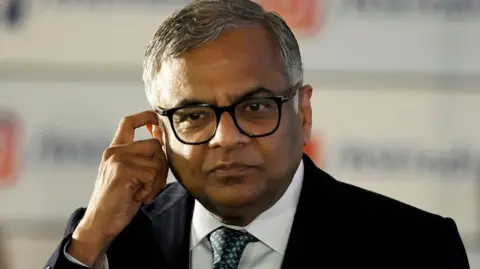
- Chandra, 63, who has been with the Tata group for 40 years and is the first non-Parsi chairman, did not name the board member who opposed his extension.
- Chandra said he communicated his decision not to offer himself for reappointment and asked the board to decide on succession soon.
- Chandra's decision comes days before the Tata Sons AGM on August 18, but doubts exist about quorum because the SRTT's operations are frozen by the charity commissioner.
- The SDTT and SRTT, principal constituents of Tata Trusts, collectively hold 66% shares in Tata Sons; Noel is a nominee of Tata Trusts on the board.
- Chandra has had disagreements with Tata Trusts chairman Noel Tata, who became chairman in 2024 after the death of Ratan Tata.
- Tata Sons, majority-owned by Tata Trusts, controls more than 30 group companies including Tata Consultancy Services, Tata Motors, and Air India.
Natarajan Chandrasekaran, who has led Tata Sons since January 2017, will not seek reappointment when his term ends on February 20, 2027. His decision stems from a lack of unanimous support for a proposed third five-year extension, particularly from board member Noel Tata.1
Chandrasekaran's tenure has been transformative for the Tata Group, marked by significant investments in semiconductors, electronics, and aviation. He played a crucial role in the acquisition of Air India, aiming to establish a global airline presence. His leadership style emphasized synergy and simplicity through the “One Tata” strategy, which aimed to unify the diverse operations of the conglomerate.
Despite his successes, uncertainties regarding his future were exacerbated by disagreements with Noel Tata, who became chairman of Tata Trusts in 2024 after the death of Ratan Tata. Chandrasekaran noted in his statement, “the proposal was not carried through because one of the Board Members did not support it, and in the absence of unanimous support, I chose to defer the decision.”9
His departure raises questions about the future leadership of Tata Sons, which is majority-owned by Tata Trusts and controls over 30 group companies, including Tata Consultancy Services and Tata Motors. As the company prepares for its annual general meeting, the governance issues surrounding the Sir Ratan Tata Trust may complicate the transition process.10
“Chandrasekaran, 63, has led the $170-billion conglomerate for nine years and is the first non-Parsi chairman. His decision comes days before the August 18 AGM, but the SRTT's frozen operations by the charity commissioner cast doubt on quorum, complicating succession.”