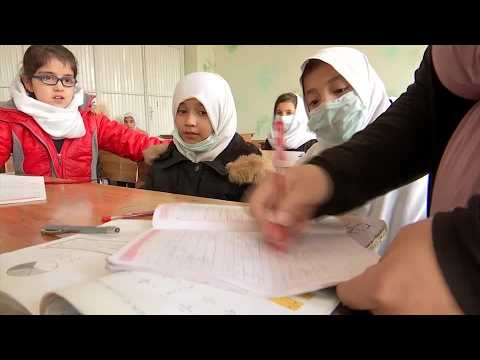
- 2.4 million girls in Afghanistan are barred from secondary school, according to UNESCO, which has renewed its call on the Taliban government to lift restrictions on female education.
- UNESCO reported that the number of girls deprived of secondary school has grown by 200,000 since last year’s count and could approach four million by 2030.
- Since the Taliban returned to power in 2021, Afghanistan has become the only country in the world to stop girls and women from attending secondary schools and universities.
- In March 2022, girls were barred from secondary schools, and in December 2022, women were banned from universities.
- In 2025, an estimated 3 million people are expected to return to Afghanistan, which will add pressure on the already strained education system.
- UNESCO estimates that the ban on female education could lead to 600,000 Afghan women leaving the workforce by 2066 and result in $9.6 billion in cumulative income losses.
UNESCO has revealed that 2.4 million Afghan girls are currently barred from secondary education, a number that has increased by 200,000 since last year.2
The ban could escalate to nearly 4 million girls by 2030, as the Taliban government continues to enforce strict restrictions on female education.
Afghanistan stands alone as the only country globally to prohibit girls and women from attending secondary schools and universities, a situation described by the UN as a form of “gender apartheid.”
The Taliban's return to power in 2021 marked a significant regression in educational rights, with girls barred from secondary schools in March 2022 and women from universities by December of the same year.34
“Many teachers have left the country ... and those who were in the system are banned from continuing teaching,” said Hoda Jaberian, UNESCO's programme coordinator for education in emergencies.
The UN estimates a shortfall of over 11,000 qualified female teachers by 2030, exacerbating the crisis in Afghanistan's education system.
Currently, more than 2 million primary school children are out of class, and 90% of 10-year-olds cannot read a simple text, contributing to a national literacy rate of just 37%.
The Taliban has dismissed global calls to lift the ban, labeling it an internal matter, while the education system faces numerous challenges, including overcrowding and inadequate facilities.
UNESCO warns that the ban could lead to 600,000 Afghan women leaving the workforce by 2066, resulting in $9.6 billion in cumulative income losses and an increased risk of early marriage.6
“The ban has also stripped qualified female teachers, leaving boys with untrained male teachers, and UNESCO projects a shortfall of over 11,000 female teachers by 2030. Additionally, the policy could cause 600,000 women to leave the workforce by 2066, with $9.6 billion in cumulative income losses.”