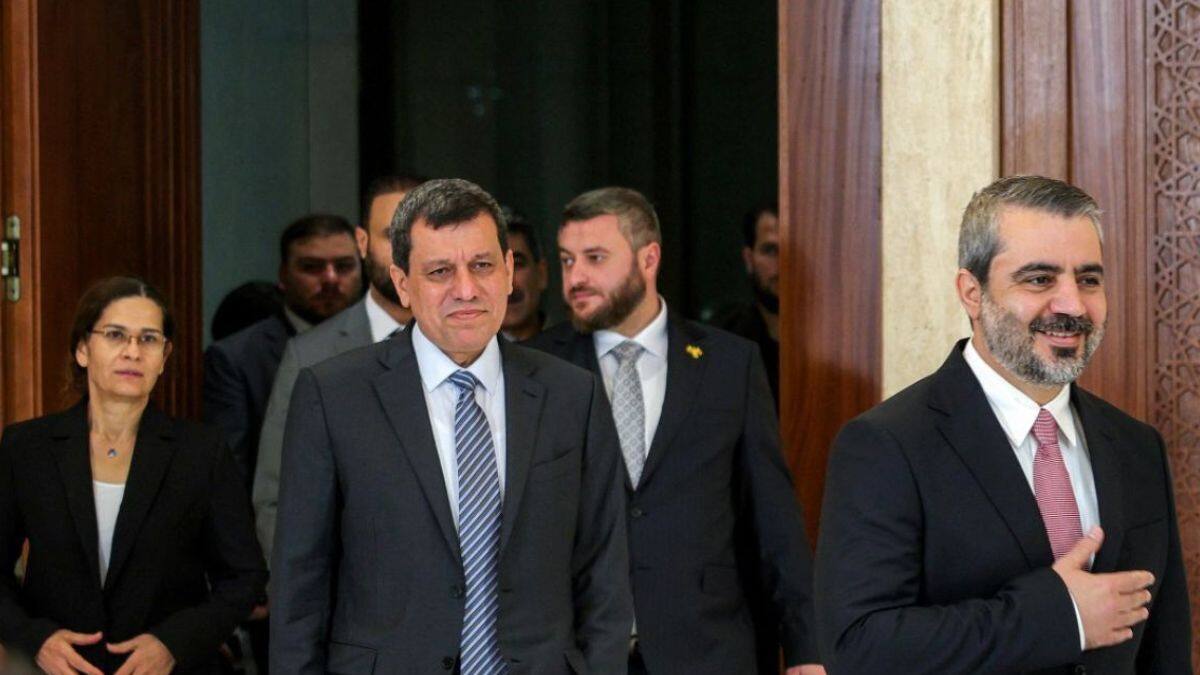
- Syria's President Ahmed al-Sharaa has appointed Mazloum Abdi, leader of the now-dissolved Kurdish-led Syrian Democratic Forces (SDF), as a presidential advisor.
- Al-Sharaa issued Decree No 164, appointing Abdi as "an advisor to the Presidency of the Republic" on Thursday, the Syrian state news agency Sana reported.
- This move comes three days after Abdi announced the dissolution of the SDF and the completion of its integration with the Syrian military.
- State media reported the appointment on Friday.
- In March 2025, Al-Sharaa and Abdi agreed to fold the SDF into the central government.
- In January 2026, state forces battled into the northeast, taking Raqqa and Deir Az Zor; al-Sharaa issued a decree recognizing Kurdish as a national language and restoring citizenship to Syrian Kurds.
- Al-Sharaa proposed Abdi as deputy defence minister and governor of Hasakah in January 2026.
Syrian President Ahmed al-Sharaa appointed Mazloum Abdi as a presidential advisor, a role that follows the dissolution of the Kurdish-led Syrian Democratic Forces (SDF) and their integration into the Syrian military. This decision, announced on Thursday, is part of a broader agreement made in January to incorporate Kurdish forces into the central government.1
Abdi's appointment comes just days after he declared the SDF's dissolution, stating it was completed as part of the integration process with the Syrian army. The integration deal represents a significant victory for Sharaa, effectively ending Kurdish aspirations for autonomy in the region. US special envoy to Syria Tom Barrack remarked that this integration reflects a diplomatic solution aimed at strengthening Syria's sovereignty.
The SDF, formed in 2015 with US backing, played a crucial role in combating the Islamic State. However, following recent clashes that resulted in territorial losses to government forces, Abdi agreed to the integration deal. This shift has been marked by a ceasefire that placed key cities under central government control and committed the SDF to join the defense and interior ministries under a 14-point plan. Notably, during this period, Sharaa also recognized Kurdish national rights and acknowledged Kurdish as a national language, a historic move since Syria's independence in 1946.67
Abdi's new advisory role is seen as a lesser position compared to earlier proposals for him to serve as deputy defense minister or governor of Hasakah province, indicating a complex and evolving political landscape in Syria.8
“The appointment comes three days after Abdi announced the SDF's dissolution, completing integration with the Syrian army. US envoy Tom Barrack praised the move as 'real integration,' while Kurdish hopes for autonomy have ended.”