
- The Supreme Court ruled against the GOP's attempt to trash thousands of ballots in the case of *Watson v. RNC*, marking a significant setback for the party.
- In a 5-4 ruling, the Supreme Court rejected efforts to prevent states from counting mail ballots that were postmarked by Election Day but received later.
- Trump expressed his disappointment over the ruling, calling it a 'tremendous loss' and emphasized the need for Congress to pass the SAVE AMERICA ACT.
- The ruling is seen as a blow to ongoing efforts by Trump and the GOP to curtail mail-in voting ahead of the midterms.
- The Supreme Court's decision in the *Watson* case reflects a long-standing practice where states have counted absentee ballots that arrive after Election Day.
- Justice Amy Coney Barrett stated that 'Election Day' refers to the act of casting votes, not the receipt or counting of votes, which is determined by state law.
The Supreme Court's recent rulings represent a significant setback for former President Trump and the GOP regarding election law and mail-in ballots. In a 5-4 decision, the Court upheld Mississippi's law allowing absentee ballots postmarked by Election Day to be counted if received within five days thereafter.12
Justice Amy Coney Barrett, nominated by Trump, stated that federal election laws do not prevent states from counting these ballots, emphasizing that Election Day refers to the act of casting votes, not their receipt.9

This ruling is a critical blow to the Republican National Committee (RNC), which argued that federal statutes set Election Day as the deadline for ballot receipt.7
The RNC's lawsuit aimed to discard ballots that arrived after Election Day, a move that could have disenfranchised hundreds of thousands of voters nationwide.
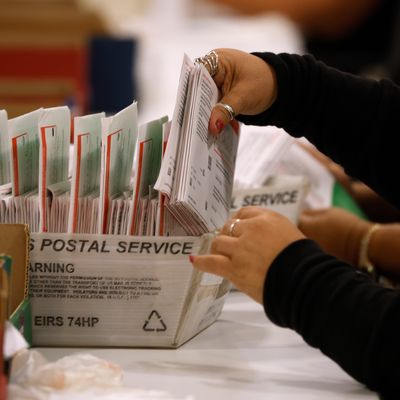
Elisabeth Frost, litigation chair of Elias Law Group, noted, “It rejected the RNC's radical attempt to rewrite election laws in a way that would have resulted in the rejection of hundreds of thousands of ballots.”
The ruling reflects a broader trend where states have historically counted absentee ballots arriving after Election Day without legal issues.

Trump's response to the ruling highlighted the urgency for Congress to pass the SAVE AMERICA ACT, which aims to tighten voting regulations, despite being controversial and already illegal to target noncitizen voting.56
The implications of these rulings are profound as they reinforce the autonomy of states in managing their election processes, particularly in the context of mail-in voting ahead of the midterms.
“The Supreme Court's ruling in Watson v. RNC marks a significant defeat for the GOP's efforts to restrict mail-in voting. Trump expressed disappointment over the decision, emphasizing the need for new voter-ID legislation.”


 CNBC
CNBC New York Magazine



