
- The Supreme Court ruled that Trump’s executive order limiting foundational rights violated the 14th amendment of the constitution.
- In a 6-3 decision, the Supreme Court upheld birthright citizenship, marking a significant setback for Trump’s immigration agenda.
- Chief Justice John Roberts stated that children born in the US "to parents unlawfully or temporarily present" are "citizens at birth" under the 14th amendment.
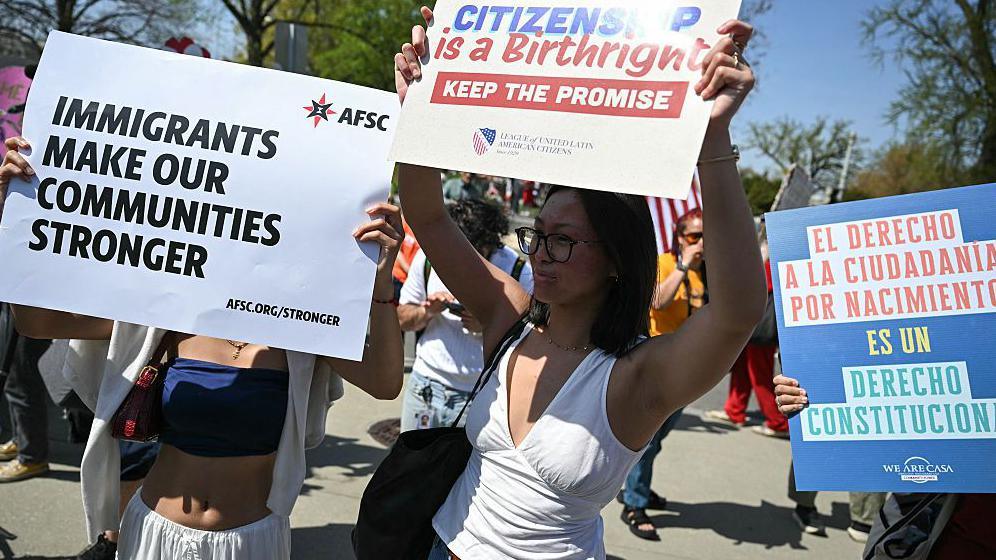
- The ruling was described as a major setback for Trump’s immigration agenda and was welcomed by civil rights groups.
- Trump expressed his disappointment on Truth Social, stating that the court's decision was "too bad" and vowed to continue fighting to end birthright citizenship through legislation.
- The 14th Amendment, passed after the Civil War, grants citizenship to all persons born or naturalized in the US, and has been upheld by the Supreme Court for over a century.
- The majority opinion authored by Chief Justice Roberts emphasized that citizenship is the right to have rights and to participate in the political community.
- The dissenting opinion by Justice Clarence Thomas argued that the 14th amendment was being "repurposed for political projects".
The Supreme Court's ruling on birthright citizenship marks a pivotal moment in U.S. immigration law. In a decisive 6-3 vote, the Court upheld the constitutional right to citizenship for all individuals born on American soil, rejecting former President Trump's executive order that sought to limit this right.12
Chief Justice John Roberts authored the majority opinion, stating, "Citizenship, then and now, was the right to have rights - to freely participate in our political community." The ruling reinforces the 14th Amendment's guarantee of citizenship, which has been in place since 1868.367
The decision is seen as a significant setback for Trump's immigration agenda, which aimed to redefine citizenship eligibility. Trump's executive order argued that children of undocumented immigrants and temporary visitors were not "subject to the jurisdiction thereof" and thus ineligible for birthright citizenship.
Justice Clarence Thomas dissented, suggesting that the President's order could align with the original public meaning of the Citizenship Clause. However, Roberts countered that there was "scant evidence" supporting the Trump administration's view.8
The ruling has been welcomed by civil rights groups, with Hakeem Jeffries, House Democratic leader, stating that the Court "finally affirmed that all persons born in the United States are American citizens." The decision underscores the enduring principle that citizenship is a fundamental right for all born in the U.S.
“The Supreme Court ruled that children born in the US are citizens at birth under the 14th Amendment, rejecting Trump's efforts to limit this right. This decision marks a significant setback for Trump's immigration agenda and has been welcomed by civil rights groups.”


 The Guardian



