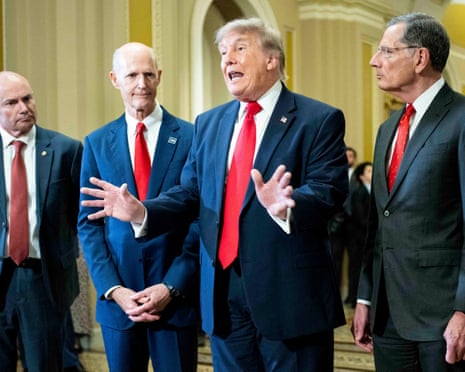
- The supreme court ruled in favor of the Trump administration’s bid to strip temporary protected status (TPS) from hundreds of thousands of Haitians and Syrians, who were legally in the US and protected from deportation.
- In another major immigration ruling, the high court gave the Trump administration a green light to turn back asylum seekers at the US-Mexico border, in a decision that fundamentally reshapes the US asylum system.
The Supreme Court's recent ruling marks a significant shift in U.S. immigration policy. The court's decision allows the Trump administration to strip temporary protected status (TPS) from hundreds of thousands of Haitians and Syrians, who had been legally residing in the U.S. and protected from deportation.1
Additionally, the ruling permits the administration to turn back asylum seekers at the U.S.-Mexico border. This decision fundamentally reshapes the U.S. asylum system, raising concerns among immigrant advocates about the implications for those seeking refuge.2
Critics argue that these changes could lead to increased vulnerability for individuals fleeing violence and persecution in their home countries.
The ruling reflects a broader trend in U.S. immigration policy under the Trump administration, prioritizing stricter enforcement measures and limiting protections for vulnerable populations.
As the legal landscape evolves, the impact of these decisions will likely resonate throughout the immigration system, affecting countless lives and the future of asylum in the United States.
“The supreme court ruled in favor of the Trump administration's bid to strip temporary protected status from hundreds of thousands of Haitians and Syrians. Additionally, the high court gave the administration a green light to turn back asylum seekers at the US-Mexico border.”


 The Guardian