
- The Supreme Court has limited the power of the federal government to disarm drug users, ruling that the government's prosecution of Ali Danial Hemani was inconsistent with the Second Amendment.
- On a 9-0 vote, the court concluded that the government's invocation of the law against Hemani fell afoul of the Constitution's Second Amendment rights.
- The ruling, authored by Justice Neil Gorsuch, does not invalidate the law entirely but makes it harder for prosecutors to invoke it against casual drug users.
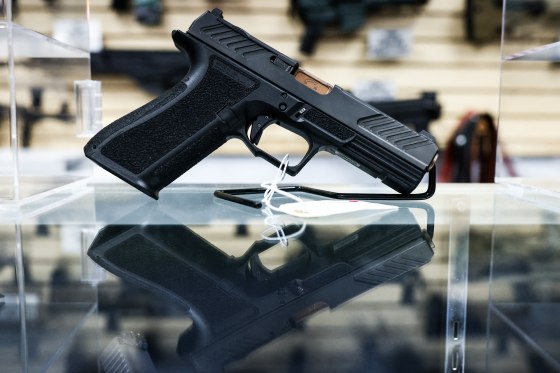
- The case involved Ali Danial Hemani, who was indicted in 2023 for violating the federal anti-guns-and-drugs law after an FBI search found a Glock 9mm pistol and 60 grams of marijuana in his home.
- The ruling sends a strong message that the government cannot criminalize the conduct of large numbers of people based on unfounded assumptions about their danger to society.
- The Trump administration defended the federal law in this case, arguing that guns and drugs are a dangerous combination, despite professing support for the Second Amendment.
- The law has led to about 300 charges annually, with a conviction carrying a potential 15-year prison sentence.
- Justice Amy Coney Barrett raised concerns about the law's scope, questioning whether individuals using medications like Ambien would be covered under it.
- The ruling does not address broader issues regarding the ban on drug addicts from possessing firearms, as Gorsuch described it as a narrow ruling.
- The same statute was invoked in the case of Hunter Biden, who was convicted under it in June 2024.
The Supreme Court's recent ruling limits the federal government's ability to disarm casual drug users, particularly in the case of Ali Danial Hemani, who faced charges under a law similar to that used against Hunter Biden.12413
On a unanimous 9-0 vote, the court found that the government's prosecution violated the Second Amendment, emphasizing that not all drug users pose a danger.3
Justice Neil Gorsuch noted that the ruling is a “narrow one,” focusing specifically on casual users and not addressing broader issues regarding drug addiction and firearm possession.
The court rejected the federal government's assertion that marijuana users are inherently dangerous, highlighting that millions of Americans legally use marijuana in various states despite its federal prohibition.
Cecillia Wang, legal director of the ACLU representing Hemani, stated, “The court has sent a strong message that the government cannot criminalize the conduct of large numbers of people by making categorical and unfounded assumptions about whether they are dangerous.”7
The ruling could impact the approximately 300 individuals charged annually under this law, which carries a potential 15-year prison sentence for violations.910
Justice Amy Coney Barrett raised concerns about the law's broad application, questioning whether users of legal medications could also be affected.11
This decision marks a significant shift in how the law is applied to casual drug users, reinforcing Second Amendment rights amidst ongoing debates about gun control and drug policy.
“The Supreme Court has ruled that the federal government cannot disarm casual drug users, impacting cases like that of Ali Danial Hemani. This decision reinforces Second Amendment rights amid ongoing debates about drug use and gun ownership.”
