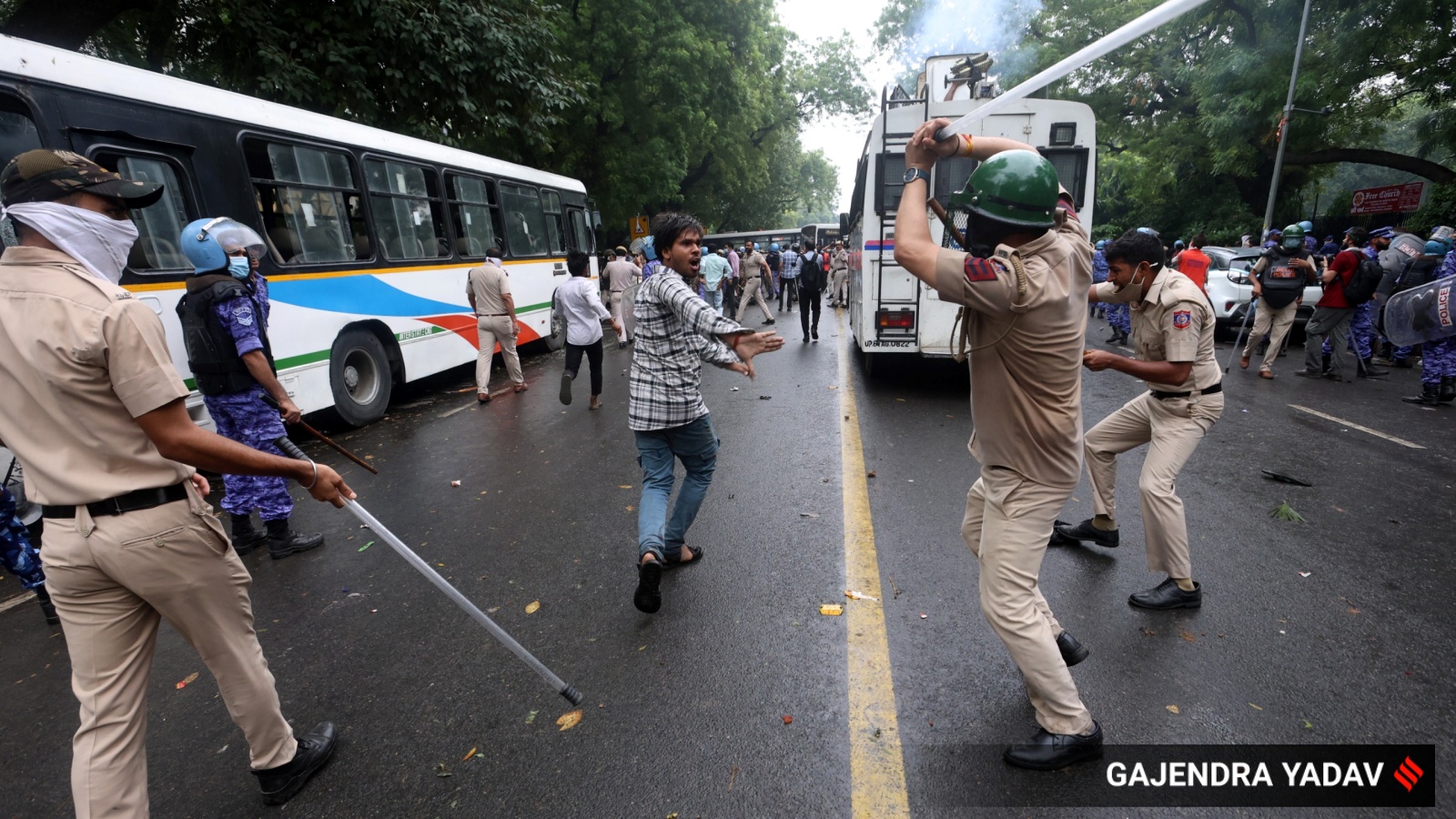
- The Supreme Court agreed to hear a plea filed by RJD MP Manoj Jha regarding the police lathicharge against protesters in Jantar Mantar.
- The Supreme Court affirmed the constitutional right to peaceful protest, stating that there can't be lathicharge merely due to agitation.
- Following the police action, demonstrations intensified at the protest site and began spreading to other parts of the country.
- The Supreme Court emphasized that any police excesses during protests must be independently examined.
- The court also highlighted the need for uniformity in protocol across states, stating that discipline is integral to the democratic process.
- Rahul Gandhi accused the police of using extreme force, including pellet guns, against protesters during the July 20 incident.
- Delhi Police has denied using pellet guns during the protests, while the CRPF has not responded to allegations involving the Rapid Action Force.
The Supreme Court has emphasized the right to peaceful protest, stating that states cannot resort to lathicharge simply due to agitation. This ruling comes in response to a plea regarding police actions during protests, particularly the crackdown on the Cockroach Janta Party protest in Delhi.12345
The court highlighted that the right to peaceful, lawful protest is absolutely guaranteed under the Constitution. It stated, “So long as it is peaceful agitation, merely because there is agitation, there can’t be lathicharge”. The court also called for an independent examination of any police excesses during protests.
The Supreme Court's ruling is particularly significant in light of recent events, including the July 20 protests where students faced police action involving tear gas and batons. “Thousands of youth were baton-charged, beaten, and pellet guns were used against them,” said Rahul Gandhi, the Leader of the Opposition, who accused the government of using extreme force to suppress dissent.7
The court has agreed to hear multiple petitions regarding these incidents, emphasizing the need for uniform protocols across states to ensure discipline in the democratic process. It also noted that “Police excesses must be inquired into” and called for an explanation from the government regarding the lack of adequate gear for police personnel injured during protests.
As demonstrations continue to spread across the country, the Supreme Court's stance reinforces the importance of protecting citizens' rights to protest peacefully.
“The Supreme Court's remarks come as protests intensified following police actions, with allegations of excessive force, including the use of pellet guns. Rahul Gandhi criticized the government's response, claiming that thousands of youth faced brutal treatment during the protests, highlighting the need for uniform guidelines on police conduct.”
 The Indian Express



