- The Supreme Court allowed the White House ballroom construction to proceed on a technicality.
- Chief Justice John Roberts accused the majority of allowing a likely infringement of Congress's constitutional authority.
- Roberts compared Hoagland's aesthetic injury to recognized aesthetic injuries, stating that under the majority’s reasoning, 'I want to look at a crocodile' can answer Article 3's demand while 'I want to look at the White House' cannot.
- Roberts and his fellow dissenters saw a much more concrete injury, comparing Hoagland’s situation to aesthetic injuries the Supreme Court has long recognized.
- For Roberts, this was little different from the aesthetic injuries the Supreme Court has long recognized when someone regularly visits a particular river, forest, or other place and a challenged action changes what they encounter there.
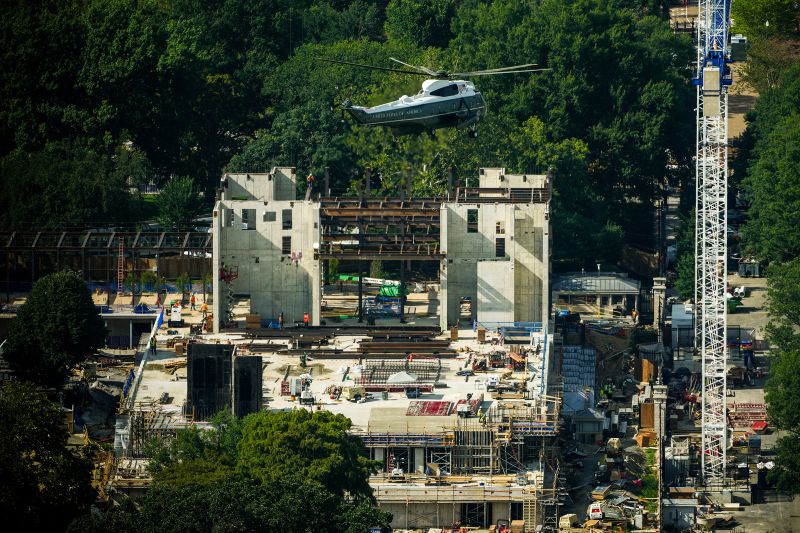
The Supreme Court's decision to permit the Trump administration to proceed with the construction of a new White House ballroom has sparked controversy, particularly among dissenting justices who argue it undermines congressional authority.1
The project, which is estimated to cost roughly $400 million, is being financed through private donations rather than congressional appropriations. Federal law mandates that express congressional authority is required to erect structures on federal parks and public grounds in Washington, yet Congress never approved the ballroom's construction on President's Park.
The National Trust for Historic Preservation filed a lawsuit challenging the project, leading to a preliminary injunction that temporarily halted construction. However, the Supreme Court's majority ruled that the government met the necessary legal standards to proceed, despite acknowledging that it was unlikely to prove its legal authority to build the ballroom.
The dissenting opinion, led by Chief Justice John Roberts, emphasized that the majority's ruling disregarded the concrete injury experienced by individuals like Alison Hoagland, a member of the National Trust, who argued that the new ballroom would impair her aesthetic and cultural interests in viewing the White House. Roberts contended that her injury was akin to those recognized in previous cases involving changes to natural landscapes.2345
Roberts criticized the majority's reasoning, suggesting it trivialized the significance of aesthetic injuries, stating, “I want to look at the White House” should be sufficient to establish standing, just as “I want to look at a crocodile” is.
“Chief Justice Roberts, joined by the three liberal justices, argued the majority's narrow standing rules allow a likely infringement of Congress's constitutional authority. He compared Hoagland's aesthetic injury to recognized ones, writing that 'I want to look at a crocodile' can satisfy Article 3 while 'I want to look at the White House' cannot.”