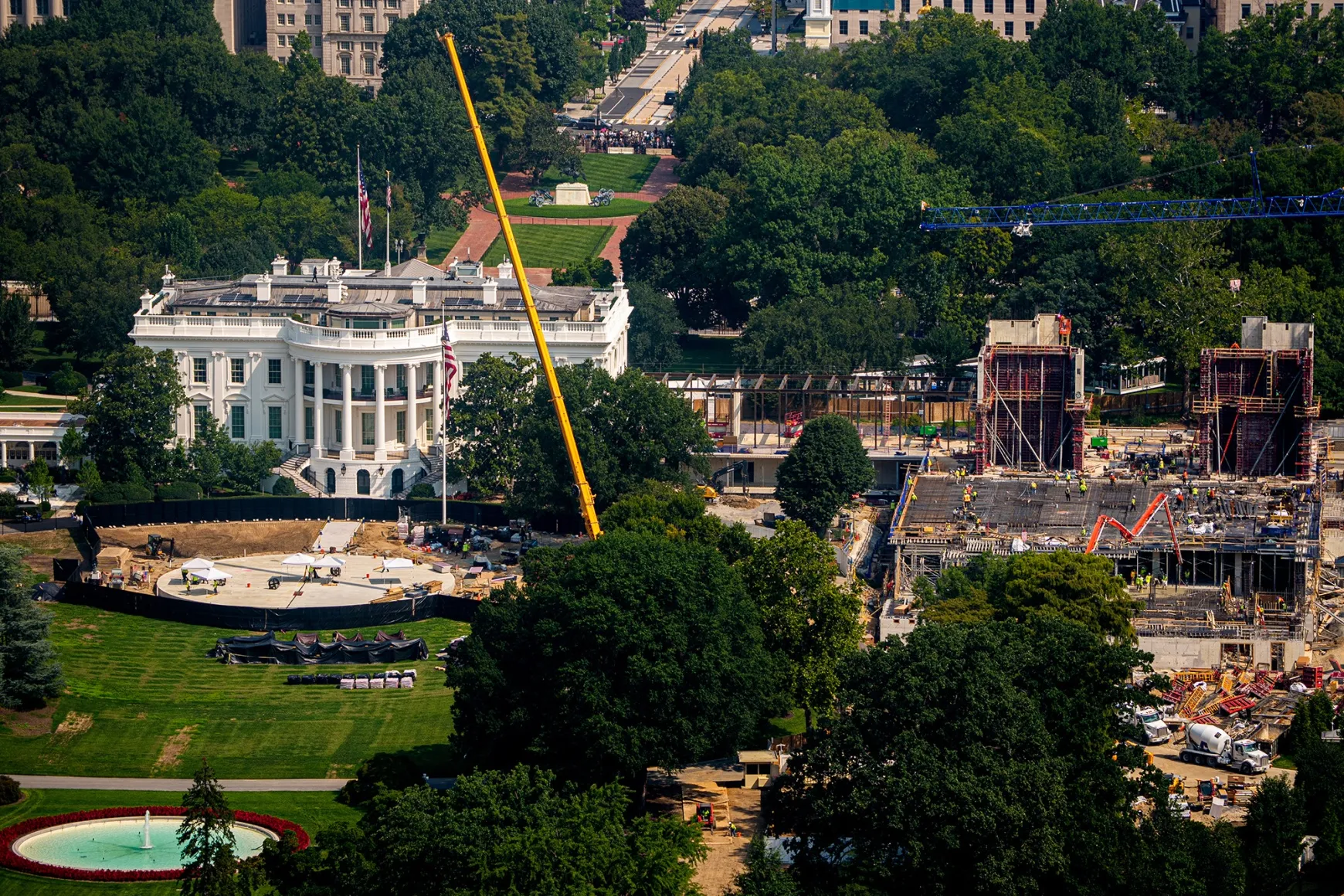
- The Supreme Court has temporarily allowed President Donald Trump to continue working on a massive new ballroom at the White House, freezing a court ruling that would have required construction to stop at midnight Friday.
- Chief Justice John Roberts signed an order that stayed the lower court ruling, meaning construction can continue at the White House until the Supreme Court issues another order.
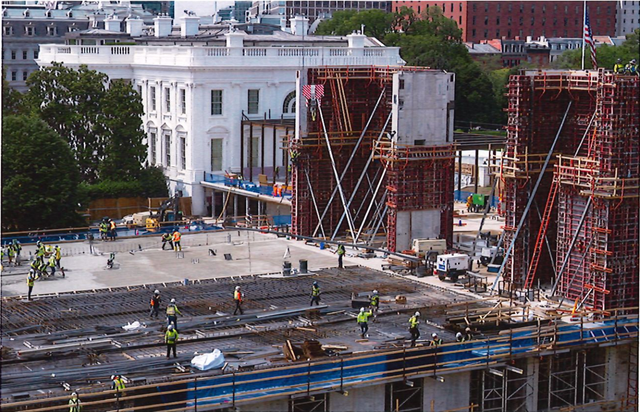
- Construction has been progressing rapidly, with a 250-person crew working 20-hour days, 7 days per week, according to a filing submitted by the Trump administration to the Supreme Court.
- The government put the ballroom complex at 65% complete in its entirety.
- Judge Richard Leon ruled in March that construction needed to stop unless it involved safety and security.
- Construction of the ballroom began last July, closing off access to the north side of the White House and Lafayette Park, which were previously open to the public.
- The National Trust for Historic Preservation sued over the project in December and later convinced a federal judge in DC to order Trump to stop work on the ballroom until Congress gives him authority to move forward.
- The appeals court concluded that Congress has not ceded unfettered authority to the Executive Branch to dramatically redesign the White House.
- Trump has argued that the new ballroom is a necessity, often pointing to the lack of space to host events with foreign dignitaries.
The Supreme Court's decision allows President Trump to proceed with the construction of a 90,000-square-foot ballroom at the White House, despite a lower court ruling that required a halt pending congressional approval.1
Chief Justice John Roberts issued the stay, enabling work to continue without a new deadline.2
The ballroom, which is 65% complete, has faced legal challenges from the National Trust for Historic Preservation, which argues that the president lacks authority to build without congressional consent.7
The Trump administration contends the ballroom is essential for hosting foreign dignitaries and includes security features like bomb shelters and a drone port.
Construction has been rapid, with a 250-person crew working around the clock.
The National Trust claims the project represents a significant overreach of executive power, stating, “Whether or not a massive ballroom should be constructed is for Congress to decide.”
Public opinion appears divided, with a recent poll indicating 56% of Americans disapprove of the project.
The legal saga began in March when Judge Richard Leon ruled against Trump, stating construction should cease unless it involved safety and security enhancements.5
The case continues to unfold as the Supreme Court has yet to review the merits of the lower court's decisions.
“The project is 65% complete with a 250-person crew working 20-hour days, according to administration filings. The National Trust for Historic Preservation, which sued in December, argues Congress must approve the project, and a recent poll shows 56% of Americans disapprove of the construction.”


 NPR
NPR