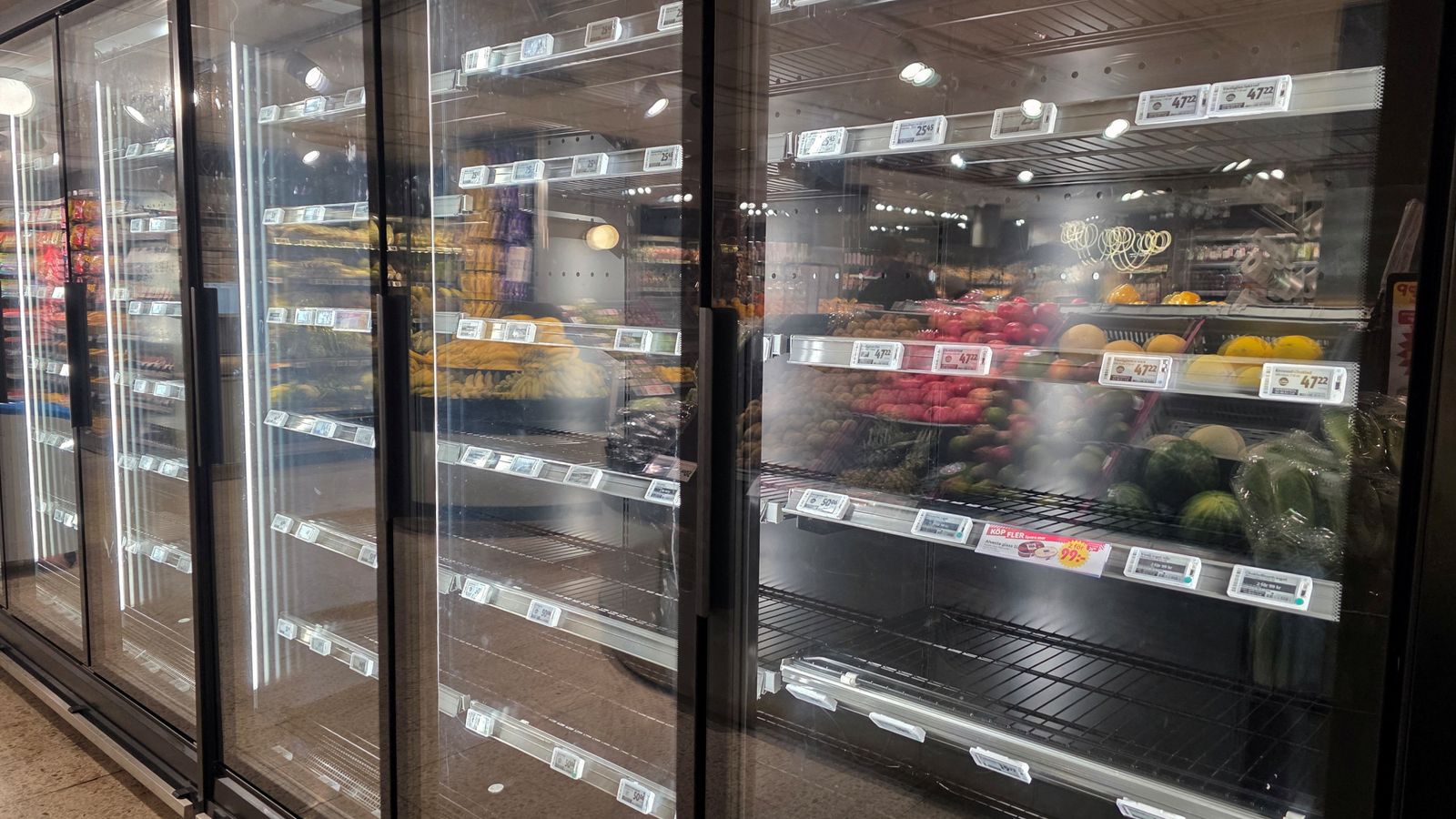
- Supermarkets across Europe have been hit by a cyberattack affecting their fridges and freezers, raising concern about the vulnerabilities of internet-connected hardware.
- Researchers from UK Cyber Defence have identified more than 800 refrigeration and building-control interfaces associated with British retailers that can be accessed over the public internet.
- The NCSC said it was working with international partners and industry to understand the supermarket incidents, but it was unaware of any impact on the UK.
- Helen Dickinson, chief executive of the British Retail Consortium, said cyber incidents are a major concern for retailers, with businesses working alongside the NCSC to share intelligence and strengthen their defences.
- Belgium's Centre for Cybersecurity spokesperson Katrien Eggers said it is not known who is behind the attack, and expressed concern about the growing number of incidents, partly due to AI.
- EU commissioner for agriculture Christophe Hansen called the repeated cyberattacks "a deliberate attempt to disrupt our food supply chain and undermine consumers' confidence in it," stressing that "the repeated occurrence of these cyberattacks is deeply concerning."
- Cyber security experts warned that without proper protections, "any factory or equipment" connected to the internet - from carmakers to electricity or transport infrastructure - could face similar risks, and that smaller, poorly funded utility companies may be relying on older, vulnerable equipment.
- Researcher Tom Hegel at SentinelOne said such attacks were typically linked to extortion, political motives, or nation-state operations, with the absence of financial demands in recent cases pointing to sabotage.
A wave of cyberattacks has struck supermarkets across Europe, impacting refrigeration systems and raising significant concerns about the security of internet-connected devices.1
The National Cyber Security Centre (NCSC) is currently investigating these incidents, which have affected major retailers including Ahold Delhaize, Colruyt, and ICA.34
Over 800 exposed refrigeration interfaces have been identified by UK researchers, highlighting vulnerabilities in the retail sector.
“Everything is destroyed,” said Engla Ingwall, a sales manager at an ICA store in Stockholm, where temperatures in freezers soared to 50 degrees Celsius due to the attack.
The incidents have forced stores to discard large quantities of food, echoing a similar attack in France last month.
“They are a deliberate attempt to disrupt our food supply chain,” warned EU commissioner for agriculture Christophe Hansen, emphasizing the seriousness of these cyber threats.6
The NCSC is collaborating with international partners to assess the situation, although it reports no immediate impact on the UK.
“Retail is an easy target,” noted Tom Hegel from SentinelOne, pointing out that the extensive use of refrigeration controllers and management systems makes retailers vulnerable to such attacks.9
As the incidents unfold, experts stress the need for enhanced cybersecurity measures to protect critical infrastructure from future threats.
“Belgium's cybersecurity centre says it is unknown who is behind the attack, with AI now enabling sophisticated exploitation of connected systems. EU agriculture commissioner Christophe Hansen calls the repeated incidents "a deliberate attempt to disrupt our food supply chain".”